Saturday, 7 March 2026

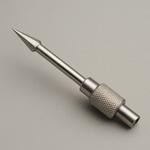
Do you speak a little French when you say 'trocar'?

'Trocar' is a word borrowed from French 'trois carre'. The word entered the English language some time around 1706.
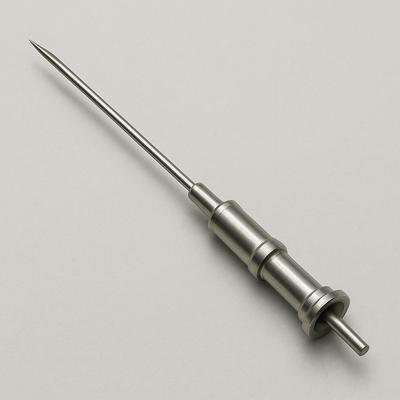

trocar [noun] [circa 1706]
A sharp-pointed surgical instrument fitted with a cannula and used especially to insert the cannula into a body cavity ...
See 'trocar' on the Loan Words Map

See more loan words from French.

Etymology: French 'trocart' alteration of 'trois-quart' from 'trois' three + 'carre' edge
See more loan words from 1700s.


The Dutch origins of the word 'geek'

'Geek' is a word borrowed from Dutch 'gekk'. The word entered the English language some time around 1914.


geek [noun] [1914]
  • a carnival performer often billed as a wild man whose act usually includes biting the head off a live chicken or snake
  • a person often of an intellectual bent who is disliked
  • an enthusiast or expert especially in a technological field or activity
See 'geek' on the Loan Words Map

See more loan words from Dutch.

note: Likely comes from Germanic words like the Dutch gekk or Middle Low German geck both meaning fool.
Etymology: Probably from English dialect 'geek, geck' fool, from Low German 'geck' from Middle Low German
See more loan words from 1910s.


When you hear 'crust' are you hearing English or Latin?

'Crust' is a word borrowed from Latin 'crusta'. The word entered the English language some time around the 14th century.


crust [noun] [14th century]
  • the hardened exterior or surface part of bread
  • a piece of this or of bread grown dry or hard
  • the pastry cover of a pie
  • a hard or brittle external coat or covering
  • as
See 'crust' on the Loan Words Map

See more loan words from Latin.

note: From Latin crusta (hard coating/shell) entering English via Anglo-French/Old French crouste/cruste in the 14th century meaning the hard outer layer of bread with deeper roots in the Proto-Indo-European root *kreus- meaning to form a crust or begin to freeze linking it to words for frost and ice.
Etymology: Middle English, from Latin 'crusta;' akin to Old English 'hrūse' earth, Greek 'kryos' icy cold, 'krystallos' ice, crystal
See more loan words from 1300s.


When you say 'chibouk' are you speaking Turkish?

'Chibouk' is a word borrowed from Turkish 'çubuk'. The word entered the English language some time around 1811.


chibouk [noun] [1811]
A long-stemmed Turkish tobacco pipe with a clay bowl
See 'chibouk' on the Loan Words Map

See more loan words from Turkish.

Etymology: French 'chibouque' from Turkish 'çubuk'
See more loan words from 1800s.


Do you speak a little Afrikaans when you say 'reebok'?

'Reebok' is a word borrowed from Afrikaans 'rhebok'.


reebok
(details not available)
See 'reebok' on the Loan Words Map

See more loan words from Afrikaans.

note: Afrikaans for the grey rhebok a type of African antelope.
Etymology: -
See more loan words from (unknown date).

The word 'nopal' originally came from Amerindian as 'nopalli'

'Nopal' is a word borrowed from Amerindian 'nopalli'. The word entered the English language some time around 1730.


nopal [noun] [1730]
  • any of a genus (Nopalea) of cacti of Mexico and Central America that differ from the prickly pears in having erect pe...
  • prickly pear
  • a fleshy young tender stem segment of the prickly pear cactus (especially ) or the nopal cactus used as food
See 'nopal' on the Loan Words Map

See more loan words from Amerindian.

Etymology: Spanish, from Nahuatl 'nohpalli'
See more loan words from 1700s.


Is 'ambulance' English, or is it actually Latin?

'Ambulance' is a word borrowed from Latin 'ambulant'. The word entered the English language some time around 1809.


ambulance [noun] [1809]
A vehicle equipped for transporting the injured or sick
See 'ambulance' on the Loan Words Map

See more loan words from Latin.

Etymology: French, from ('hôpital') 'ambulant' literally, ambulant field hospital, from 'ambulant' itinerant, from Latin 'ambulant-, ambulans' present participle of 'ambulare'
See more loan words from 1800s.


Is 'soporific' English, or is it actually Latin?

'Soporific' is a word borrowed from Latin 'soporificus'. The word entered the English language some time around 1665.


soporific [adjective] [1665]
  • causing or tending to cause sleep
  • tending to dull awareness or alertness
  • of, relating to, or marked by sleepiness or lethargy
See 'soporific' on the Loan Words Map

See more loan words from Latin.

note: Soporific originates from the 17th-century French soporifique which comes from the Latin sopōrificus (causing sleep). It combines sopor (deep sleep) and -fic (from facereto make or do). Its roots trace back to the Proto-Indo-European root *swep- (to sleep) which is also the source of somnus (Latin for sleep) and hypnos (Greek for sleep).
Etymology: Probably from French 'soporifique' from Latin 'sopor' deep sleep; akin to Latin 'somnus' sleep
See more loan words from 1600s.


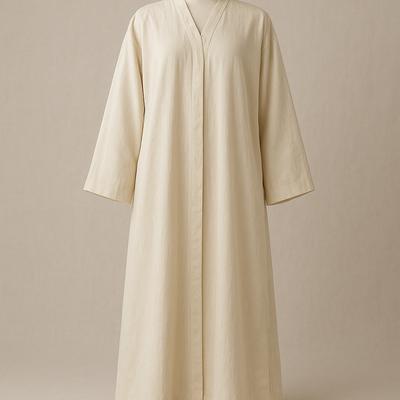
When you hear 'caftan' are you hearing English or Persian?

'Caftan' is a word borrowed from Persian 'kaftan'. The word entered the English language some time around 1591.


caftan [noun] [1591]
A usually cotton or silk ankle-length garment with long sleeves that is common throughout the Levant
See 'caftan' on the Loan Words Map

See more loan words from Persian.

Etymology: Russian & Turkish; Russian 'kaftan' from Turkish, from Persian 'qaftān'
See more loan words from 1500s.


Is 'oniric' English, or is it actually Greek?

'Oniric' is a word borrowed from Greek 'oneiros'.


oniric
(details not available)
See 'oniric' on the Loan Words Map

See more loan words from Greek.

note: The term oniric derives from the Greek word oneiros (dreams or the god of dreams) combined with the suffix -ic. It was borrowed into English perhaps from the French onirique in 1859 to describe something that is dream-like or related to dreams.
Etymology: -
See more loan words from (unknown date).

The word 'sarcoma' originally came from Greek as 'sark-oma'

'Sarcoma' is a word borrowed from Greek 'sark-oma'. The word entered the English language some time around 1804.


sarcoma [noun] [1804]
A malignant tumor arising in tissue (as connective tissue, bone, cartilage, or striated muscle) of mesodermal origin
See 'sarcoma' on the Loan Words Map

See more loan words from Greek.

note: Derived from Greek sarkōma meaning a fleshy excrescence from *sark-*sarx (flesh) + -oma (a suffix indicating a tumor or growth).
Etymology: New Latin, from Greek 'sarkōmat-, sarkōma' fleshy growth, from 'sarkoun' to grow flesh, from 'sark-, sarx'
See more loan words from 1800s.


How the Greek language influenced English with the word 'orchestra'

'Orchestra' is a word borrowed from Greek 'orkhēstra'. The word entered the English language some time around 1606.


orchestra [noun] [1606]
  • the circular space used by the chorus in front of the proscenium in an ancient Greek theater
  • a corresponding semicircular space in a Roman theater used for seating important persons
  • the space in front of the stage in a modern theater that is used by an orchestra
  • the forward section of seats on the main floor of a theater
See 'orchestra' on the Loan Words Map

See more loan words from Greek.

note: The word orchestra comes from the Ancient Greek orkhēstra (ὀρχήστρα) meaning the dancing place referring to the circular area in front of the stage in Greek theaters where the chorus would sing and dance. This term related to the Greek word for to dance (orkheisthai) was later adopted by Romans and eventually into English (around 1600) to describe the musicians who played in that space evolving into the large musical groups we know today.
Etymology: Latin, from Greek 'orchēstra' from 'orcheisthai' to dance; perhaps akin to Sanskrit 'ṛghāyati' he trembles, he rages
See more loan words from 1600s.


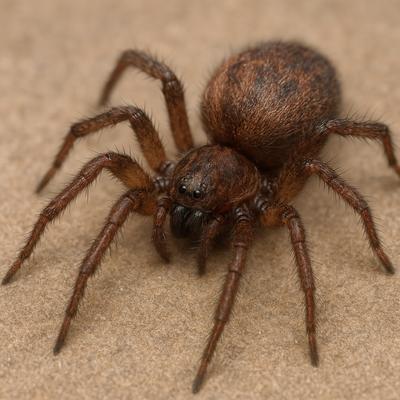
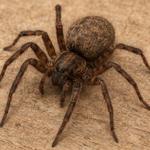
Do you speak a little Italian when you say 'tarantula'?

'Tarantula' is a word borrowed from Italian 'tarantula'. The word entered the English language some time around 1561.


tarantula [noun] [1561]
  • a European wolf spider (Lycosa tarentula) popularly held to be the cause of
  • any of a family (Theraphosidae) of large hairy American spiders that are typically rather sluggish and capable of bitin...
See 'tarantula' on the Loan Words Map

See more loan words from Italian.

Etymology: Medieval Latin, from Old Italian 'tarantola' from 'Taranto'
See more loan words from 1500s.