Showing posts with label 1400s. Show all posts

Saturday, 7 March 2026

How the Latin language influenced English with the word 'poultice'

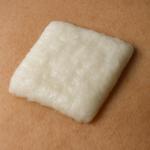
'Poultice' is a word borrowed from Latin 'pultes'. The word entered the English language some time around the 15th century.


poultice [noun] [15th century]
A soft usually heated and sometimes medicated mass spread on cloth and applied to sores or other lesions
See 'poultice' on the Loan Words Map

See more loan words from Latin.

Etymology: Middle English 'pultes' from Medieval Latin, literally, pap, from Latin, plural of 'pult-, puls' porridge
See more loan words from 1400s.


Do you speak a little Latin when you say 'armature'?

'Armature' is a word borrowed from Latin 'armare'. The word entered the English language some time around the 15th century.


armature [noun] [15th century]
  • an organ or structure (as teeth or thorns) for offense or defense
  • a piece of soft iron or steel that connects the poles of a magnet or of adjacent magnets
  • a usually rotating part of an electric machine (as a generator or motor) which consists essentially of coils of wire ar...
  • the movable part of an electromagnetic device (as a loudspeaker)
See 'armature' on the Loan Words Map

See more loan words from Latin.

note: Late Middle English: from French from Latin armatura ‘armour’ from armare ‘to arm’. The original sense was ‘armour’ hence ‘protective covering’ (armature early 18th century) later ‘keeper of a magnet’ source of armature (mid 19th century).
Etymology: Middle English, armor, from Latin 'armatura' armor, equipment, from 'armatus'
See more loan words from 1400s.


Wednesday, 4 March 2026

Is 'escutcheon' English, or is it actually Latin?

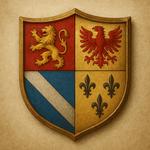
'Escutcheon' is a word borrowed from Latin 'scutum'. The word entered the English language some time around the 15th century.


escutcheon [noun] [15th century]
  • a defined area on which armorial bearings are displayed and which usually consists of a shield
  • a protective or ornamental plate or flange (as around a keyhole)
  • the part of a ship's stern on which the name is displayed
See 'escutcheon' on the Loan Words Map

See more loan words from Latin.

Etymology: Middle English 'escochon' from Anglo-French 'escuchoun' from Vulgar Latin '*scution-, scutio' from Latin 'scutum' shield
See more loan words from 1400s.


Saturday, 28 February 2026

The French roots of the word 'quoit'

'Quoit' is a word borrowed from French 'quoit'. The word entered the English language some time around the 15th century.


quoit [noun] [15th century]
  • a flattened ring of iron or circle of rope used in a throwing game
  • a game in which the are thrown at an upright pin in an attempt to ring the pin or come as near to it as possible
See 'quoit' on the Loan Words Map

See more loan words from French.

note: Probably from Old French coite - flat stone.
Etymology: Middle English 'coite'
See more loan words from 1400s.


Sunday, 5 January 2025

The word 'golf' is originally from Dutch 'kolf'

'Golf' is a word borrowed from Dutch 'kolf'. The word entered the English language some time around the 15th century.


golf [noun] [15th century]
A game in which a player using special clubs attempts to sink a ball with as few strokes as possible into each of the 9...
See 'golf' on the Loan Words Map

See more loan words from Dutch.

note: Although modern golf is a Scottish invention the word was first documented in Dutch: 1261 Middle Dutch manuscript of the Flemish poet Jacob van Maerlant's Boeck Merlijn. The first Scottish mention was in a 1457 Act of the Scottish Parliament.
Etymology: Middle English (Scots)
See more loan words from 1400s.


Did you know that 'cere' is actually Latin?

'Cere' is a word borrowed from Latin 'cerare'. The word entered the English language some time around the 15th century.


cere [verb] [15th century]
To wrap in or as if in a
See 'cere' on the Loan Words Map

See more loan words from Latin.

Etymology: Middle English, to impregnate with wax, from Middle French 'cirer' from Latin 'cerare' from 'cera'
See more loan words from 1400s.


Friday, 3 January 2025

The word 'applaud' is a loan word from Latin 'applaudere'

'Applaud' is a word borrowed from Latin 'applaudere'. The word entered the English language some time around the 15th century.


applaud [verb] [15th century]
  • to express approval especially by clapping the hands
  • to express approval of
  • praise
  • to show approval of especially by clapping the hands
See 'applaud' on the Loan Words Map

See more loan words from Latin.

Etymology: Middle English, from Middle French or Latin; Middle French 'aplaudir' from Latin 'applaudere' from 'ad-' + 'plaudere' to applaud
See more loan words from 1400s.


Is 'bruin' English, or is it actually Dutch?

'Bruin' is a word borrowed from Dutch 'bruin'. The word entered the English language some time around the 15th century.


bruin [noun] [15th century]
Bear
See 'bruin' on the Loan Words Map

See more loan words from Dutch.

Etymology: Middle Dutch, name of the bear in 'Reynard the Fox'
See more loan words from 1400s.
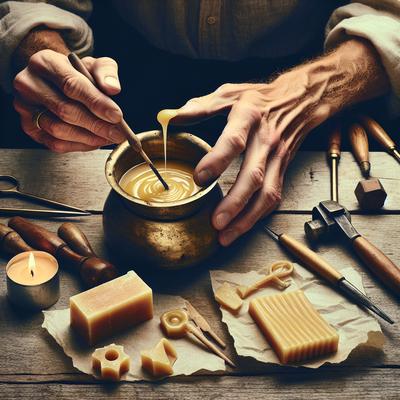

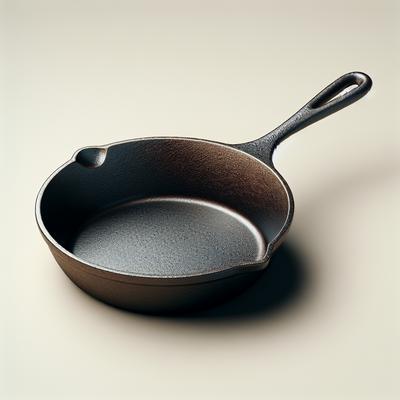
The French roots of the word 'skillet'

'Skillet' is a word borrowed from French 'esculette'. The word entered the English language some time around the 15th century.


skillet [noun] [15th century]
  • a small kettle or pot usually having three or four often long feet and used for cooking on the hearth
  • frying pan
See 'skillet' on the Loan Words Map

See more loan words from French.

Etymology: Middle English 'skelet' probably from Anglo-French '*escuelete' diminutive of 'escuelle, eskil' bowl
See more loan words from 1400s.


Italian 'banca' in the English language

'Bank' is a word borrowed from Italian 'banca'. The word entered the English language some time around the 15th century.


bank [noun] [15th century]
  • an establishment for the custody, loan, exchange, or issue of money, for the extension of credit, and for facilitating ...
  • the table, counter, or place of business of a money changer
  • a person conducting a gambling house or game
  • dealer
See 'bank' on the Loan Words Map

See more loan words from Italian.

note: Bank in the sense of a money table or financial institution originates from Italian banca.
Etymology: Middle English, from Middle French or Old Italian; Middle French 'banque' from Old Italian 'banca' literally, bench, of Germanic origin; akin to Old English 'benc'
See more loan words from 1400s.


The Persian roots of the word 'spinach'

'Spinach' is a word borrowed from Persian 'aspānāḵ'. The word entered the English language some time around the 15th century.


spinach [noun] [15th century]
  • an Asian herb (Spinacia oleracea) of the goosefoot family cultivated for its edible leaves which form in a dense basa...
  • its leaves
  • something unwanted, pretentious, or spurious
  • an untidy overgrowth
See 'spinach' on the Loan Words Map

See more loan words from Persian.

Etymology: Middle English 'spinache' from Anglo-French, alteration of Old French 'espinaces' from Medieval Latin 'spinachium' ultimately from Arabic 'isfānākh' from Persian
See more loan words from 1400s.


Is 'gallant' English, or is it actually French?

'Gallant' is a word borrowed from French 'galant'. The word entered the English language some time around the 15th century.


gallant [adjective] [15th century]
  • showy in dress or bearing
  • smart
  • splendid
  • spirited
  • nobly chivalrous and often self-sacrificing
See 'gallant' on the Loan Words Map

See more loan words from French.

Etymology: Middle English 'galaunt' from Middle French 'galant' from present participle of 'galer' to have a good time, from Old French, from 'gale' pleasure, of Germanic origin; akin to Old English 'wela' weal
See more loan words from 1400s.


Tuesday, 8 August 2023

The Scandinavian roots of the word 'walleyed'

'Walleyed' is a word borrowed from Scandinavian 'vagl-eygr'. The word entered the English language some time around the 15th century.


walleyed [adjective] [15th century]
  • having or affected with
  • marked by a wild irrational staring of the eyes
See 'walleyed' on the Loan Words Map

See more loan words from Scandinavian.

Etymology: By folk etymology from Middle English 'wawil-eghed' part translation of Old Norse 'vagl-eygr' walleyed, from 'vagl' beam (akin to Greek 'ochleus' bar, Old English 'wegan' to move, carry) + 'eygr' eyed
See more loan words from 1400s.


The word 'gnash' originally came from Scandinavian as 'gnastan'

'Gnash' is a word borrowed from Scandinavian 'gnastan'. The word entered the English language some time around the 15th century.


gnash [verb] [15th century]
To strike or grind (as the teeth) together
See 'gnash' on the Loan Words Map

See more loan words from Scandinavian.

note: Old Norse gnastan gnashing of teeth
Etymology: Alteration of Middle English 'gnasten'
See more loan words from 1400s.

Monday, 7 August 2023

The French roots of the word 'propitious'

'Propitious' is a word borrowed from French 'propicieus'. The word entered the English language some time around the 15th century.


propitious [adjective] [15th century]
  • favorably disposed
  • benevolent
  • being a good omen
  • auspicious
  • tending to favor
  • advantageous
See 'propitious' on the Loan Words Map

See more loan words from French.

Etymology: Middle English 'propycyous' from Anglo-French 'propicius' from Latin 'propitius' probably from 'pro-' for + 'petere' to seek
See more loan words from 1400s.


Is 'lanyard' English, or is it actually French?

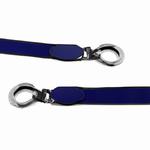
'Lanyard' is a word borrowed from French 'laniere'. The word entered the English language some time around the 15th century.


lanyard [noun] [15th century]
  • a piece of rope or line for fastening something in a ship
  • one of the pieces passing through deadeyes to extend shrouds or stays
  • a cord or strap to hold something (as a knife or a whistle) and usually worn around the neck
  • a cord worn as a symbol of a military citation
See 'lanyard' on the Loan Words Map

See more loan words from French.

Etymology: Middle English 'lanyer' thong, lanyard, from Anglo-French 'lanier'
See more loan words from 1400s.


When you hear 'crimson' are you hearing English or Arabic?

'Crimson' is a word borrowed from Arabic 'qirmiz'. The word entered the English language some time around the 15th century.


crimson [noun] [15th century]
Any of several deep purplish reds
See 'crimson' on the Loan Words Map

See more loan words from Arabic.

Etymology: Middle English 'crimisin' from Old Spanish 'cremesín' from Arabic 'qirmizī' from 'qirmiz' kermes
See more loan words from 1400s.


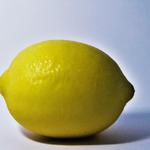
The Persian roots of the word 'lemon'

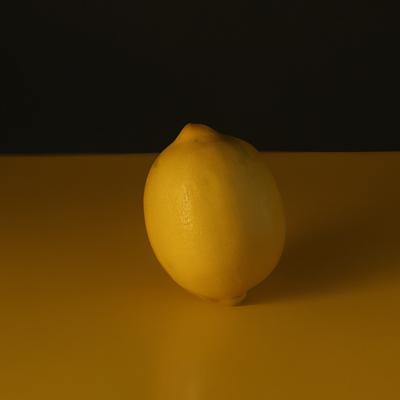
'Lemon' is a word borrowed from Persian 'līmun'. The word entered the English language some time around the 15th century.


lemon [noun] [15th century]
  • an acid fruit that is botanically a many-seeded pale yellow oblong berry produced by a small thorny citrus tree (Citru...
  • a tree that bears
  • one (as an automobile) that is unsatisfactory or defective
See 'lemon' on the Loan Words Map

See more loan words from Persian.

Etymology: Middle English 'lymon' from Middle French 'limon' from Medieval Latin 'limon-, limo' from Arabic 'laymūn, līmūn' from Persian 'līmū, līmun'
See more loan words from 1400s.


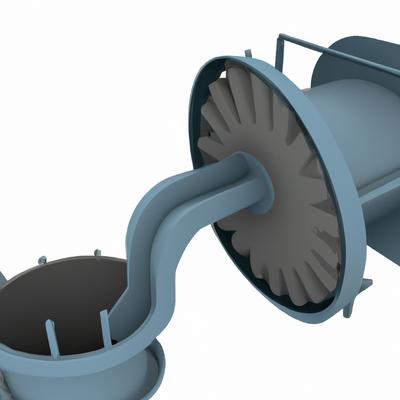
Did you know that 'sluice' is actually French?

'Sluice' is a word borrowed from French 'escluse'. The word entered the English language some time around the 15th century.


sluice [noun] [15th century]
  • an artificial passage for water (as in a millstream) fitted with a valve or gate for stopping or regulating flow
  • a body of water pent up behind a floodgate
  • a dock gate
  • floodgate
  • a stream flowing through a floodgate
See 'sluice' on the Loan Words Map

See more loan words from French.

Etymology: Middle English 'sluse' alteration of 'scluse' from Anglo-French 'escluse' from Late Latin 'exclusa' from Latin, feminine of 'exclusus' past participle of 'excludere' to exclude
See more loan words from 1400s.


The word 'leveret' is a loan word from French 'levre'

'Leveret' is a word borrowed from French 'levre'. The word entered the English language some time around the 15th century.


leveret [noun] [15th century]
A hare in its first year
See 'leveret' on the Loan Words Map

See more loan words from French.

Etymology: Middle English, from Anglo-French, hare skin, from 'levere' 'levre' hare, from Latin 'lepor-, lepus'
See more loan words from 1400s.