Showing posts with label Italian. Show all posts

Thursday, 29 October 2026

When you say 'gorgonzola' are you speaking Italian?

'Gorgonzola' is a word borrowed from Italian 'gorgonzola'. The word entered the English language some time around 1878.


gorgonzola [noun] [1878]
A pungent blue cheese of Italian origin
Meaning: Blue-veined Italian cheese with sharp flavor.

Etymology: Named for Gorgonzola in Italy where the cheese originated.

Origin: From Italian to English.

note: Meaning: Blue-veined Italian cheese with sharp flavor. Etymology: Named for Gorgonzola in Italy.
See 'gorgonzola' on the Loan Words Map

See more loan words from Italian.
See more loan words from 1800s.


Sunday, 25 October 2026

The Italian roots of the word 'staccato'

'Staccato' is a word borrowed from Italian 'staccato'. The word entered the English language some time around 1724.


staccato [adjective] [circa 1724]
  • cut short or apart in performing
  • disconnected
  • marked by short clear-cut playing or singing of tones or chords
  • abrupt

Meaning: cut short or apart in performing : disconnected staccato notes; marked by short clear-cut playing or singing of tones or chords a staccato style; abrupt disjointed staccato screams.

Etymology: Italian; from past participle of staccare to detach; from s- ex- (from Latin ex- ) + at taccare to attack; attach; perhaps from Old French estachier attach.

Topics: Arts:Music.

Origin: From Italian to English.
See 'staccato' on the Loan Words Map

See more loan words from Italian.
See more loan words from 1700s.


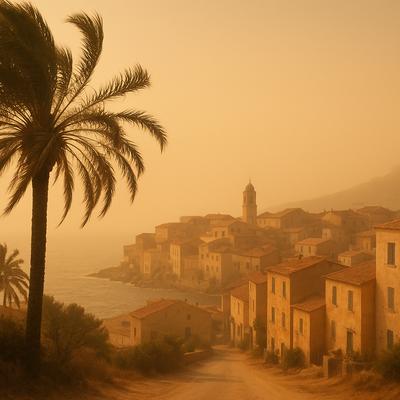
Do you speak a little Italian when you say 'sirocco'?

'Sirocco' is a word borrowed from Italian 'scirocco'. The word entered the English language some time around 1617.


sirocco [noun] [1617]
  • a hot dust-laden wind from the Libyan deserts that blows on the northern Mediterranean coast chiefly in Italy, Malta, a...
  • a warm moist oppressive southeast wind in the same regions
  • a hot or warm wind of cyclonic origin from an arid or heated region

Meaning: a hot dust-laden wind from the Libyan deserts that blows on the northern Mediterranean coast chiefly in Italy; Malta; and Sicily; a warm moist oppressive southeast wind in the same regions; a hot or warm wind of cyclonic origin from an arid or heated region.

Etymology: Italian scirocco; sirocco; alteration of Old Italian scilocco; from Arabic dialect (Maghreb) sloq southeast wind; alteration of Arabic shaluq; shuluq.

Topics: Weather.

Origin: From Arabic to English.

note: The word siricco refers to Sirocco a hot dry dusty wind that blows from North Africa across the Mediterranean Sea. Its etymology traces back to the Italian word scirocco which itself derives from the Arabic word šarq meaning east. Therefore the name ultimately refers to the wind blowing from the east.
See 'sirocco' on the Loan Words Map

See more loan words from Italian.
See more loan words from 1600s.


Saturday, 24 October 2026

The French roots of the word 'cantaloupe'

'Cantaloupe' is a word borrowed from French 'cantaloup'. The word entered the English language some time around 1739.


cantaloupe [noun] [1739]
  • a small widely cultivated muskmelon (Cucumis melo reticulatus) with a heavily netted rind and reddish-orange flesh
  • muskmelon
  • a muskmelon (Cucumis melo cantalupensis) with a rough hard warty rind that is not usually grown in North America

Meaning: a small widely cultivated muskmelon ( Cucumis melo reticulatus ) with a heavily netted rind and reddish-orange flesh; muskmelon a; a muskmelon ( Cucumis melo cantalupensis ) with a rough hard warty rind that is not usually grown in North America.

Etymology: Cantalupo; former papal villa near Rome; Italy.

Topics: Plants:Fruits, Food:Sweets, Geography:Regions.

Origin: From Italian to French to English.

note: A sweet orange fleshed muskmelon named after Cantalupo near Rome borrowed via French cantaloup from Italian place name.
See 'cantaloupe' on the Loan Words Map

See more loan words from French.
See more loan words from 1700s.


Monday, 19 October 2026

When you say 'credenza' are you speaking Italian?

'Credenza' is a word borrowed from Italian 'credenza'. The word entered the English language some time around 1880.


credenza [noun] [1880]
  • credence
  • a sideboard, buffet, or bookcase patterned after a Renaissance
  • one without legs

Meaning: credence 3; a sideboard; buffet; or bookcase patterned after a Renaissance credence; one without legs.

Etymology: Italian; literally; belief; confidence; from Medieval Latin credentia.

Topics: Household:Furniture.

Origin: From Italian to Latin to English.

note: From the Italian credenza meaning belief trust or confidence which derives from the Medieval Latin credentia and Latin credere (to believe). It refers to the 16th-century Italian practice of placing food on a sideboard to be tasted by servants for poison before serving it to nobles symbolizing trust in the food's safety.
See 'credenza' on the Loan Words Map

See more loan words from Italian.
See more loan words from 1800s.

The German roots of the word 'marzipan'

'Marzipan' is a word borrowed from German 'Marzipan'. The word entered the English language some time around 1542.


marzipan [noun] [1542]
A confection of crushed almonds or almond paste, sugar, and egg whites that is often shaped into various forms
Meaning: a confection of crushed almonds or almond paste; sugar; and egg whites that is often shaped into various forms.

Etymology: German; from Italian marzapane.

Topics: Food:Sweets.

Origin: From Italian to German to English.

note: A sweet paste of almonds sugar and egg whites used for candies and cakes. Borrowed into English from German Marzipan ultimately from Italian marzapane. Other theories mention a Venetian coin name or an Arabic source.
See 'marzipan' on the Loan Words Map

See more loan words from German.
See more loan words from 1500s.


When you hear 'balcony' are you hearing English or Italian?

'Balcony' is a word borrowed from Italian 'balcone'. The word entered the English language some time around 1618.


balcony [noun] [1618]
  • a platform that projects from the wall of a building and is enclosed by a parapet or railing
  • an interior projecting gallery in a public building (as a theater)

Meaning: projecting platform on a building.

Etymology: Borrowed from Italian balcone likely Germanic origin.

Topics: Architecture:Elements.

Origin: From Italian to English.

note: Meaning: projecting platform on a building. Etymology: Borrowed from Italian balcone likely Germanic origin.
See 'balcony' on the Loan Words Map

See more loan words from Italian.
See more loan words from 1600s.


The word 'bagatelle' is a loan word from Italian 'bagatella'

'Bagatelle' is a word borrowed from Italian 'bagatella'. The word entered the English language some time around 1633.


bagatelle [noun] [1633]
  • trifle
  • any of various games involving the rolling of balls into scoring areas
  • a short literary or musical piece in light style

Meaning: trifle 1; any of various games involving the rolling of balls into scoring areas; a short literary or musical piece in light style.

Etymology: French; from Italian bagattella.

Topics: Society:Culture.

Origin: From Latin to English.

note: Likely a diminutive of the Italian bagata (little property) or perhaps from the Latin baca meaning berry used to represent something small and insignificant.
See 'bagatelle' on the Loan Words Map

See more loan words from Italian.
See more loan words from 1600s.


Is 'disaster' English, or is it actually Italian?

'Disaster' is a word borrowed from Italian 'disastro'. The word entered the English language some time around 1568.


disaster [noun] [1568]
  • an unfavorable aspect of a planet or star
  • a sudden calamitous event bringing great damage, loss, or destruction
  • a sudden or great misfortune or failure

Meaning: an unfavorable aspect of a planet or star; a sudden calamitous event bringing great damage; loss; or destruction; a sudden or great misfortune or failure the party was a disaster.

Etymology: Middle French & Old Italian; Middle French desastre; from Old Italian disastro; from dis- (from Latin) + astro star; from Latin astrum astral.

Topics: Society:Culture.

Origin: From Italian to English.
See 'disaster' on the Loan Words Map

See more loan words from Italian.
See more loan words from 1500s.


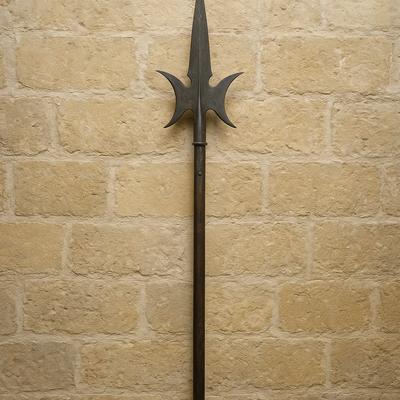
Do you speak a little Italian when you say 'partisan'?

'Partisan' is a word borrowed from Italian 'partigiano'. The word entered the English language some time around 1555.


partisan [noun] [1555]
  • a firm adherent to a , faction, cause, or person
  • one exhibiting blind, prejudiced, and unreasoning allegiance
  • a member of a body of detached light troops making forays and harassing an enemy
  • a member of a guerrilla band operating within enemy lines

Meaning: a firm adherent to a party ; faction; cause; or person; one exhibiting blind; prejudiced; and unreasoning allegiance; a member of a body of detached light troops making forays and harassing an enemy.

Etymology: Middle French partisan; from north Italian dialect partizan; from part part; party; from Latin part-; pars part.

Topics: Military:Warfare.

Origin: From Italian to English.
See 'partisan' on the Loan Words Map

See more loan words from Italian.
See more loan words from 1500s.


Did you know that 'mafia' is actually Italian?

'Mafia' is a word borrowed from Italian 'mafiusu'. The word entered the English language some time around 1875.


mafia [noun] [1875]
  • a secret criminal society of Sicily or Italy
  • a similarly conceived criminal organization in the United States
  • a similar organization elsewhere
  • a criminal organization associated with a particular traffic

Meaning: a secret criminal society of Sicily or Italy; a similarly conceived criminal organization in the United States; a similar organization elsewhere the Japanese Mafia.

Etymology: Mafia; Maffia; a Sicilian secret criminal society; from Italian dialect (Sicily); probably from mafiusu.

Topics: Law:Crime.

Origin: From Italian to English.
See 'mafia' on the Loan Words Map

See more loan words from Italian.
See more loan words from 1800s.


When you hear 'bulletin' are you hearing English or Italian?

'Bulletin' is a word borrowed from Italian 'bullettino'. The word entered the English language some time around 1765.


bulletin [noun] [1765]
  • a brief public notice issuing usually from an authoritative source
  • a brief news item intended for immediate publication or broadcast
  • periodical
  • the organ of an institution or association

Meaning: a brief public notice issuing usually from an authoritative source; a brief news item intended for immediate publication or broadcast; periodical.

Etymology: French; from Middle French; from bullette seal; notice; diminutive of bulle seal; from Medieval Latin bulla.

Topics: Society:Culture.

Origin: From French to Italian to English.

note: From French from Italian bullettino diminutive of bulletta ‘passport’ diminutive of bulla ‘seal or bull’.
See 'bulletin' on the Loan Words Map

See more loan words from Italian.
See more loan words from 1700s.


Saturday, 21 March 2026

The Italian origins of the word 'quarantine'

'Quarantine' is a word borrowed from Italian 'quaranta giorni'. The word entered the English language some time around 1609.


quarantine [noun] [1609]
  • a period of 40 days
  • a term during which a ship arriving in port and suspected of carrying contagious disease is held in isolation from the ...
  • a regulation placing a ship in quarantine
  • a place where a ship is detained during quarantine
See 'quarantine' on the Loan Words Map

See more loan words from Italian.

note: From the 14th-century Italian phrase quaranta giorni meaning 40 days. It stems from the Venetian practice of forcing ships to anchor for 40 days to prevent the spread of the plague. 14th Century Origin: The term arose during the Black Death in Europe when Mediterranean ports required ships to isolate. Venetian Practice: The Republic of Ragusa (modern-day Dubrovnik) first implemented a 30-day isolation period (trentino) in 1377 which was later extended to 40 days (quarantino or quarantena). Why 40 Days? The 40-day period may have been chosen for its biblical significance (e.g. Jesus in the desert Lent) or simply deemed sufficient to ensure a ship was safe.
Etymology: Partly modification of French 'quarantaine' from Old French, from 'quarante' forty, from Latin 'quadraginta' from 'quadra-' (akin to 'quattuor' four) + '-ginta' (akin to vi'ginti' twenty); partly modification of Italian 'quarantena' quarantine of a ship, from 'quaranta' forty, from Latin 'quadraginta'
See more loan words from 1600s.


Saturday, 7 March 2026

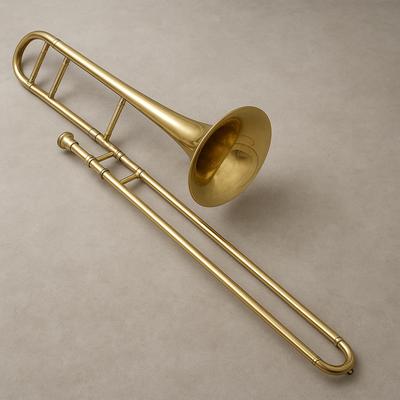
Did you know that 'trombone' is actually Italian?

'Trombone' is a word borrowed from Italian 'tromba'. The word entered the English language some time around 1724.


trombone [noun] [circa 1724]
A brass instrument consisting of a long cylindrical metal tube with two turns and having a movable slide or valves for ...
See 'trombone' on the Loan Words Map

See more loan words from Italian.

Etymology: Italian, augmentative of 'tromba' trumpet, of Germanic origin; akin to Old High German 'trumba, trumpa' trumpet
See more loan words from 1700s.


Do you speak a little Italian when you say 'tarantula'?

'Tarantula' is a word borrowed from Italian 'tarantula'. The word entered the English language some time around 1561.


tarantula [noun] [1561]
  • a European wolf spider (Lycosa tarentula) popularly held to be the cause of
  • any of a family (Theraphosidae) of large hairy American spiders that are typically rather sluggish and capable of bitin...
See 'tarantula' on the Loan Words Map

See more loan words from Italian.

Etymology: Medieval Latin, from Old Italian 'tarantola' from 'Taranto'
See more loan words from 1500s.


Wednesday, 4 March 2026

Did you know that 'macaronic' is actually Italian?

'Macaronic' is a word borrowed from Italian 'macaroni.'. The word entered the English language some time around 1638.


macaronic [adjective] [1638]
  • characterized by a mixture of vernacular words with Latin words or with non-Latin words having Latin endings
  • characterized by a mixture of two languages
See 'macaronic' on the Loan Words Map

See more loan words from Italian.

Etymology: New Latin 'macaronicus' from Italian dialect 'maccarone' macaroni
See more loan words from 1600s.


Do you speak a little Italian when you say 'parasol'?

'Parasol' is a word borrowed from Italian 'parasole'. The word entered the English language some time around 1660.


parasol [noun] [1660]
A lightweight umbrella used as a sunshade
See 'parasol' on the Loan Words Map

See more loan words from Italian.

Etymology: French, from Old Italian 'parasole' from 'parare' to shield + 'sole' sun, from Latin 'sol'
See more loan words from 1600s.


Monday, 2 March 2026

Italian 'con sordini' in the English language

'Con sordini' is a word borrowed from Italian 'con sordini'.


con sordini
(details not available)
See 'con sordini' on the Loan Words Map

See more loan words from Italian.

note: Con sordini comes from Italian meaning with mutes combining con (with) and sordini (plural of sordino meaning mute/damper) ultimately from Latin surdus (deaf). It's a musical direction telling players to use mutes on brass/strings or (on piano) to release the damper pedal for a muffled softer sound with senza sordini meaning without mutes.
Etymology: -
See more loan words from (unknown date).

Sunday, 1 March 2026

Do you speak a little Italian when you say 'ballerina'?

'Ballerina' is a word borrowed from Italian 'ballerina'. The word entered the English language some time around 1815.


ballerina [noun] [1815]
A woman who is a dancer - danseuse
See 'ballerina' on the Loan Words Map

See more loan words from Italian.

Etymology: Italian, from 'ballare' to dance, from Late Latin
See more loan words from 1800s.


Tuesday, 24 February 2026

Is 'tramontane' English, or is it actually Italian?

'Tramontane' is a word borrowed from Italian 'tramontana'. The word entered the English language some time around 1596.


tramontane [adjective] [1596]
  • transalpine
  • lying on or coming from the other side of a mountain range
See 'tramontane' on the Loan Words Map

See more loan words from Italian.

Etymology: Italian 'tramontano' from Latin 'transmontanus' from 'trans-' + 'mont-, mons' mountain
See more loan words from 1500s.