Showing posts with label 1200s. Show all posts

Thursday, 29 October 2026

When you hear 'push' are you hearing English or Old French?

'Push' is a word borrowed from Old French 'pousser'. The word entered the English language some time around the 13th century.


push [verb] [13th century]
  • to press against with force in order to drive or impel
  • to move or endeavor to move away or ahead by steady pressure without striking
  • to thrust forward, downward, or outward
  • to cause to increase
  • raise

Meaning: Move something away by applying force.

Etymology: Probably from Old French pousser; ultimately from Latin pulsare.

Origin: From Old French to English.

note: Meaning: Move something away by applying force. Etymology: Probably from Old French pousser; ultimately from Latin pulsare.
See 'push' on the Loan Words Map

See more loan words from Old French.
See more loan words from 1200s.


Monday, 19 October 2026

When you hear 'lantern' are you hearing English or Latin?

'Lantern' is a word borrowed from Latin 'lanterna'. The word entered the English language some time around the 13th century.


lantern [noun] [13th century]
  • a usually portable protective case for a light with transparent openings
  • lighthouse
  • the chamber in a lighthouse containing the light
  • a structure with glazed or open sides above an opening in a roof for light or ventilation

Meaning: a usually portable protective case for a light with transparent openings compare chinese lantern; lighthouse; the chamber in a lighthouse containing the light.

Etymology: Middle English lanterne; from Anglo-French; from Latin lanterna; from Greek lampter; from lampein to shine lamp.

Topics: Household:Objects.

Origin: From Latin to English.

note: An alternate historical spelling was 'lanthorn' possibly derived from the ancient use of animal horn to cover window apertures but allow in light.
See 'lantern' on the Loan Words Map

See more loan words from Latin.
See more loan words from 1200s.


When you hear 'closed' are you hearing English or Latin?

'Closed' is a word borrowed from Latin 'claudare'. The word entered the English language some time around the 13th century.


closed [adjective] [13th century]
  • not open
  • enclosed
  • composed entirely of closed tubes or vessels
  • forming a self-contained unit allowing no additions

Meaning: to move so as to bar passage through something close the gate; to block against entry or passage close a street; to deny access to the city closed the beach.

Etymology: Middle English; from Anglo-French clos-; stem of clore; from Latin claudere to shut; close; perhaps akin to Greek kleiein to close clavicle.

Topics: Society:Culture.

Origin: From French to Latin to English.

note: Middle English: from Old French clos- stem of clore from Latin claudere ‘to shut’.
See 'closed' on the Loan Words Map

See more loan words from Latin.
See more loan words from 1200s.


The Scandinavian origins of the word 'crooked'

'Crooked' is a word borrowed from Scandinavian 'krāka'. The word entered the English language some time around the 13th century.


crooked [adjective] [13th century]
  • not straight
  • dishonest

Meaning: Bent or curved; figuratively dishonest.

Etymology: From crook plus -ed; crook is related to Old Norse krok hook.

Topics: Society:Culture.

Origin: From Norse to English.

note: The word crooked comes from Middle English croked the past participle of the verb croken (to bend) ultimately stemming from Old Norse krāka (hook) or Proto-Germanic krokaz meaning a bend or hook. Evolved from an even older Proto-Indo-European root for bending. It literally meant bent or curved with figurative senses of dishonesty or bad temper developing by the 13th century.
See 'crooked' on the Loan Words Map

See more loan words from Scandinavian.
See more loan words from 1200s.


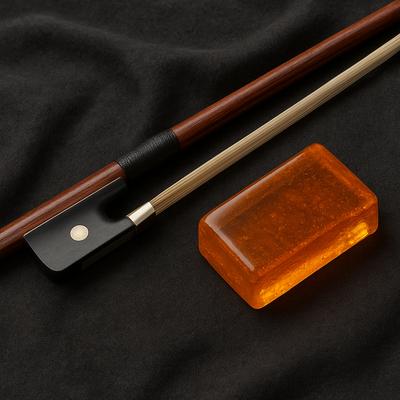
The French roots of the word 'rosin'

'Rosin' is a word borrowed from French 'rosine'. The word entered the English language some time around the 13th century.


rosin [noun] [13th century]
A translucent amber-colored to almost black brittle friable resin that is obtained from the oleoresin or deadwood of pi...
Meaning: a translucent amber-colored to almost black brittle friable resin that is obtained from the oleoresin or deadwood of pine trees or from tall oil and used especially in making varnish.

Etymology: Middle English; from Anglo-French reisine; rosine resin.

Topics: Materials:Wood, Arts:Music.

Origin: From Latin to French to English.

note: Meaning: brittle resin from pine used on instrument bows varnish and solder flux. Etymology: Middle English via Anglo French reisine or rosine ultimately from Latin resina. Note: in French colophane is rosin while resine is general resin.
See 'rosin' on the Loan Words Map

See more loan words from French.
See more loan words from 1200s.


Friday, 6 March 2026

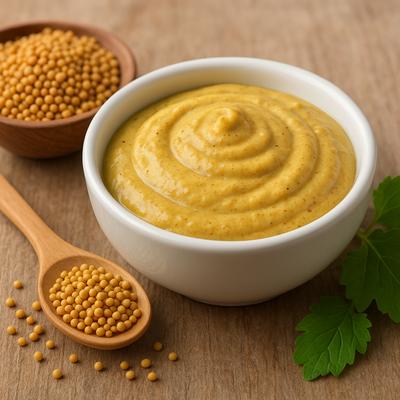
Did you know that 'mustard' is actually French?

'Mustard' is a word borrowed from French 'moustarde'. The word entered the English language some time around the 13th century.


mustard [noun] [13th century]
  • a pungent yellow powder of the seeds of any of several common Brassica hirta, B. nigra, ( or ) used as a condiment or i...
  • zest
  • any of several herbs (genus Brassica of the family Cruciferae syn. Brassicaceae, the mustard family) with lobed leaves,...
  • a dark to moderate yellow
See 'mustard' on the Loan Words Map

See more loan words from French.

note: The word mustard originates from the Latin term *mustum ardens* translating to burning must. This refers to the Roman practice of mixing ground mustard seeds with must (unfermented fresh grape juice) to create a pungent paste. The term passed through Old French (moustarde) before entering Middle English in the 13th century.
Etymology: Middle English, from Anglo-French 'mustarde' from 'must' must, from Latin 'mustum'
See more loan words from 1200s.

Monday, 2 March 2026

Is 'buoy' English, or is it actually Spanish?

'Buoy' is a word borrowed from Spanish 'boya'. The word entered the English language some time around the 13th century.


buoy [noun] [13th century]
  • float
  • a floating object moored to the bottom to mark a channel or something (as a shoal) lying under the water
  • life buoy
See 'buoy' on the Loan Words Map

See more loan words from Spanish.

note: Middle English: probably from Middle Dutch boye/boeie from a Germanic base meaning ‘signal’. The verb is from Spanish boyar ‘to float’ from boya ‘buoy’. Consider also buoyant.
Etymology: Middle English 'boye' probably from Middle Dutch 'boeye;' akin to Old High German 'bouhhan' sign
See more loan words from 1200s.

Saturday, 28 February 2026

The word 'galley' originally came from Greek as 'galaia'

'Galley' is a word borrowed from Greek 'galaia'. The word entered the English language some time around the 13th century.


galley [noun] [13th century]
  • a ship or boat propelled solely or chiefly by oars
  • as
  • a long low ship used for war and trading especially in the Mediterranean Sea from the Middle Ages to the 19th century
  • galleass
  • a warship of classical antiquity
See 'galley' on the Loan Words Map

See more loan words from Greek.

Etymology: Middle English 'galeie' from Anglo-French 'galie, galee' ultimately from Middle Greek 'galea'
See more loan words from 1200s.

Tuesday, 24 February 2026

The word 'topaz' is a loan word from Greek 'topazos'

'Topaz' is a word borrowed from Greek 'topazos'. The word entered the English language some time around the 13th century.


topaz [noun] [13th century]
  • a mineral that is essentially a silicate of aluminum and usually occurs in orthorhombic translucent or transparent crys...
  • a usually yellow to brownish-yellow transparent mineral topaz used as a gem
  • a yellow sapphire
  • a yellow quartz
See 'topaz' on the Loan Words Map

See more loan words from Greek.

Etymology: Middle English 'topace' from Anglo-French, from Latin 'topazus' from Greek 'topazos'
See more loan words from 1200s.


Friday, 3 January 2025

Do you speak a little French when you say 'ribald'?

'Ribald' is a word borrowed from French 'ribauld'. The word entered the English language some time around the 13th century.


ribald [noun] [13th century]
A ribald person
See 'ribald' on the Loan Words Map

See more loan words from French.

Etymology: Middle English 'ribaud' person of low status, scoundrel, lecher, from Anglo-French, from Old French 'riber' to be debauched, of Germanic origin; akin to Old High German 'rīban' to be in heat, copulate, literally, to rub
See more loan words from 1200s.


Tuesday, 8 August 2023

How the French language influenced English with the word 'vinegar'

'Vinegar' is a word borrowed from French 'vyn egre'. The word entered the English language some time around the 13th century.


vinegar [noun] [13th century]
  • a sour liquid obtained by fermentation of dilute alcoholic liquids and used as a condiment or preservative
  • ill humor
  • sourness
  • vim
See 'vinegar' on the Loan Words Map

See more loan words from French.

Etymology: Middle English 'vinegre' from Anglo-French 'vin egre' from 'vin' wine (from Latin 'vinum') + 'egre' keen, sour
See more loan words from 1200s.


The French origins of the word 'squire'

'Squire' is a word borrowed from French 'esquier'. The word entered the English language some time around the 13th century.


squire [noun] [13th century]
  • a shield bearer or armor bearer of a knight
  • a male attendant especially on a great personage
  • a man who devotedly attends a lady
  • gallant
  • a member of the British gentry ranking below a knight and above a gentleman
See 'squire' on the Loan Words Map

See more loan words from French.

Etymology: Middle English 'squier' from Anglo-French 'esquier'
See more loan words from 1200s.


When you say 'asperity' are you speaking French?

'Asperity' is a word borrowed from French 'asperite'. The word entered the English language some time around the 13th century.


asperity [noun] [13th century]
  • rigor
  • roughness of surface
  • unevenness
  • a tiny projection from a surface
  • roughness of sound
See 'asperity' on the Loan Words Map

See more loan words from French.

Etymology: Middle English 'asprete' from Anglo-French 'aspreté' from 'aspre' rough, from Latin 'asper' from Old Latin '*absperos' from 'ab-' ab- + '-speros;' akin to Sanskrit 'apasphura' repelling, Latin 'spernere' to spurn
See more loan words from 1200s.


Is 'poke' English, or is it actually French?

'Poke' is a word borrowed from French 'pocket'. The word entered the English language some time around the 13th century.


poke [noun] [13th century]
  • bag
  • wallet
  • purse
See 'poke' on the Loan Words Map

See more loan words from French.

Etymology: Middle English, from Anglo-French
See more loan words from 1200s.

Monday, 7 August 2023

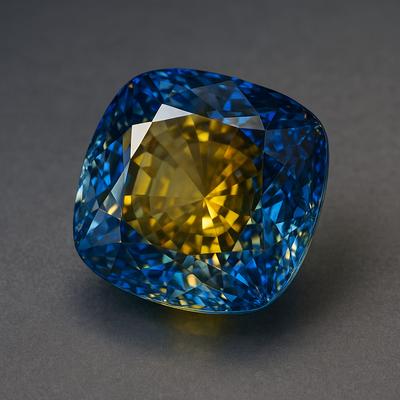
Did you know that 'gravel' is actually French?

'Gravel' is a word borrowed from French 'grave'. The word entered the English language some time around the 13th century.


gravel [noun] [13th century]
  • sand
  • loose rounded fragments of rock
  • a stratum or deposit of gravel
  • a surface covered with gravel
See 'gravel' on the Loan Words Map

See more loan words from French.

Etymology: Middle English, from Anglo-French 'gravele' diminutive of 'grave, greve' river bank, stony ground
See more loan words from 1200s.

Did you know that 'brae' is actually Scandinavian?

'Brae' is a word borrowed from Scandinavian 'brá'. The word entered the English language some time around the 13th century.


brae [noun] [13th century]
A hillside especially along a river
See 'brae' on the Loan Words Map

See more loan words from Scandinavian.

note: Consider Brae in Scotland and also Bray of Ireland and Brí an old Irish word meaning 'hill'.
Etymology: Middle English 'bra' from Old Norse 'brā' eyelid; akin to Old English 'brǣw' eyebrow, and probably to Old English 'bregdan' to move quickly
See more loan words from 1200s.


Saturday, 19 November 2022

Do you speak a little French when you say 'blame'?

'Blame' is a word borrowed from French 'blamer'. The word entered the English language some time around the 13th century.


blame [verb] [13th century]
  • to find fault with
  • censure
  • to hold responsible
  • to place responsibility for
See 'blame' on the Loan Words Map

See more loan words from French.

Etymology: Middle English, from Anglo-French 'blamer, blasmer' from Late Latin 'blasphemare' to blaspheme, from Greek 'blasphēmein'
See more loan words from 1200s.


Sunday, 13 November 2022

Did you know that 'saffron' is actually Arabic?

'Saffron' is a word borrowed from Arabic 'za‘farān'. The word entered the English language some time around the 13th century.


saffron [noun] [13th century]
  • the deep orange aromatic pungent dried stigmas of a purple-flowered crocus (Crocus sativus) used to color and flavor ...
  • the crocus supplying saffron
  • a moderate orange to orange yellow
See 'saffron' on the Loan Words Map

See more loan words from Arabic.

Etymology: Middle English, from Anglo-French 'saffron, safren' from Medieval Latin 'safranum' from Arabic 'zaʽfarān'
See more loan words from 1200s.
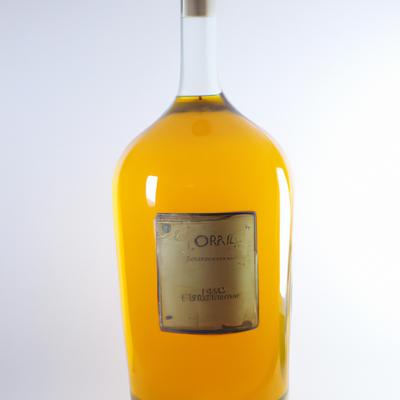

The Scandinavian roots of the word 'husband'

'Husband' is a word borrowed from Scandinavian 'husbandi'. The word entered the English language some time around the 13th century.


husband [noun] [13th century]
  • a male partner in a marriage
  • manager
  • a frugal manager
See 'husband' on the Loan Words Map

See more loan words from Scandinavian.

Etymology: Middle English 'husbonde' from Old English 'hūsbonda' master of a house, from Old Norse 'hūsbōndi' from 'hūs' house + 'bōndi' householder; akin to Old Norse 'būa' to inhabit; akin to Old English 'būan' to dwell
See more loan words from 1200s.

Friday, 11 November 2022

Is 'same' English, or is it actually Sanskrit?

'Same' is a word borrowed from Sanskrit 'sama'. The word entered the English language some time around the 13th century.


same [adjective] [13th century]
  • resembling in every relevant respect
  • conforming in every respect
  • used with 'as'
  • being one without addition, change, or discontinuance
  • identical
  • being the one under discussion or already referred to
See 'same' on the Loan Words Map

See more loan words from Sanskrit.

Etymology: Middle English, from Old Norse 'samr;' akin to Old High German 'sama' same, Latin 'simulis' like, 'simul' together, at the same time, 'similis' like, 'sem-' one, Greek 'homos' same, 'hama' together, 'hen-, heis' one
See more loan words from 1200s.