Showing posts with label (unknown date). Show all posts

Thursday, 29 October 2026

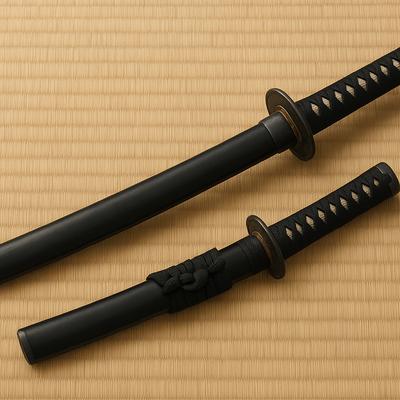
Do you speak a little Japanese when you say 'wakizashi'?

'Wakizashi' is a word borrowed from Japanese 'wakizashi'.

wakizashi
(details not available)
Meaning: Short Japanese sword traditionally worn by samurai.

Etymology: From Japanese wakizashi; its internal word analysis is debated.

Topics: Sports:MartialArts.

Origin: From Japanese to English.

note: One of the traditionally made Japanese swords worn by the samurai in feudal Japan. Its name refers to the practice of wearing it inserted through one's obi or sash.
See 'wakizashi' on the Loan Words Map
See more loan words from Japanese.
See more loan words from (unknown date).

Monday, 19 October 2026

When you hear 'katana' are you hearing English or Japanese?

'Katana' is a word borrowed from Japanese 'katana'.


katana
(details not available)
Meaning: Traditionally single-edged Japanese sword.

Etymology: From Japanese katana sword; deeper word history is uncertain.

Topics: Military:Weapons.

Origin: From Japanese to English.

note: A slightly curved single-edged sword historically worn by the Japanese samurai.
See 'katana' on the Loan Words Map

See more loan words from Japanese.
See more loan words from (unknown date).

Is 'golilla' English, or is it actually Spanish?

'Golilla' is a word borrowed from Spanish 'golilla'.


golilla
(details not available)
Meaning: Stiff starched collar formerly worn by Spanish officials.

Etymology: Spanish golilla is a diminutive of gola throat.

Topics: Society:Culture.

Origin: From Spanish to English.

note: A starched white collar worn by some Spanish magistrates. Diminutive of gola which means throat.
See 'golilla' on the Loan Words Map

See more loan words from Spanish.
See more loan words from (unknown date).

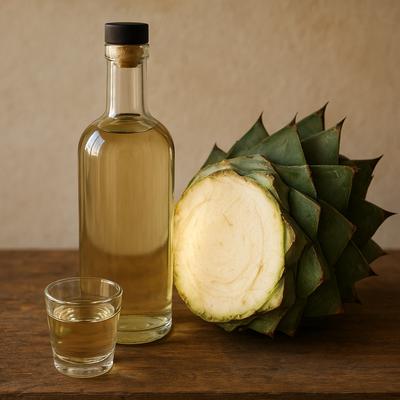
Do you speak a little Amerindian (Central America) when you say 'mezcal'?

'Mezcal' is a word borrowed from Amerindian (Central America) 'mexcalli'.


mezcal
(details not available)
Meaning: Mexican spirit distilled from cooked agave hearts.

Etymology: From Nahuatl mexcalli cooked agave through Spanish mezcal.

Topics: Food:Beverages.

Origin: From Nahuatl to Spanish to English.

note: A Mexican spirit distilled from cooked agave hearts from Nahuatl mexcalli via Spanish tequila is a type of mezcal.
See 'mezcal' on the Loan Words Map

See more loan words from Amerindian (Central America).
See more loan words from (unknown date).

Is 'punctum' English, or is it actually Latin?

'Punctum' is a word borrowed from Latin 'punctum'.


punctum
(details not available)
Meaning: Photographic detail that poignantly affects an individual viewer.

Etymology: Latin punctum means point or prick; Barthes used it metaphorically.

Topics: Arts:Visual.

Origin: From Latin to English.

note: Punctum (Latin for point or prick) primarily refers to a poignant personal detail in a photograph that pierces the viewer emotionally creating a unique connection beyond the image's general meaning (studium). It's an accidental subjective element — like a fleeting expression or a specific object — that resonates with an individual's feelings often disrupting the photo's intended message and making it linger in memory. The term also refers to tiny openings in eyelids (lacrimal puncta) for tear drainage a genus of small snails (Punctidae) and other specific scientific/historical uses.
See 'punctum' on the Loan Words Map

See more loan words from Latin.
See more loan words from (unknown date).

The word 'lumpenproletariat' is a loan word from German 'Lumpenproletariat'

'Lumpenproletariat' is a word borrowed from German 'Lumpenproletariat'.


lumpenproletariat
(details not available)
Meaning: Marginalized underclass in Marxist terminology.

Etymology: From German Lumpenproletariat; Lumpen means rags.

Topics: Society:Culture.

Origin: From German to English.

note: Meaning: The marginalized underclass below the organized proletariat. Etymology: Borrowed from German Lumpenproletariat.
See 'lumpenproletariat' on the Loan Words Map

See more loan words from German.
See more loan words from (unknown date).

The Japanese origins of the word 'poka-yoke'

'Poka-yoke' is a word borrowed from Japanese 'poka-yoke'.


poka-yoke
(details not available)
Meaning: Design or process that prevents mistakes.

Etymology: Japanese poka-yoke combines poka inadvertent error and yokeru avoid.

Topics: Technology:Automation.

Origin: From Japanese to English.

note: A Japanese term that means mistake-proofing or error prevention. It is also sometimes referred to as a forcing function or a behavior-shaping constraint. A poka-yoke is any mechanism in a process that helps an equipment operator avoid (yokeru) mistakes (poka) and defects by preventing correcting or drawing attention to human errors as they occur. The concept was formalized and the term adopted by Shigeo Shingo as part of the Toyota Production System.
See 'poka-yoke' on the Loan Words Map

See more loan words from Japanese.
See more loan words from (unknown date).

Do you speak a little French when you say 'grimoire'?

'Grimoire' is a word borrowed from French 'grammaire'.


grimoire
(details not available)
Meaning: Book of magic spells or spirit-summoning instructions.

Etymology: French grimoire developed from Old French gramaire learned book.

Topics: Religion:Magic.

Origin: From French to English.

note: A magicians manual for invoking demons and the spirits of the dead. French from Old French alteration of gramaire = grammar grammar - book learned work - book of witchcraft.
See 'grimoire' on the Loan Words Map

See more loan words from French.
See more loan words from (unknown date).

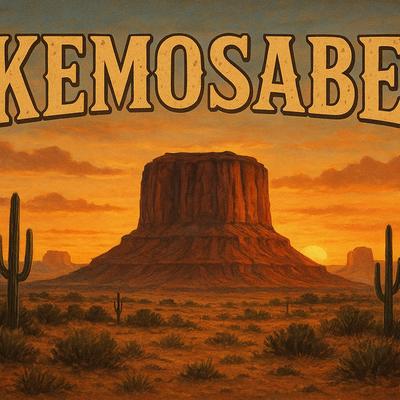
The word 'kemosabe' originally came from Amerindian as 'gimoozaabi'

'Kemosabe' is a word borrowed from Amerindian 'gimoozaabi'.


kemosabe
(details not available)
Meaning: Popularized name for a trusted companion or scout.

Etymology: Popularized by radio; modeled on Ojibwe giimoozaabi; gloss is disputed.

Topics: Linguistics.

Origins: From Ojibwe to English. Alternatively: From Potawatomi to English.

note: Derived from 'gimoozaabi' an Ojibwe and Potawatomi word that may mean 'he/she looks out in secret'. It has been occasionally translated as trusty scout or faithful friend.
See 'kemosabe' on the Loan Words Map

See more loan words from Amerindian.
See more loan words from (unknown date).

Sunday, 18 October 2026

The German origins of the word 'Schrecklichkeit'

'Schrecklichkeit' is a word borrowed from German 'Schrecklichkeit'.


Schrecklichkeit
(details not available)
Meaning: policy of terrorizing an enemy.

Etymology: Borrowed from German Schrecklichkeit frightfulness.

Topics: Linguistics, Military:Warfare.

Origin: From German to English.

note: Meaning: Policy of terrorizing an enemy. Etymology: Borrowed from German Schrecklichkeit frightfulness. Path: German > English.
See 'Schrecklichkeit' on the Loan Words Map

See more loan words from German.
See more loan words from (unknown date).
Saturday, 21 March 2026

Is 'pelmeni' English, or is it actually Russian?

'Pelmeni' is a word borrowed from Russian 'pelmen'.


pelmeni
(details not available)
See 'pelmeni' on the Loan Words Map

See more loan words from Russian.

note: Russian meat dumplings that are often served in broth. Pelmeni became a staple of Russian cuisine during the period of Russian expansion into the Ural Mountains and Siberia. Pelmeni also have deep roots in the traditions and folklore of the Komi and Udmurtia regions of Russia and figure prominently in Komi and Udmurt cuisine.
Etymology: -
See more loan words from (unknown date).

Saturday, 7 March 2026

Do you speak a little Afrikaans when you say 'reebok'?

'Reebok' is a word borrowed from Afrikaans 'rhebok'.


reebok
(details not available)
See 'reebok' on the Loan Words Map

See more loan words from Afrikaans.

note: Afrikaans for the grey rhebok a type of African antelope.
Etymology: -
See more loan words from (unknown date).

Is 'oniric' English, or is it actually Greek?

'Oniric' is a word borrowed from Greek 'oneiros'.


oniric
(details not available)
See 'oniric' on the Loan Words Map

See more loan words from Greek.

note: The term oniric derives from the Greek word oneiros (dreams or the god of dreams) combined with the suffix -ic. It was borrowed into English perhaps from the French onirique in 1859 to describe something that is dream-like or related to dreams.
Etymology: -
See more loan words from (unknown date).

Wednesday, 4 March 2026

Is 'dreggs' English, or is it actually Swedish?

'Dreggs' is a word borrowed from Swedish 'drägg'.


dreggs
(details not available)
See 'dreggs' on the Loan Words Map

See more loan words from Swedish.

note: Middle English: probably of Scandinavian origin and related to Swedish drägg (plural).
Etymology: -
See more loan words from (unknown date).

Monday, 2 March 2026

Is 'murmuration' English, or is it actually Latin?

'Murmuration' is a word borrowed from Latin 'murmuratio'.


murmuration
(details not available)
See 'murmuration' on the Loan Words Map

See more loan words from Latin.

note: From the Latin murmuratio meaning murmuring or grumbling and was borrowed into Middle English via Old French. The term originally referred to the sound of a low continuous noise or a grumble which was then applied to the sound of a large flock of starlings flying. Connection to sound: It is related to the sound of a continuous low noise and also has an ancient origin in words like the Sanskrit marmara for the rustling of leaves or water and the Greek mormyrien for to boil.
Etymology: -
See more loan words from (unknown date).

Italian 'con sordini' in the English language

'Con sordini' is a word borrowed from Italian 'con sordini'.


con sordini
(details not available)
See 'con sordini' on the Loan Words Map

See more loan words from Italian.

note: Con sordini comes from Italian meaning with mutes combining con (with) and sordini (plural of sordino meaning mute/damper) ultimately from Latin surdus (deaf). It's a musical direction telling players to use mutes on brass/strings or (on piano) to release the damper pedal for a muffled softer sound with senza sordini meaning without mutes.
Etymology: -
See more loan words from (unknown date).
Sunday, 1 March 2026

Did you know that 'sugan' is actually Gaelic?

'Sugan' is a word borrowed from Gaelic 'súgán'.


sugan
(details not available)
See 'sugan' on the Loan Words Map

See more loan words from Gaelic.

note: The sugawn chair gets its name from the Irish word súgán which refers to a rope particularly a rope made of straw. Its etymology traces back to the Proto-Celtic souggo ultimately derived from the Proto-Indo-European root sew- meaning to bend to cut or to drive.
Etymology: -
See more loan words from (unknown date).
Saturday, 28 February 2026

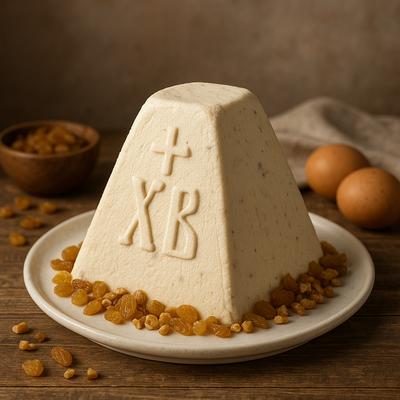
When you hear 'pashka' are you hearing English or Russian?

'Pashka' is a word borrowed from Russian 'pashka'.


pashka
(details not available)
See 'pashka' on the Loan Words Map

See more loan words from Russian.

note: Pashka (also spelled pasha**pascha or paskha; Russian: па́сха) is an Eastern European/Russian Orthodox cheese dessert with an etymology that directly links to the holiday it celebrates. The word pashka is derived from Pascha the Greek term for Easter which itself is a transliteration of the Aramaic pascha and the Hebrew pesach meaning Passover. Context: In Russian Paskha (Пасха) is the word for Easter. The dish is named after this as it is designed to be eaten specifically to break the fast after the Lenten period. Doublet: It is a doublet of the English word Pasch and the Ukrainian word paska (which refers to a similar but bread-based Easter tradition).
Etymology: -
See more loan words from (unknown date).

Tuesday, 24 February 2026

Do you speak a little Japanese when you say 'wabi-sabi'?

'Wabi-sabi' is a word borrowed from Japanese 'wabi-sabi'.


wabi-sabi
(details not available)
See 'wabi-sabi' on the Loan Words Map

See more loan words from Japanese.

note: In traditional Japanese aesthetics wabi-sabi (侘び寂び) is centered on the acceptance of transience and imperfection.
Etymology: -
See more loan words from (unknown date).

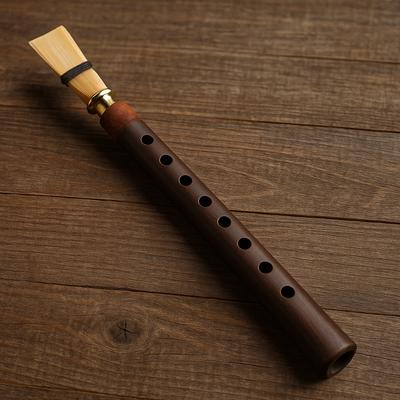
The Armenian roots of the word 'duduk'

'Duduk' is a word borrowed from Armenian 'duduk'.
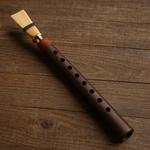

duduk
(details not available)
See 'duduk' on the Loan Words Map

See more loan words from Armenian.

note: An 'apricot-made wind instrument' is a double reed woodwind instrument made of apricot wood originating from Armenia.
Etymology: -
See more loan words from (unknown date).