Showing posts with label 1700s. Show all posts

Thursday, 29 October 2026

The Old Occitan roots of the word 'troubadour'

'Troubadour' is a word borrowed from Old Occitan 'trobador'. The word entered the English language some time around 1741.


troubadour [noun] [circa 1741]
  • one of a class of lyric poets and poet-musicians often of knightly rank who flourished from the 11th to the end of the ...
  • a singer especially of folk songs

Meaning: one of a class of lyric poets and poet-musicians often of knightly rank who flourished from the 11th to the end of the 13th century chiefly in the south of France and the north of Italy and whose major theme was courtly love compare trouvere; a singer especially of folk songs.

Etymology: French; from Old Occitan trobador; from trobar to compose; from Vulgar Latin *tropare; from Latin tropus trope.

Topics: Arts:Music.

Origin: From French to English.

note: A medieval lyric poet and singer of courtly love in southern France and northern Italy. From Old Occitan trobar to compose entering English via French.
See 'troubadour' on the Loan Words Map

See more loan words from Old Occitan.
See more loan words from 1700s.


Is 'tourmaline' English, or is it actually Sinhalese?

'Tourmaline' is a word borrowed from Sinhalese 'tōramalli'. The word entered the English language some time around 1759.


tourmaline [noun] [1759]
A mineral of variable color that consists of a complex borosilicate and is valued as a gem when transparent and cut
Meaning: a mineral of variable color that consists of a complex borosilicate and is valued as a gem when transparent and cut.

Etymology: Sinhalese toramalli carnelian.

Topics: Materials:Gemstones.

Origin: From Sinhalese to English.
See 'tourmaline' on the Loan Words Map

See more loan words from Sinhalese.
See more loan words from 1700s.


The Greek roots of the word 'typhoon'

'Typhoon' is a word borrowed from Greek 'tuphōn'. The word entered the English language some time around 1771.


typhoon [noun] [1771]
  • a hurricane occurring especially in the region of the Philippines or the China sea
  • whirlwind

Meaning: a hurricane occurring especially in the region of the Philippines or the China sea; whirlwind 2a a typhoon of activity.

Etymology: alteration (influenced by Chinese Guangdong daaih-fuung; from daaih big + fuung wind) of earlier touffon; from Arabic tufan hurricane; from Greek typhon violent storm.

Topics: Weather.

Origin: From Greek to English.
See 'typhoon' on the Loan Words Map

See more loan words from Greek.
See more loan words from 1700s.


When you hear 'spalpeen' are you hearing English or Gaelic?

'Spalpeen' is a word borrowed from Gaelic 'spailpín'. The word entered the English language some time around 1767.


spalpeen [noun] [1767]
Rascal
Meaning: rascal.

Etymology: Irish spailpin seasonal laborer; rascal.

Topics: Society:Culture.

Origin: From Gaelic to English.

note: Originates from the Irish word spailpín which means wandering landless laborer. This term referred to itinerant or seasonal farmworkers in Ireland particularly during the 17th to early 20th centuries. The word spailp itself translates to 'turn spell or bout' suggesting the temporary nature of their work.
See 'spalpeen' on the Loan Words Map

See more loan words from Gaelic.
See more loan words from 1700s.


Sunday, 25 October 2026

The Italian roots of the word 'staccato'

'Staccato' is a word borrowed from Italian 'staccato'. The word entered the English language some time around 1724.


staccato [adjective] [circa 1724]
  • cut short or apart in performing
  • disconnected
  • marked by short clear-cut playing or singing of tones or chords
  • abrupt

Meaning: cut short or apart in performing : disconnected staccato notes; marked by short clear-cut playing or singing of tones or chords a staccato style; abrupt disjointed staccato screams.

Etymology: Italian; from past participle of staccare to detach; from s- ex- (from Latin ex- ) + at taccare to attack; attach; perhaps from Old French estachier attach.

Topics: Arts:Music.

Origin: From Italian to English.
See 'staccato' on the Loan Words Map

See more loan words from Italian.
See more loan words from 1700s.


Is 'simoom' English, or is it actually Arabic?

'Simoom' is a word borrowed from Arabic 'samūm'. The word entered the English language some time around 1790.


simoom [noun] [1790]
A hot dry violent dust-laden wind from Asian and African deserts
Meaning: a hot dry violent dust-laden wind from Asian and African deserts.

Etymology: Arabic samum.

Topics: Geography:Landforms, Weather.

Origin: From Arabic to English.

note: A hot dry dust laden desert wind of North Africa and Arabia. From Arabic samum meaning poison wind. Also appears as simoon in older English.
See 'simoom' on the Loan Words Map

See more loan words from Arabic.
See more loan words from 1700s.


Did you know that 'tofu' is actually Japanese?

'Tofu' is a word borrowed from Japanese 'tofu'. The word entered the English language some time around 1771.


tofu [noun] [1771]
A soft food product prepared by treating soybean milk with coagulants (as magnesium chloride or diluted acids)
Meaning: soybean curd food.

Etymology: From Japanese tofu from Chinese doufu.

Topics: Food:Dishes.

Origin: From Chinese to Japanese to English.

note: Meaning: soybean curd food. Etymology: From Japanese tofu from Chinese doufu.
See 'tofu' on the Loan Words Map

See more loan words from Japanese.
See more loan words from 1700s.


Saturday, 24 October 2026

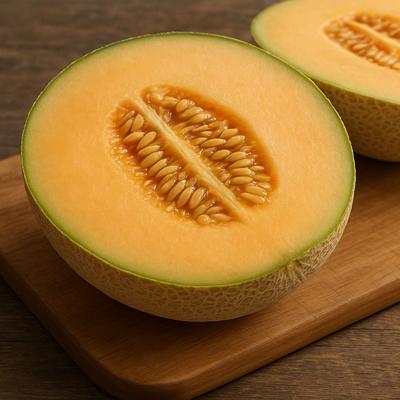
The French roots of the word 'cantaloupe'

'Cantaloupe' is a word borrowed from French 'cantaloup'. The word entered the English language some time around 1739.


cantaloupe [noun] [1739]
  • a small widely cultivated muskmelon (Cucumis melo reticulatus) with a heavily netted rind and reddish-orange flesh
  • muskmelon
  • a muskmelon (Cucumis melo cantalupensis) with a rough hard warty rind that is not usually grown in North America

Meaning: a small widely cultivated muskmelon ( Cucumis melo reticulatus ) with a heavily netted rind and reddish-orange flesh; muskmelon a; a muskmelon ( Cucumis melo cantalupensis ) with a rough hard warty rind that is not usually grown in North America.

Etymology: Cantalupo; former papal villa near Rome; Italy.

Topics: Plants:Fruits, Food:Sweets, Geography:Regions.

Origin: From Italian to French to English.

note: A sweet orange fleshed muskmelon named after Cantalupo near Rome borrowed via French cantaloup from Italian place name.
See 'cantaloupe' on the Loan Words Map

See more loan words from French.
See more loan words from 1700s.


Monday, 19 October 2026

Do you speak a little Latin when you say 'pistil'?

'Pistil' is a word borrowed from Latin 'pistillum'. The word entered the English language some time around 1741.


pistil [noun] [circa 1741]
A single carpel or group of fused carpels usually differentiated into an ovary, style, and stigma
Meaning: a single carpel or group of fused carpels usually differentiated into an ovary; style; and stigma see flower illustration.

Etymology: New Latin pistillum; from Latin; pestle pestle.

Topics: Science:Botany.

Origin: From Latin to French to Italian to English.

note: Derived from Latin through French or Italian. Etymology: From Latin pistillum which means a pestle or pounder (used in a mortar). Context: adopted into botanical English because the female organ of a flower resembles a pestle in shape (pestle itself ultimately originates from Latin pistillum).
See 'pistil' on the Loan Words Map

See more loan words from Latin.
See more loan words from 1700s.


Did you know that 'pirouette' is actually French?

'Pirouette' is a word borrowed from French 'pirouette'. The word entered the English language some time around 1706.


pirouette [noun] [1706]
  • a rapid whirling about of the body
  • a full turn on the toe or ball of one foot in ballet

Meaning: a rapid whirling about of the body; a full turn on the toe or ball of one foot in ballet.

Etymology: French; literally; teetotum.

Topics: Arts:Dance.

Origin: From French to English.

note: Borrowed from French pirouette (spinning top) a term in dancing. It comes from the Gallo-Roman root *pir- (peg/plug) combined with the diminutive suffix -ette. It originally referred to a spinning top in the 15th century.
See 'pirouette' on the Loan Words Map

See more loan words from French.
See more loan words from 1700s.


Is 'dhow' English, or is it actually Arabic?

'Dhow' is a word borrowed from Arabic 'dawa'. The word entered the English language some time around 1785.


dhow [noun] [1785]
An Arab lateen-rigged boat usually having a long overhang forward, a high poop, and a low waist
Meaning: an Arab lateen-rigged boat usually having a long overhang forward; a high poop; and a low waist.

Etymology: Arabic dawa.

Topics: Maritime:Nautical.

Origin: From Arabic to English.
See 'dhow' on the Loan Words Map

See more loan words from Arabic.
See more loan words from 1700s.


Do you speak a little Spanish when you say 'mantilla'?

'Mantilla' is a word borrowed from Spanish 'mantilla'. The word entered the English language some time around 1717.


mantilla [noun] [1717]
  • a light scarf worn over the head and shoulders especially by Spanish and Latin-American women
  • a short light cape or cloak

Meaning: a light scarf worn over the head and shoulders especially by Spanish and Latin-American women; a short light cape or cloak.

Etymology: Spanish; diminutive of manta.

Topics: Society:Culture.

Origin: From Latin to English.

note: Diminutive of manta meaning blanket or cloak. The word manta itself originates from the Late Latin mantum (cloak) and the Latin mantellum (cloak) ultimately deriving from mantum. Thus a mantilla is etymologically a little cloak or small veil referring to the traditional Spanish head and shoulder covering.
See 'mantilla' on the Loan Words Map

See more loan words from Spanish.
See more loan words from 1700s.


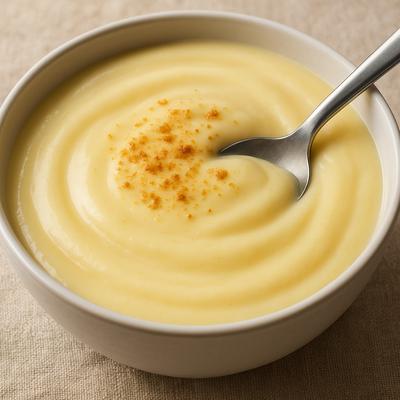
When you hear 'custard' are you hearing English or French?

'Custard' is a word borrowed from French 'crouste'. The word entered the English language some time around 1706.


custard [noun] [circa 1706]
A pudding-like usually sweetened mixture made with eggs and milk
Meaning: a pudding-like usually sweetened mixture made with eggs and milk.

Etymology: Middle English; a kind of pie; alteration of crustarde; crustade; probably from Anglo-French *crustade; from cruste crust; from Latin crusta crust.

Topics: Plants:Fruits, Food:Dishes, Food:Meat.

Origin: From Latin to French to English.

note: From Middle English crustade referring to a meat/fruit pie in a crust derived from Anglo-French croustade meaning something covered with crust ultimately from Latin crusta (crust) and its root kreus- (to freeze/form a crust). Originally described a baked dish in pastry evolving from French/Italian tart terms (croustade/crostata) linked to the Latin for crust before narrowing in meaning to the egg-thickened milk dish we know today.
See 'custard' on the Loan Words Map

See more loan words from French.
See more loan words from 1700s.


The word 'scoot' originally came from Scandinavian as 'skjóta'

'Scoot' is a word borrowed from Scandinavian 'skjóta'. The word entered the English language some time around 1758.


scoot [verb] [1758]
  • to move swiftly
  • to slide especially while seated

Meaning: to move swiftly; to slide especially while seated scoot over and let me sit down.

Etymology: perhaps alteration of earlier scout; of unknown origin.

Topics: Maritime:Nautical.

Origin: From Scandinavian to English.

note: The word scoot likely emerged in the mid-18th century possibly as nautical slang with uncertain origins but potential links to Scandinavian words like Old Norse skjóta (to shoot/dart) or related dialectal terms for quick movement and in Scots it also meant to gush out. It's also thought to be connected to Middle English scottlynge (scampering/scuttling) and some sources suggest Dutch/Italian roots (like scampare to decamp) though Scandinavian influence is strong and it was perhaps reintroduced to British English from America.
See 'scoot' on the Loan Words Map

See more loan words from Scandinavian.
See more loan words from 1700s.


The Khoikhoi origins of the word 'quagga'

'Quagga' is a word borrowed from Khoikhoi 'quácha'. The word entered the English language some time around 1785.


quagga [noun] [1785]
An extinct mammal (Equus quagga) of southern Africa that resembled and was related to the zebras
Meaning: an extinct mammal ( Equus quagga ) of southern Africa that resembled and was related to the zebras.

Etymology: obsolete Afrikaans (now kwagga ); from Khoikhoi quacha.

Topics: Animals:Mammals.

Origin: From Khoikhoi to English.
See 'quagga' on the Loan Words Map

See more loan words from Khoikhoi.
See more loan words from 1700s.


The word 'boutique' originally came from Greek as 'apothēkē 3'

'Boutique' is a word borrowed from Greek 'apothēkē 3'. The word entered the English language some time around 1767.


boutique [noun] [1767]
  • a small fashionable shop
  • a small shop within a large department store
  • a small company that offers highly specialized services or products

Meaning: a small fashionable shop; a small shop within a large department store; a small company that offers highly specialized services or products boutique wineries an independent investment boutique.

Etymology: French; shop; probably from Old Occitan botica; ultimately from Greek apotheke storehouse apothecary.

Topics: Economy:Trade.

Origin: From French to Latin to Italian to English.

note: Evolution: Passed from Latin apotheca into Italian (bottega meaning a shop or workshop) and then into French (boutique meaning a small shop). English Entry: Borrowed from French into English in the 20th century to denote a small fashionable retail store eventually expanding to describe specialized services or goods.
See 'boutique' on the Loan Words Map

See more loan words from Greek.
See more loan words from 1700s.


When you hear 'bulletin' are you hearing English or Italian?

'Bulletin' is a word borrowed from Italian 'bullettino'. The word entered the English language some time around 1765.


bulletin [noun] [1765]
  • a brief public notice issuing usually from an authoritative source
  • a brief news item intended for immediate publication or broadcast
  • periodical
  • the organ of an institution or association

Meaning: a brief public notice issuing usually from an authoritative source; a brief news item intended for immediate publication or broadcast; periodical.

Etymology: French; from Middle French; from bullette seal; notice; diminutive of bulle seal; from Medieval Latin bulla.

Topics: Society:Culture.

Origin: From French to Italian to English.

note: From French from Italian bullettino diminutive of bulletta ‘passport’ diminutive of bulla ‘seal or bull’.
See 'bulletin' on the Loan Words Map

See more loan words from Italian.
See more loan words from 1700s.

How the French language influenced English with the word 'chignon'

'Chignon' is a word borrowed from French 'chignon'. The word entered the English language some time around 1783.


chignon [noun] [1783]
A knot of hair that is worn at the back of the head and especially at the nape of the neck
Meaning: a knot of hair that is worn at the back of the head and especially at the nape of the neck.

Etymology: French; from Middle French chaignon chain; collar; nape.

Topics: Clothing:Accessories.

Origin: From French to English.

note: A knot of hair worn at the back of the head. Borrowed from French chignon from Middle French chaignon meaning chain collar or nape. Some sources trace to Old French forms.
See 'chignon' on the Loan Words Map

See more loan words from French.
See more loan words from 1700s.


When you hear 'agave' are you hearing English or Greek?

'Agave' is a word borrowed from Greek 'agauós'. The word entered the English language some time around 1763.


agave [noun] [1763]
Any of a genus ( of the family Agavaceae, the agave family) of plants having spiny-margined leaves and flowers in tall ...
Meaning: any of a genus ( Agave of the family Agavaceae; the agave family) of plants having spiny-margined leaves and flowers in tall spreading panicles and including some cultivated for their fiber or sap or for ornament.

Etymology: New Latin Agave; genus name; from Latin; a daughter of Cadmus; from Greek Agaue.

Topics: Science:Botany.

Origin: From Greek to English.

note: Linguistic Path: Ancient Greek (ἀγαυός / agauós) → New Latin (Agave) → English.Meaning & History: The Greek root agauós means noble illustrious or admirable. In Greek mythology Agave was also the daughter of Cadmus and the mother of Pentheus. In 1753 the famous Swedish botanist Carl Linnaeus chose the name Agave for the plant genus likely due to its majestic tall flower spikes and immense utility to indigenous peoples.
See 'agave' on the Loan Words Map

See more loan words from Greek.
See more loan words from 1700s.


Sunday, 18 October 2026

The word 'avalanche' is a loan word from French 'lavanche'

'Avalanche' is a word borrowed from French 'lavanche'. The word entered the English language some time around 1771.


avalanche [noun] [1771]
  • a large mass of snow, ice, earth, rock, or other material in swift motion down a mountainside or over a precipice
  • a sudden great or overwhelming rush or accumulation of something
  • a cumulative process in which photons or accelerated charge carriers produce additional photons or charge carriers thro...

Etymology: French, from French dialect (Franco-Provençal) 'lavantse, avalantse'.

Topics: Weather.

Origin: From French to English.
See 'avalanche' on the Loan Words Map

See more loan words from French.
See more loan words from 1700s.