Showing posts with label 1920s. Show all posts

Saturday, 29 August 2026

Did you know that 'kendo' is actually Japanese?

'Kendo' is a word borrowed from Japanese 'kendo'. The word entered the English language some time around 1921.


kendo [noun] [1921]
A Japanese sport of fencing usually with bamboo swords
See 'kendo' on the Loan Words Map

See more loan words from Japanese.

note: Kendo (剣道) which translates to way of the sword is a modern Japanese martial art derived from traditional swordsmanship (kenjutsu). The name combines ken (剑/剣) meaning sword and dō (道) meaning way path or discipline reflecting its focus on self-cultivation and mental discipline rather than just combat.
Etymology: Japanese 'kendō' from 'ken' sword + 'dō' art
See more loan words from 1920s.


Monday, 23 February 2026

The word 'gigolo' is a loan word from French 'gigole'

'Gigolo' is a word borrowed from French 'gigole'. The word entered the English language some time around 1922.


gigolo [noun] [1922]
  • a man supported by a woman usually in return for his attentions
  • a professional dancing partner or male escort
See 'gigolo' on the Loan Words Map

See more loan words from French.

Etymology: French
See more loan words from 1920s.


Sunday, 5 January 2025

When you hear 'anestrus' are you hearing English or Latin?

'Anestrus' is a word borrowed from Latin 'anestrus'. The word entered the English language some time around 1927.


anestrus [noun] [1927]
The period of sexual quiescence between two periods of sexual activity in cyclically breeding mammals
See 'anestrus' on the Loan Words Map

See more loan words from Latin.

Etymology: New Latin
See more loan words from 1920s.


Monday, 7 August 2023

Yiddish 'drek' in the English language

'Dreck' is a word borrowed from Yiddish 'drek'. The word entered the English language some time around 1922.


dreck [noun] [1922]
  • trash
See 'dreck' on the Loan Words Map

See more loan words from Yiddish.

Etymology: Yiddish 'drek' & German 'Dreck' from Middle High German 'drec;' akin to Old English 'threax' rubbish
See more loan words from 1920s.


Is 'kitsch' English, or is it actually German?

'Kitsch' is a word borrowed from German 'Kitsch'. The word entered the English language some time around 1925.


kitsch [noun] [1925]
  • something that appeals to popular or lowbrow taste and is often of poor quality
  • a tacky or lowbrow quality or condition
See 'kitsch' on the Loan Words Map

See more loan words from German.

note: From German Kitsch from dialectal kitschen (“to coat to smear”): the word and concept were popularized in the 1930s by several critics who contrasted it with avant garde art.
Etymology: German
See more loan words from 1920s.


Is 'kibbutz' English, or is it actually Yiddish?

'Kibbutz' is a word borrowed from Yiddish 'kibbutz'. The word entered the English language some time around 1926.


kibbutz [noun] [1926]
A communal farm or settlement in Israel
See 'kibbutz' on the Loan Words Map

See more loan words from Yiddish.

Etymology: Modern Hebrew 'qibbūṣ'
See more loan words from 1920s.


Sunday, 20 November 2022

The German roots of the word 'Baedeker'

'Baedeker' is a word borrowed from German 'Baedeker'. The word entered the English language some time around 1924.


Baedeker [noun] [1924]
Guidebook
See 'Baedeker' on the Loan Words Map

See more loan words from German.

Etymology: Karl 'Baedeker' †1859 German publisher of guidebooks
See more loan words from 1920s.

Sunday, 13 November 2022

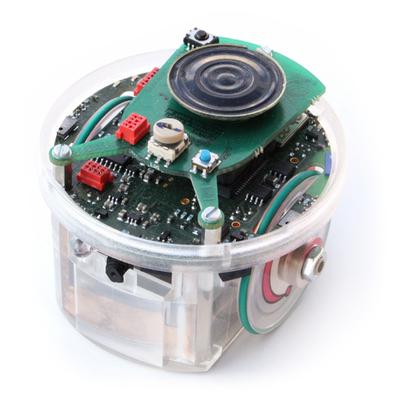
The word 'robot' is a loan word from Czech 'robota'

'Robot' is a word borrowed from Czech 'robota'. The word entered the English language some time around 1922.


robot [noun] [1922]
  • a machine that looks like a human being and performs various complex acts (as walking or talking) of a human being
  • a similar but fictional machine whose lack of capacity for human emotions is often emphasized
  • an efficient insensitive person who functions automatically
  • a device that automatically performs complicated often repetitive tasks
See 'robot' on the Loan Words Map

See more loan words from Czech.

Etymology: Czech, from 'robota' compulsory labor; akin to Old High German 'arabeit' trouble, Latin 'orbus' orphaned
See more loan words from 1920s.


Saturday, 12 November 2022

Is 'algorithm' English, or is it actually Arabic?

'Algorithm' is a word borrowed from Arabic 'al-Ḵwārizmī'. The word entered the English language some time around 1926.


algorithm [noun] [1926]
  • a procedure for solving a mathematical problem (as of finding the greatest common divisor) in a finite number of steps ...
  • a step-by-step procedure for solving a problem or accomplishing some end especially by a computer
See 'algorithm' on the Loan Words Map

See more loan words from Arabic.

Etymology: Alteration of Middle English 'algorisme' from Old French & Medieval Latin; Old French, from Medieval Latin 'algorismus' from Arabic 'al-khuwārizmi' from 'al-Khwārizmī fl'
See more loan words from 1920s.


Friday, 11 November 2022

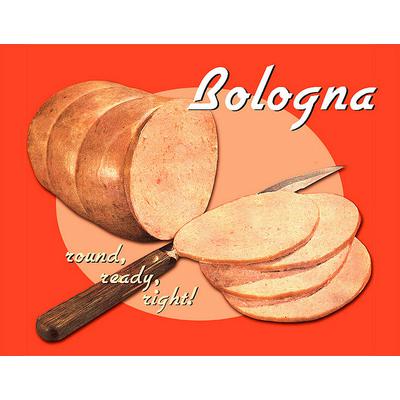
The Italian roots of the word 'baloney'

'Baloney' is a word borrowed from Italian 'bologna'. The word entered the English language some time around 1922.


baloney [noun] [1922]
Pretentious nonsense - bunkum - often used as a generalized expression of disagreement
See 'baloney' on the Loan Words Map

See more loan words from Italian.

Etymology: Bologna
See more loan words from 1920s.


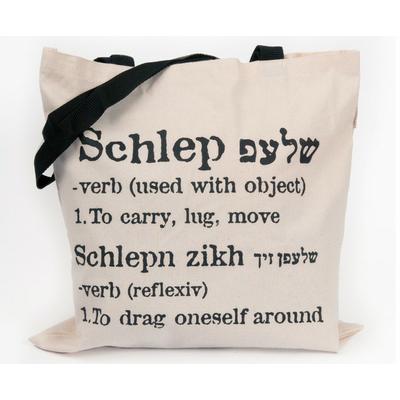
The word 'schlep' is originally from Yiddish 'shlepn'

'Schlep' is a word borrowed from Yiddish 'shlepn'. The word entered the English language some time around 1922.


schlep [verb] [1922]
  • drag
  • to proceed or move especially slowly, tediously, awkwardly, or carelessly
See 'schlep' on the Loan Words Map

See more loan words from Yiddish.

Etymology: Yiddish 'shlepn' from Middle High German 'sleppen' from Middle Low German 'slēpen'
See more loan words from 1920s.