Showing posts with label Gaelic. Show all posts

Thursday, 29 October 2026

When you hear 'spalpeen' are you hearing English or Gaelic?

'Spalpeen' is a word borrowed from Gaelic 'spailpín'. The word entered the English language some time around 1767.
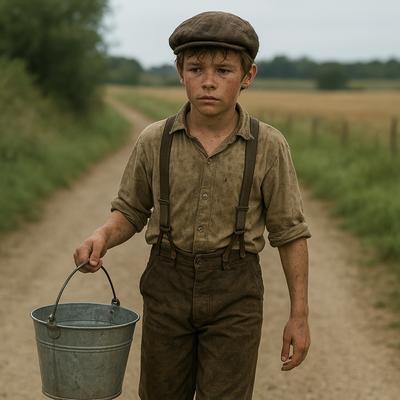

spalpeen [noun] [1767]
Rascal
Meaning: rascal.

Etymology: Irish spailpin seasonal laborer; rascal.

Topics: Society:Culture.

Origin: From Gaelic to English.

note: Originates from the Irish word spailpín which means wandering landless laborer. This term referred to itinerant or seasonal farmworkers in Ireland particularly during the 17th to early 20th centuries. The word spailp itself translates to 'turn spell or bout' suggesting the temporary nature of their work.
See 'spalpeen' on the Loan Words Map
See more loan words from Gaelic.
See more loan words from 1700s.


Sunday, 1 March 2026

Did you know that 'sugan' is actually Gaelic?

'Sugan' is a word borrowed from Gaelic 'súgán'.


sugan
(details not available)
See 'sugan' on the Loan Words Map

See more loan words from Gaelic.

note: The sugawn chair gets its name from the Irish word súgán which refers to a rope particularly a rope made of straw. Its etymology traces back to the Proto-Celtic souggo ultimately derived from the Proto-Indo-European root sew- meaning to bend to cut or to drive.
Etymology: -
See more loan words from (unknown date).

Friday, 3 January 2025

The word 'smithereens' is a loan word from Gaelic 'smidirín'

'Smithereens' is a word borrowed from Gaelic 'smidirín'. The word entered the English language some time around 1829.


smithereens [noun plural] [1829]
  • fragments
See 'smithereens' on the Loan Words Map

See more loan words from Gaelic.

Etymology: Perhaps from Irish 'smidiríní'
See more loan words from 1800s.


Monday, 6 November 2023

Is 'cant' English, or is it actually Gaelic?

'Cant' is a word borrowed from Gaelic 'caint'. The word entered the English language some time around the 14th century.


cant [adjective] [14th century]
  • lively
See 'cant' on the Loan Words Map

See more loan words from Gaelic.

note: From the Irish word caint (older spelling cainnt) speech; talk or Scottish Gaelic cainnt. It is seen to have derived amongst the itinerant groups of people in Ireland and Scotland who hailed from both Irish/Scottish Gaelic and English-speaking backgrounds ultimately developing as various creole languages.
Etymology: Middle English, probably from Middle Low German '*kant'
See more loan words from 1300s.


Tuesday, 8 August 2023

Did you know that 'slogan' is actually Gaelic?

'Slogan' is a word borrowed from Gaelic 'sluagh-ghairm'. The word entered the English language some time around 1513.


slogan [noun] [1513]
  • a war cry especially of a Scottish clan
  • a word or phrase used to express a characteristic position or stand or a goal to be achieved
  • a brief attention-getting phrase used in advertising or promotion
See 'slogan' on the Loan Words Map

See more loan words from Gaelic.

Etymology: Alteration of earlier 'slogorn' from Scottish Gaelic 'sluagh-ghairm' from 'sluagh' army, host + 'gairm' cry
See more loan words from 1500s.


Sunday, 13 November 2022

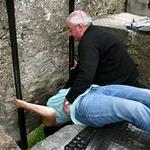
The Gaelic origins of the word 'blarney'

'Blarney' is a word borrowed from Gaelic 'blarney'. The word entered the English language some time around 1784.


blarney [noun] [1784]
  • skillful flattery
  • blandishment
  • nonsense
See 'blarney' on the Loan Words Map

See more loan words from Gaelic.

Etymology: a stone in Blarney Castle, near Cork, Ireland, held to bestow skill in flattery on those who kiss it
See more loan words from 1700s.


Saturday, 12 November 2022

The word 'galore' originally came from Gaelic as 'go leor'

'Galore' is a word borrowed from Gaelic 'go leor'. The word entered the English language some time around 1628.


galore [adjective] [1628]
  • abundant
  • used postpositively
See 'galore' on the Loan Words Map

See more loan words from Gaelic.

Etymology: Irish 'go leor' enough
See more loan words from 1600s.


The word 'esker' is a loan word from Gaelic 'eiscir'

'Esker' is a word borrowed from Gaelic 'eiscir'. The word entered the English language some time around 1848.


esker [noun] [1848]
A long narrow ridge or mound of sand, gravel, and boulders deposited by a stream flowing on, within, or beneath a stagn...
See 'esker' on the Loan Words Map

See more loan words from Gaelic.

Etymology: Irish 'eiscir' ridge
See more loan words from 1800s.


The word 'keen' originally came from Gaelic as 'caoinim'

'Keen' is a word borrowed from Gaelic 'caoinim'. The word entered the English language some time around 1845.


keen [verb] [1845]
  • to make a loud and long cry of sorrow
  • to lament with a keen
  • to make a sound suggestive of a loud cry of sorrow
  • to lament, mourn, or complain loudly
  • to utter with a loud wailing voice or wordless cry
See 'keen' on the Loan Words Map

See more loan words from Gaelic.

Etymology: Irish 'caoinim' I lament, weep
See more loan words from 1800s.


Did you know that 'Shillelagh' is actually Gaelic?

'Shillelagh' is a word borrowed from Gaelic 'sail éille'. The word entered the English language some time around 1772.


Shillelagh [noun] [1772]
Cudgel
See 'Shillelagh' on the Loan Words Map

See more loan words from Gaelic.

note: A thick stick of blackthorn or oak typically used as a weapon.
Etymology: town in Ireland
See more loan words from 1700s.

Is 'glen' English, or is it actually Gaelic?

'Glen' is a word borrowed from Gaelic 'glen'. The word entered the English language some time around the 15th century.


glen [noun] [15th century]
A secluded narrow valley
See 'glen' on the Loan Words Map

See more loan words from Gaelic.

Etymology: Middle English (Scots), valley, from Scottish Gaelic & Irish 'gleann' from Old Irish 'glenn'
See more loan words from 1400s.


Friday, 11 November 2022

Did you know that 'whiskey' is actually Gaelic?

'Whiskey' is a word borrowed from Gaelic 'uisce beatha'. The word entered the English language some time around 1715.


whiskey [noun] [1715]
  • a liquor distilled from fermented wort (as that obtained from rye, corn, or barley mash)
  • a drink of whiskey
See 'whiskey' on the Loan Words Map

See more loan words from Gaelic.

Etymology: Irish 'uisce beatha' & Scottish Gaelic 'uisge beatha' literally, water of life
See more loan words from 1700s.


When you hear 'claymore' are you hearing English or Gaelic?

'Claymore' is a word borrowed from Gaelic 'claidheamh mór'. The word entered the English language some time around 1527.


claymore [noun] [1527]
  • a large 2-edged sword formerly used by Scottish Highlanders
  • their basket-hilted broadsword
See 'claymore' on the Loan Words Map

See more loan words from Gaelic.

Etymology: Scottish Gaelic 'claidheamh mór' literally, great sword
See more loan words from 1500s.


Is 'Limerick' English, or is it actually Gaelic?

'Limerick' is a word borrowed from Gaelic 'Luimnigh'. The word entered the English language some time around 1896.


Limerick [noun] [1896]
A light or humorous verse form of five chiefly anapestic verses of which lines 1, 2, and 5 are of three feet and lines ...
See 'Limerick' on the Loan Words Map

See more loan words from Gaelic.

Etymology: Ireland
See more loan words from 1800s.

Thursday, 10 November 2022

How the Gaelic language influenced English with the word 'Ceilidh'

'Ceilidh' is a word borrowed from Gaelic 'céile'. The word entered the English language some time around 1875.


Ceilidh [noun] [1875]
A party with music, dancing, and often storytelling
See 'Ceilidh' on the Loan Words Map

See more loan words from Gaelic.

Etymology: Irish 'céilí' & Scottish Gaelic 'cèilidh' visit, social evening, party with music and dancing, from Old Irish 'céilide' visit, from 'céile' servant, companion, neighbor; akin to Welsh 'cilydd' companion, Old Breton 'kiled'
See more loan words from 1800s.

How the Gaelic language influenced English with the word 'banshee'

'Banshee' is a word borrowed from Gaelic 'bean sídhe'. The word entered the English language some time around 1771.


banshee [noun] [1771]
A female spirit in Gaelic folklore whose appearance or wailing warns a family that one of them will soon die
See 'banshee' on the Loan Words Map

See more loan words from Gaelic.

Etymology: Irish 'bean sídhe' & Scottish Gaelic 'bean sìth' literally, woman of fairyland
See more loan words from 1700s.


When you say 'bard' are you speaking Gaelic?

'Bard' is a word borrowed from Gaelic 'bard'. The word entered the English language some time around the 15th century.


bard [noun] [15th century]
  • a tribal poet-singer skilled in composing and reciting verses on heroes and their deeds
  • a composer, singer, or declaimer of epic or heroic verse
  • poet
See 'bard' on the Loan Words Map

See more loan words from Gaelic.

Etymology: Middle English, from Scottish Gaelic & Irish
See more loan words from 1400s.