Showing posts with label Turkish. Show all posts

Thursday, 29 October 2026

Is 'tulip' English, or is it actually Turkish?

'Tulip' is a word borrowed from Turkish 'tulipe'. The word entered the English language some time around 1578.


tulip [noun] [1578]
  • any of a genus (Tulipa) of Eurasian bulbous herbs of the lily family that have linear or broadly lanceolate leaves an...
  • the flower or bulb of a tulip

Meaning: any of a genus ( Tulipa ) of Eurasian bulbous herbs of the lily family that have linear or broadly lanceolate leaves and are widely grown for their showy flowers; the flower or bulb of a tulip.

Etymology: New Latin tulipa; from Turkish tulbent turban turban.

Topics: Clothing:Headwear.

Origin: From Turkish to French to English.

note: Via French 'tulipe' derived from the Turkish tülbend which means turban. Ultimately traces back to the Persian dulband. The flower was named for its resemblance to the folds of a turban when it is in bloom.
See 'tulip' on the Loan Words Map

See more loan words from Turkish.
See more loan words from 1500s.


Monday, 19 October 2026

When you hear 'odalisque' are you hearing English or Turkish?

'Odalisque' is a word borrowed from Turkish 'oda-lisk'. The word entered the English language some time around 1681.


odalisque [noun] [circa 1681]
  • a female slave
  • a concubine in a harem

Meaning: a female slave; a concubine in a harem.

Etymology: French; from Turkish odalk; from oda room.

Topics: Society:Culture.

Origin: From French to Turkish to English.

note: Late 17th century: from French from Turkish odalik from oda chamber + lik function.
See 'odalisque' on the Loan Words Map

See more loan words from Turkish.
See more loan words from 1600s.


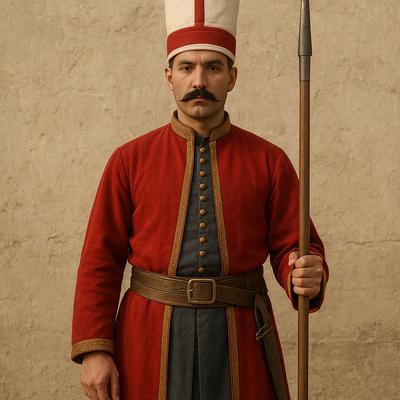
The word 'janissary' is originally from Turkish 'yeniçeri'

'Janissary' is a word borrowed from Turkish 'yeniçeri'. The word entered the English language some time around 1529.


janissary [noun] [1529]
  • a soldier of an elite corps of Turkish troops organized in the 14th century and abolished in 1826
  • a member of a group of loyal or subservient troops, officials, or supporters

Meaning: a soldier of an elite corps of Turkish troops organized in the 14th century and abolished in 1826; a member of a group of loyal or subservient troops; officials; or supporters.

Etymology: Italian gianizzero; from Turkish yeniceri; from yeni new + ceri soldier.

Topics: Military:Warfare.

Origin: From Turkish to English.
See 'janissary' on the Loan Words Map

See more loan words from Turkish.
See more loan words from 1500s.


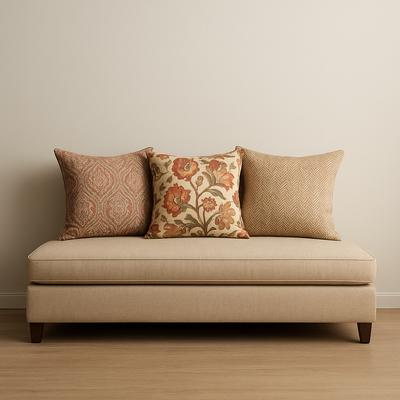
How the Persian language influenced English with the word 'divan'

'Divan' is a word borrowed from Persian 'divan'. The word entered the English language some time around 1586.


divan [noun] [1586]
  • the privy council of the Ottoman Empire
  • council
  • a council chamber
  • a large couch usually without back or arms often designed for use as a bed

Meaning: the privy council of the Ottoman Empire; council; a council chamber.

Etymology: Turkish; from Persian divan account book.

Topics: Household:Furniture.

Origin: From Turkish to Persian to English.

note: Derived from Turkish divan originating in Persian dēvān (bundle of written sheets/small book/collection of poems/archive). It historically passed through meanings of book of accounts customs house council chamber and finally to long cushioned seat (sofa) because such seats were found in council chambers.
See 'divan' on the Loan Words Map

See more loan words from Persian.
See more loan words from 1500s.


Saturday, 7 March 2026

When you say 'chibouk' are you speaking Turkish?

'Chibouk' is a word borrowed from Turkish 'çubuk'. The word entered the English language some time around 1811.


chibouk [noun] [1811]
A long-stemmed Turkish tobacco pipe with a clay bowl
See 'chibouk' on the Loan Words Map

See more loan words from Turkish.

Etymology: French 'chibouque' from Turkish 'çubuk'
See more loan words from 1800s.


Saturday, 28 February 2026

The word 'pasha' is originally from Turkish 'paça'

'Pasha' is a word borrowed from Turkish 'paça'. The word entered the English language some time around 1646.


pasha [noun] [1646]
A man of high rank or office (as in Turkey or northern Africa)
See 'pasha' on the Loan Words Map

See more loan words from Turkish.

note: Via Turkish paşa from Pahlavi pati ‘lord’ + šāh ‘shah’.
Etymology: Turkish 'paşa'
See more loan words from 1600s.


Friday, 3 January 2025

The word 'taraban' is originally from Turkish 'daraban'

'Taraban' is a word borrowed from Turkish 'daraban'.


taraban
(details not available)
See 'taraban' on the Loan Words Map

See more loan words from Turkish.

note: The taraban (Turkish: daraban; Ukrainian: тарабан) is a percussive drum-like folk instrument of Turkish origin which was once used in Ukraine and to a lesser extent in Poland.
Etymology: -
See more loan words from (unknown date).

Tuesday, 8 August 2023

The word 'shabrack' is originally from Turkish 'çaprak'

'Shabrack' is a word borrowed from Turkish 'çaprak'.


shabrack
(details not available)
See 'shabrack' on the Loan Words Map

See more loan words from Turkish.

note: A cavalry saddlecloth used in European armies. Early 19th century from German Schabracke of east European origin; compare with Russian shabrak.
Etymology: -
See more loan words from (unknown date).

Monday, 7 August 2023

Did you know that 'seraglio' is actually Turkish?

'Seraglio' is a word borrowed from Turkish 'sarāy'. The word entered the English language some time around 1581.


seraglio [noun] [1581]
  • harem
  • a palace of a sultan
See 'seraglio' on the Loan Words Map

See more loan words from Turkish.

note: Via Turkish from Persian sarāy (see serai).
Etymology: Italian 'serraglio' modification of Turkish 'saray' palace
See more loan words from 1500s.

Saturday, 19 November 2022

When you say 'yoghurt' are you speaking Turkish?

'Yoghurt' is a word borrowed from Turkish 'yoǧurt'. The word entered the English language some time around 1625.


yoghurt [noun] [1625]
A fermented slightly acid often flavored semisolid food made of milk and milk solids to which cultures of two bacteria ...
See 'yoghurt' on the Loan Words Map

See more loan words from Turkish.

Etymology: Turkish 'yoğurt'
See more loan words from 1600s.


Sunday, 13 November 2022

When you say 'angora' are you speaking Turkish?

'Angora' is a word borrowed from Turkish 'Angora'. The word entered the English language some time around 1819.


angora [noun] [1819]
  • any of a breed of cats having a long graceful body and silky medium-length hair with no undercoat
  • a long-haired domestic cat
See 'angora' on the Loan Words Map

See more loan words from Turkish.

Etymology: (Ankara), Turkey
See more loan words from 1800s.


Saturday, 12 November 2022

The word 'bulgar' is originally from Turkish 'bulgur'

'Bulgar' is a word borrowed from Turkish 'bulgur'. The word entered the English language some time around the 14th century.


bulgar [noun] [14th century]
Bulgarian
See 'bulgar' on the Loan Words Map

See more loan words from Turkish.

note: A cereal food made from whole wheat partially boiled then dried - eaten especially in Turkey.
Etymology: Middle English 'Bulgare' from Medieval Latin 'Bulgarus'
See more loan words from 1300s.


Friday, 11 November 2022

Turkish 'kahveh' in the English language

'Coffee' is a word borrowed from Turkish 'kahveh'. The word entered the English language some time around 1598.


coffee [noun] [1598]
  • a beverage made by percolation, infusion, or decoction from the roasted and ground seeds of a coffee plant
  • any of several Old World tropical plants (genus Coffea and especially C. arabica and ) of the madder family that are wi...
  • coffee seeds especially roasted and often ground
  • a dehydrated product made from brewed coffee
See 'coffee' on the Loan Words Map

See more loan words from Turkish.

Etymology: Italian & Turkish; Italian 'caffè' from Turkish 'kahve' from Arabic 'qahwa'
See more loan words from 1500s.