Saturday, 29 August 2026

When you hear 'junk' are you hearing English or Malaysian?

'Junk' is a word borrowed from Malaysian 'jong'. The word entered the English language some time around the 14th century.

junk [noun] [14th century]
  • pieces of old cable or cordage used especially to make gaskets, mats, swabs, or oakum
  • old iron, glass, paper, or other waste that may be used again in some form
  • secondhand, worn, or discarded articles
  • clutter
See 'junk' on the Loan Words Map
See more loan words from Malaysian.

note: A flat-bottomed sailing vessel of a kind typical of China and the East Indies with a prominent stem and lugsails. From Malay jong via French juncque or Dutch jonke or Portuguese junco.
Etymology: Middle English 'jonke'
See more loan words from 1300s.


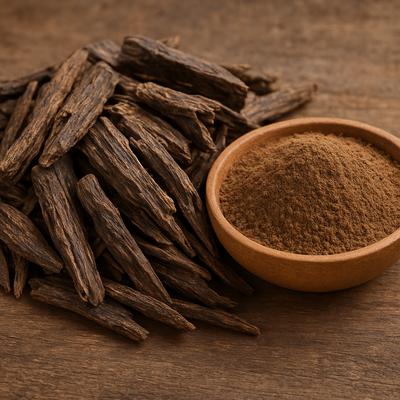
The word 'sandalwood' is originally from Sanskrit 'candana'

'Sandalwood' is a word borrowed from Sanskrit 'candana'. The word entered the English language some time around 1511.


sandalwood [noun] [circa 1511]
  • the compact close-grained fragrant yellowish heartwood of a parasitic tree ( of the family Santalaceae, the sandalwood ...
  • the tree that yields this wood
  • any of various trees other than the sandalwood some of which yield dyewoods
  • the fragrant wood of such a tree
See 'sandalwood' on the Loan Words Map

See more loan words from Sanskrit.

note: The term for the tree has a very different etymology from the English word 'sandal'. Sanskrit (candana): Derived from candrah meaning shining or glowing linked to the Latin candere (to shine or glow) in reference to its sacred glowing presence when burned. Arabic & Persian (sandal): The spice and incense trade brought the word into Arabic and Persian as sandal. Greek & Latin (santalum / sandalum): Medieval Latin adapted it as sandalum via the Late Greek word santalon. French & English: passed into Old French as sandale first appearing in the English language in the early 16th century.
Etymology: sandalwood (from Middle English, from Anglo-French 'sandali' from Medieval Latin 'sandalum' from Late Greek 'santalon' ultimately from Sanskrit 'candana' of Dravidian origin; akin to Tamil 'cāntu' sandalwood tree) + 'wood'
See more loan words from 1500s.


The Greek origins of the word 'katabatic'

'Katabatic' is a word borrowed from Greek 'katabatikos'. The word entered the English language some time around 1918.


katabatic [adjective] [1918]
Relating to or being a wind produced by the flow of cold dense air down a slope (as of a mountain or glacier) in an are...
See 'katabatic' on the Loan Words Map

See more loan words from Greek.

Etymology: Greek 'katabatos' descending, verbal of 'katabainein' to go down, from 'kata-' cata- + 'bainein' to go
See more loan words from 1910s.


Do you speak a little French when you say 'gallop'?

'Gallop' is a word borrowed from French 'galoper'. The word entered the English language some time around 1523.


gallop [noun] [1523]
  • a bounding gait of a quadruped
  • a fast natural 3-beat gait of the horse
  • a ride or run at a gallop
  • a stretch of land suitable for horses
See 'gallop' on the Loan Words Map

See more loan words from French.

note: From Old French galoper (to gallop) which likely originated from a Frankish compound wala hlaupan (to run well) from Germanic elements: wala (well) and hlaupan (to run/leap).
Etymology: Middle French 'galop'
See more loan words from 1500s.


The word 'perfervid' is originally from Latin 'perfervidus'

'Perfervid' is a word borrowed from Latin 'perfervidus'. The word entered the English language some time around 1856.


perfervid [adjective] [1856]
Marked by overwrought or exaggerated emotion - excessively fervent
See 'perfervid' on the Loan Words Map

See more loan words from Latin.

Etymology: New Latin 'perfervidus' from Latin 'per-' thoroughly + 'fervidus' fervid
See more loan words from 1800s.


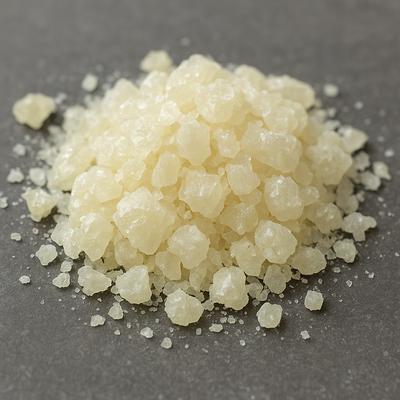
When you say 'camphor' are you speaking Malaysian?

'Camphor' is a word borrowed from Malaysian 'kapur'. The word entered the English language some time around the 14th century.


camphor [noun] [14th century]
  • a tough gummy volatile aromatic crystalline compound CHO obtained especially from the wood and bark of the camphor tree...
  • any of several similar compounds (as some terpene alcohols and ketones)
See 'camphor' on the Loan Words Map

See more loan words from Malaysian.

note: Camphor comes from Medieval Latin camphora which originated from Arabic kāfūr ultimately derived from Malay kapur (chalk/lime/camphor). It refers to a white volatile crystalline substance with an aromatic smell.
Etymology: Middle English 'caumfre' from Anglo-French, from Medieval Latin 'camphora' from Arabic 'kāfūr' from Malay 'kapur'
See more loan words from 1300s.


How the Latin language influenced English with the word 'lily'

'Lily' is a word borrowed from Latin 'lilium'. The word entered the English language some time before the 12th century.


lily [noun] [before 12th century]
  • any of a genus ( of the family Liliaceae, the lily family) of erect perennial leafy-stemmed bulbous herbs that are nati...
  • any of various plants of the lily family or of the related amaryllis or iris families
  • any of various plants with showy flowers
  • as
  • a scarlet anemone (Anemone coronaria) of the Mediterranean region
See 'lily' on the Loan Words Map

See more loan words from Latin.

Etymology: Middle English 'lilie' from Old English, from Latin 'lilium'
See more loan words from before 1200.


Latin 'rubicundus' in the English language

'Rubicund' is a word borrowed from Latin 'rubicundus'. The word entered the English language some time around the 15th century.


rubicund [adjective] [15th century]
Ruddy
See 'rubicund' on the Loan Words Map

See more loan words from Latin.

Etymology: Middle English 'rubicunde' from Latin 'rubicundus' from 'rubēre' to be red; akin to Latin 'rubeus'
See more loan words from 1400s.


Did you know that 'kendo' is actually Japanese?

'Kendo' is a word borrowed from Japanese 'kendo'. The word entered the English language some time around 1921.


kendo [noun] [1921]
A Japanese sport of fencing usually with bamboo swords
See 'kendo' on the Loan Words Map

See more loan words from Japanese.

note: Kendo (剣道) which translates to way of the sword is a modern Japanese martial art derived from traditional swordsmanship (kenjutsu). The name combines ken (剑/剣) meaning sword and dō (道) meaning way path or discipline reflecting its focus on self-cultivation and mental discipline rather than just combat.
Etymology: Japanese 'kendō' from 'ken' sword + 'dō' art
See more loan words from 1920s.


Thursday, 27 August 2026

When you hear 'amphitheater' are you hearing English or Greek?

'Amphitheater' is a word borrowed from Greek 'amphitheatron'. The word entered the English language some time around the 14th century.


amphitheater [noun] [14th century]
  • an oval or circular building with rising tiers of seats ranged about an open space and used in ancient Rome especially ...
  • a very large auditorium
  • a room with a gallery from which doctors and students may observe surgical operations
  • a rising gallery in a modern theater
See 'amphitheater' on the Loan Words Map

See more loan words from Greek.

note: Late Middle English: via Latin from Greek amphitheatron - from amphi ‘on both sides’ + theatron.
Etymology: Latin 'amphitheatrum' from Greek 'amphitheatron' from 'amphi-' + 'theatron' theater
See more loan words from 1300s.