Showing posts with label 1900s. Show all posts

Monday, 19 October 2026

How the French language influenced English with the word 'barrette'

'Barrette' is a word borrowed from French 'barrette'. The word entered the English language some time around 1901.
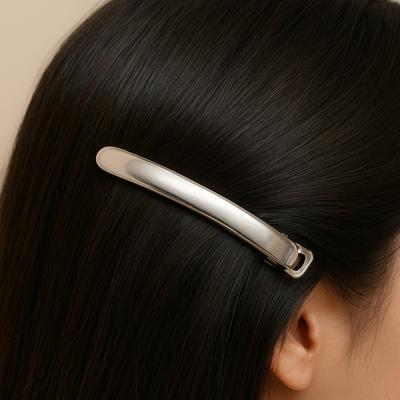

barrette [noun] [1901]
A clip or bar for holding hair in place
Meaning: a clip or bar for holding hair in place.

Etymology: French; diminutive of barre bar.

Topics: Clothing:Accessories.

Origin: From French to English.

note: Diminutive form of the French word barre (bar) effectively translating to a little bar. It entered the English language in the early 20th century to describe the small bar-shaped clasp used to hold hair in place.
See 'barrette' on the Loan Words Map
See more loan words from French.
See more loan words from 1900s.


Is 'haiku' English, or is it actually Japanese?

'Haiku' is a word borrowed from Japanese 'haiku'. The word entered the English language some time around 1902.


haiku [noun] [1902]
  • an unrhymed verse form of Japanese origin having three lines containing usually five, seven, and five syllables respect...
  • a poem in this form usually having a seasonal reference

Meaning: an unrhymed verse form of Japanese origin having three lines containing usually five; seven; and five syllables respectively; a poem in this form usually having a seasonal reference compare tanka.

Etymology: Japanese.

Topics: Arts:Visual.

Origin: From Japanese to English.
See 'haiku' on the Loan Words Map

See more loan words from Japanese.
See more loan words from 1900s.


Saturday, 7 March 2026

When you say 'goo' are you speaking Persian?

'Goo' is a word borrowed from Persian 'bulġūr'. The word entered the English language some time around 1900.


goo [noun] [1900]
  • a viscid or sticky substance
  • sentimental tripe
See 'goo' on the Loan Words Map

See more loan words from Persian.

note: Early 20th century (originally US): perhaps from burgoo a nautical slang term for porridge based on Persian bulġūr ‘bruised grain’.
Etymology: Perhaps short for 'burgoo'
See more loan words from 1900s.


Sunday, 1 March 2026

Japanese 'bonsai' in the English language

'Bonsai' is a word borrowed from Japanese 'bonsai'. The word entered the English language some time around 1900.


bonsai [noun] [1900]
  • a potted plant (as a tree) dwarfed (as by pruning) and trained to an artistic shape
  • the art of growing such a plant
See 'bonsai' on the Loan Words Map

See more loan words from Japanese.

note: The word bonsai comes from Japanese combining bon (盆 tray or shallow pot) and sai (栽 planting or plant) literally meaning tray planting or tree planted in a pot. This term originates from the ancient Chinese practice of penjing (or pun-sai)
Etymology: Japanese, literally, tray planting
See more loan words from 1900s.


Friday, 3 January 2025

Do you speak a little Russian when you say 'pogrom'?

'Pogrom' is a word borrowed from Russian 'pogromit'. The word entered the English language some time around 1903.


pogrom [noun] [1903]
  • an organized massacre of helpless people
  • such a massacre of Jews
See 'pogrom' on the Loan Words Map

See more loan words from Russian.

Etymology: Yiddish, from Russian, literally, devastation
See more loan words from 1900s.


Monday, 6 November 2023

The word 'hoosegow' originally came from Spanish as 'juzgado'

'Hoosegow' is a word borrowed from Spanish 'juzgado'. The word entered the English language some time around 1909.


hoosegow [noun] [1909]
Jail
See 'hoosegow' on the Loan Words Map

See more loan words from Spanish.

Etymology: Spanish 'juzgado' panel of judges, courtroom, from past participle of 'juzgar' to judge, from Latin 'judicare'
See more loan words from 1900s.


Did you know that 'aioli' is actually French?

'Aioli' is a word borrowed from French 'aioli'. The word entered the English language some time around 1900.


aioli [noun] [circa 1900]
A mayonnaise flavored with garlic and sometimes other ingredients (as red pepper)
See 'aioli' on the Loan Words Map

See more loan words from French.

Etymology: Occitan, from 'ai' garlic + 'oli' oil
See more loan words from 1900s.


Tuesday, 8 August 2023

How the Yiddish language influenced English with the word 'yarmulke'

'Yarmulke' is a word borrowed from Yiddish 'yarmolke'. The word entered the English language some time around 1903.


yarmulke [noun] [1903]
A skullcap worn especially by Orthodox and Conservative Jewish males in the synagogue and the home
See 'yarmulke' on the Loan Words Map

See more loan words from Yiddish.

Etymology: Yiddish 'yarmlke' from Polish 'jarmułka' & Ukrainian 'yarmulka' skullcap, of Turkic origin; akin to Turkish 'yağmurluk' rainwear
See more loan words from 1900s.


Sunday, 13 November 2022

Is 'nacelle' English, or is it actually French?

'Nacelle' is a word borrowed from French 'nacelle'. The word entered the English language some time around 1904.


nacelle [noun] [1904]
A streamlined enclosure (as for an engine) on an aircraft
See 'nacelle' on the Loan Words Map

See more loan words from French.

Etymology: French, literally, small boat, from Late Latin 'navicella' diminutive of Latin 'navis' ship
See more loan words from 1900s.


Saturday, 12 November 2022

The French roots of the word 'garage'

'Garage' is a word borrowed from French 'garage'. The word entered the English language some time around 1902.


garage [noun] [1902]
  • a shelter or repair shop for automotive vehicles
  • a cabinet with a vertical rolling door that is used for storing a small kitchen appliance
See 'garage' on the Loan Words Map

See more loan words from French.

Etymology: French, act of docking, garage, from 'garer' to dock, from Middle French 'garrer' probably ultimately from Old Norse 'vara' to beware, take care; akin to Old High German bi'warōn' to protect
See more loan words from 1900s.


Friday, 11 November 2022

The French roots of the word 'pointillism'

'Pointillism' is a word borrowed from French 'pointillisme'. The word entered the English language some time around 1901.


pointillism [noun] [1901]
The theory or practice in art of applying small strokes or dots of color to a surface so that from a distance they blen...
See 'pointillism' on the Loan Words Map

See more loan words from French.

Etymology: French 'pointillisme' from 'pointiller' to stipple, from 'point' spot, from Old French
See more loan words from 1900s.


When you hear 'clone' are you hearing English or Greek?

'Clone' is a word borrowed from Greek 'klōn'. The word entered the English language some time around 1903.


clone [noun] [1903]
  • the aggregate of genetically identical cells or organisms asexually produced by a single progenitor cell or organism
  • an individual grown from a single somatic cell or cell nucleus and genetically identical to it
  • a group of replicas of all or part of a macromolecule and especially DNA
  • one that appears to be a copy of an original form
  • duplicate
See 'clone' on the Loan Words Map

See more loan words from Greek.

Etymology: Greek 'klōn' twig, slip; akin to Greek 'klan' to break
See more loan words from 1900s.


The French roots of the word 'couture'

'Couture' is a word borrowed from French 'cousture'. The word entered the English language some time around 1908.


couture [noun] [1908]
  • the business of designing, making, and selling fashionable custom-made women's clothing
  • the designers and establishments engaged in couture
  • the clothes created by couture
See 'couture' on the Loan Words Map

See more loan words from French.

Etymology: French, from Old French 'cousture' sewing, from Vulgar Latin '*consutura' from Latin 'consutus' past participle of 'consuere' to sew together, from 'com-' + 'suere' to sew
See more loan words from 1900s.


The word 'fuselage' originally came from French as 'fuselé'

'Fuselage' is a word borrowed from French 'fuselé'. The word entered the English language some time around 1909.


fuselage [noun] [1909]
The central body portion of an aircraft designed to accommodate the crew and the passengers or cargo
See 'fuselage' on the Loan Words Map

See more loan words from French.

Etymology: French, from 'fuselé' spindle-shaped, from Middle French, from 'fusel' diminutive of 'fus'
See more loan words from 1900s.


Thursday, 10 November 2022

The German origins of the word 'kibble'

'Kibble' is a word borrowed from German 'kübel'. The word entered the English language some time around 1905.


kibble [noun] [circa 1905]
Coarsely ground meal or grain (as for animal feed)
See 'kibble' on the Loan Words Map

See more loan words from German.

Etymology: -
See more loan words from 1900s.