Showing posts with label Hindi. Show all posts

Sunday, 5 January 2025

Is 'ameen' English, or is it actually Hindi?

'Ameen' is a word borrowed from Hindi 'amīn'.


ameen
(details not available)
See 'ameen' on the Loan Words Map

See more loan words from Hindi.

note: A confidential agent - especially a minor official of the judicial and revenue departments.
Etymology: -
See more loan words from (unknown date).

Monday, 6 November 2023

How the Hindi language influenced English with the word 'dum dum'

'Dum dum' is a word borrowed from Hindi 'Dam Dam'. The word entered the English language some time around 1889.


dum dum [noun] [circa 1889]
A bullet (as one with a hollow point) that expands more than usual upon hitting an object
See 'dum dum' on the Loan Words Map

See more loan words from Hindi.

Etymology: arsenal near Calcutta, India
See more loan words from 1800s.


Do you speak a little Hindi when you say 'Bangalore torpedo'?

'Bangalore torpedo' is a word borrowed from Hindi 'Bangalore'. The word entered the English language some time around 1913.


Bangalore torpedo [noun] [1913]
A metal tube that contains explosives and a firing mechanism and is used to cut barbed wire and detonate buried mines
See 'Bangalore torpedo' on the Loan Words Map

See more loan words from Hindi.

Etymology: India
See more loan words from 1910s.


Tuesday, 8 August 2023

The word 'pukka' is originally from Hindi 'pakkā'

'Pukka' is a word borrowed from Hindi 'pakkā'. The word entered the English language some time around 1776.


pukka [adjective] [1776]
  • genuine
  • first-class
See 'pukka' on the Loan Words Map

See more loan words from Hindi.

Etymology: Hindi & Urdu 'pakkā' cooked, ripe, solid, from Sanskrit 'pakva;' akin to Greek 'pessein' to cook
See more loan words from 1700s.


Is 'veranda' English, or is it actually Hindi?

'Veranda' is a word borrowed from Hindi 'varandā'. The word entered the English language some time around 1711.


veranda [noun] [1711]
A usually roofed open gallery or portico attached to the exterior of a building
See 'veranda' on the Loan Words Map

See more loan words from Hindi.

note: Originates from India via Portuguese varanda (railing).
Etymology: Hindi & Urdu 'varaṇḍā'
See more loan words from 1700s.


Sunday, 13 November 2022

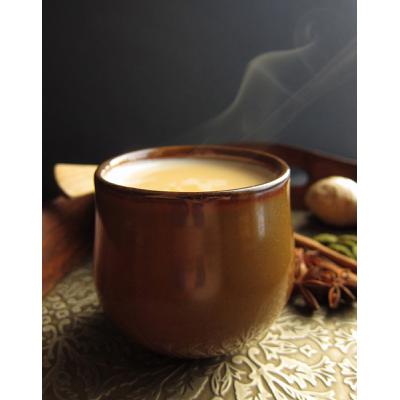
Hindi 'chá' in the English language

'Chai' is a word borrowed from Hindi 'chá'. The word entered the English language some time around 1974.


chai [noun] [1974]
A beverage that is a blend of black tea, honey, spices, and milk
See 'chai' on the Loan Words Map

See more loan words from Hindi.

note: Possibly originated from Chinese chá.
Etymology: Turkish 'çay' & Russian, Persian, Hindi, & Urdu 'chay' tea
See more loan words from 1970s.


Do you speak a little Hindi when you say 'madapollam'?

'Madapollam' is a word borrowed from Hindi 'madapollam'.


madapollam
(details not available)
See 'madapollam' on the Loan Words Map

See more loan words from Hindi.

note: A soft cotton fabric manufactured from fine yarns with a dense pick laid out in linen weave. Madapollam is used as an embroidery and handkerchief fabric and as a base for fabric printing. Late 17th century. From Madapollam the name of a suburb of Narsapur in Andhra Pradesh India.
Etymology: -
See more loan words from (unknown date).

Is 'lathi' English, or is it actually Hindi?

'Lathi' is a word borrowed from Hindi 'lathi'.


lathi
(details not available)
See 'lathi' on the Loan Words Map

See more loan words from Hindi.

note: (in South Asia) a long heavy iron-bound bamboo stick used as a weapon - especially by police.
Etymology: -
See more loan words from (unknown date).

How the Hindi language influenced English with the word 'dinghy'

'Dinghy' is a word borrowed from Hindi 'dinghy'. The word entered the English language some time around 1810.


dinghy [noun] [1810]
  • an East Indian rowboat or sailboat
  • a small boat carried on or towed behind a larger boat as a tender or a lifeboat
  • a small sailboat
  • a rubber life raft
See 'dinghy' on the Loan Words Map

See more loan words from Hindi.

Etymology: Bengali 'ḍiṅgi' Urdu 'ḍīngī' & Hindi 'ḍieṁgī'
See more loan words from 1800s.


Saturday, 12 November 2022

How the Hindi language influenced English with the word 'chutney'

'Chutney' is a word borrowed from Hindi 'chutney'. The word entered the English language some time around 1813.


chutney [noun] [1813]
A thick sauce of Indian origin that contains fruits, vinegar, sugar, and spices and is used as a condiment
See 'chutney' on the Loan Words Map

See more loan words from Hindi.

Etymology: Hindi 'caṭnī' & Urdu 'chaṭnī'
See more loan words from 1800s.


When you hear 'jodhpurs' are you hearing English or Hindi?

'Jodhpurs' is a word borrowed from Hindi 'Jodhphur'. The word entered the English language some time around 1899.


jodhpurs [noun] [1899]
  • riding breeches cut full through the hips and close-fitting from knee to ankle
  • an ankle-high boot fastened with a strap that is buckled at the side
See 'jodhpurs' on the Loan Words Map

See more loan words from Hindi.

Etymology: India
See more loan words from 1800s.


The Hindi roots of the word 'dhoti'

'Dhoti' is a word borrowed from Hindi 'dhoti'. The word entered the English language some time around 1612.


dhoti [noun] [1612]
A loincloth worn by men in some parts of India
See 'dhoti' on the Loan Words Map

See more loan words from Hindi.

Etymology: Hindi & Urdu 'dhotī'
See more loan words from 1600s.


How the Hindi language influenced English with the word 'shampoo'

'Shampoo' is a word borrowed from Hindi 'shampoo'. The word entered the English language some time around 1762.


shampoo [verb] [1762]
  • massage
  • to wash (as the hair) with soap and water or with a special preparation
  • to wash the hair of
See 'shampoo' on the Loan Words Map

See more loan words from Hindi.

Etymology: Hindi & Urdu 'cā̃po' imperative of 'cā̃pnā' to press, massage
See more loan words from 1700s.


Friday, 11 November 2022

How the Hindi language influenced English with the word 'dhobi'

'Dhobi' is a word borrowed from Hindi 'dhobi'.


dhobi
(details not available)
See 'dhobi' on the Loan Words Map

See more loan words from Hindi.

note: (in South Asia) a washerman or washerwoman.
Etymology: -
See more loan words from (unknown date).

Did you know that 'bangle' is actually Hindi?

'Bangle' is a word borrowed from Hindi 'bangle'. The word entered the English language some time around 1787.


bangle [noun] [1787]
  • a stiff usually ornamental bracelet or anklet slipped or clasped on
  • an ornamental disk that hangs loosely (as on a bracelet)
See 'bangle' on the Loan Words Map

See more loan words from Hindi.

Etymology: Hindi 'baṅglī'
See more loan words from 1700s.


When you say 'jungle' are you speaking Hindi?

'Jungle' is a word borrowed from Hindi 'jungle'. The word entered the English language some time around 1776.


jungle [noun] [1776]
  • an impenetrable thicket or tangled mass of tropical vegetation
  • a tract overgrown with thickets or masses of vegetation
  • a hobo camp
  • a confused or disordered mass of objects
  • jumble
See 'jungle' on the Loan Words Map

See more loan words from Hindi.

Etymology: Hindi 'jaṅgal' & Urdu 'jangal' forest, from Sanskrit 'jaṅgala' desert region
See more loan words from 1700s.


The Hindi origins of the word 'cashmere'

'Cashmere' is a word borrowed from Hindi 'cashmere'. The word entered the English language some time around 1684.


cashmere [noun] [1684]
  • fine wool from the undercoat of the cashmere goat
  • a yarn of this wool
  • a soft twilled fabric made originally from cashmere
See 'cashmere' on the Loan Words Map

See more loan words from Hindi.

Etymology: (Kashmir)
See more loan words from 1600s.


When you hear 'lakh' are you hearing English or Hindi?

'Lakh' is a word borrowed from Hindi 'lakh'. The word entered the English language some time around 1599.


lakh [noun] [1599]
  • one hundred thousand
  • a great number
See 'lakh' on the Loan Words Map

See more loan words from Hindi.

Etymology: Hindi & Urdu 'lākh'
See more loan words from 1500s.