Showing posts with label Arabic. Show all posts

Thursday, 29 October 2026

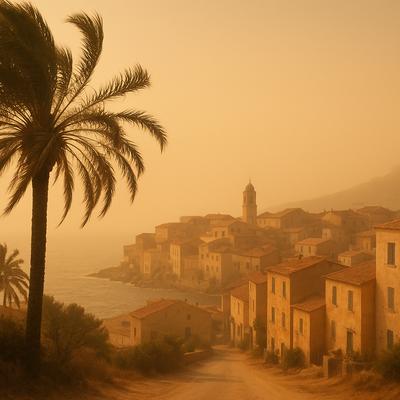
The Arabic origins of the word 'sumac'

'Sumac' is a word borrowed from Arabic 'summāqā'. The word entered the English language some time around the 14th century.
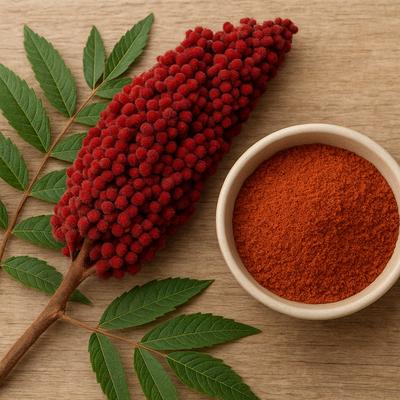

sumac [noun] [14th century]
  • a material used in tanning and dyeing that consists of dried powdered leaves and flowers of various
  • any of a genus (Rhus) of trees, shrubs, and woody vines of the cashew family that have leaves turning to brilliant co...

Meaning: a material used in tanning and dyeing that consists of dried powdered leaves and flowers of various sumacs; any of a genus ( Rhus ) of trees; shrubs; and woody vines of the cashew family that have leaves turning to brilliant colors in the autumn; small usually dioecious flowers; and spikes or loose clusters of red or whitish berries compare poison ivy poison oak poison sumac.

Etymology: Middle English sumac; from Anglo-French; ultimately from Arabic summaq.

Topics: Plants:Herbs, Food:Spices.

Origin: From Arabic to French to Latin to Aramaic to English.

note: Origin: Derived from Arabic through Old French and Medieval Latin. Etymology: From Arabic summāq (sumac) which is derived from the Aramaic summāqā meaning red. Context: The name refers to the deep red color of the berries of the plant which are dried and ground into a spice.
See 'sumac' on the Loan Words Map
See more loan words from Arabic.
See more loan words from 1300s.


Sunday, 25 October 2026

Is 'simoom' English, or is it actually Arabic?

'Simoom' is a word borrowed from Arabic 'samūm'. The word entered the English language some time around 1790.


simoom [noun] [1790]
A hot dry violent dust-laden wind from Asian and African deserts
Meaning: a hot dry violent dust-laden wind from Asian and African deserts.

Etymology: Arabic samum.

Topics: Geography:Landforms, Weather.

Origin: From Arabic to English.

note: A hot dry dust laden desert wind of North Africa and Arabia. From Arabic samum meaning poison wind. Also appears as simoon in older English.
See 'simoom' on the Loan Words Map

See more loan words from Arabic.
See more loan words from 1700s.


Do you speak a little Italian when you say 'sirocco'?

'Sirocco' is a word borrowed from Italian 'scirocco'. The word entered the English language some time around 1617.


sirocco [noun] [1617]
  • a hot dust-laden wind from the Libyan deserts that blows on the northern Mediterranean coast chiefly in Italy, Malta, a...
  • a warm moist oppressive southeast wind in the same regions
  • a hot or warm wind of cyclonic origin from an arid or heated region

Meaning: a hot dust-laden wind from the Libyan deserts that blows on the northern Mediterranean coast chiefly in Italy; Malta; and Sicily; a warm moist oppressive southeast wind in the same regions; a hot or warm wind of cyclonic origin from an arid or heated region.

Etymology: Italian scirocco; sirocco; alteration of Old Italian scilocco; from Arabic dialect (Maghreb) sloq southeast wind; alteration of Arabic shaluq; shuluq.

Topics: Weather.

Origin: From Arabic to English.

note: The word siricco refers to Sirocco a hot dry dusty wind that blows from North Africa across the Mediterranean Sea. Its etymology traces back to the Italian word scirocco which itself derives from the Arabic word šarq meaning east. Therefore the name ultimately refers to the wind blowing from the east.
See 'sirocco' on the Loan Words Map

See more loan words from Italian.
See more loan words from 1600s.


Monday, 19 October 2026

When you say 'macramé' are you speaking Arabic?

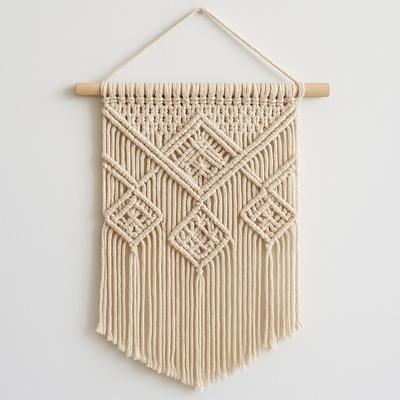
'Macramé' is a word borrowed from Arabic 'miqrama'. The word entered the English language some time around 1865.


macramé [noun] [1865]
  • a coarse lace or fringe made by knotting threads or cords in a geometrical pattern
  • the art of tying knots in patterns

Meaning: a coarse lace or fringe made by knotting threads or cords in a geometrical pattern; the art of tying knots in patterns.

Etymology: French or Italian; French macrame; from Italian macrame; from Turkish makrama napkin; towel; from Arabic miqrama coverlet.

Topics: Materials:Textiles.

Origin: From Arabic to English.
See 'macramé' on the Loan Words Map

See more loan words from Arabic.
See more loan words from 1800s.


Is 'dhow' English, or is it actually Arabic?

'Dhow' is a word borrowed from Arabic 'dawa'. The word entered the English language some time around 1785.


dhow [noun] [1785]
An Arab lateen-rigged boat usually having a long overhang forward, a high poop, and a low waist
Meaning: an Arab lateen-rigged boat usually having a long overhang forward; a high poop; and a low waist.

Etymology: Arabic dawa.

Topics: Maritime:Nautical.

Origin: From Arabic to English.
See 'dhow' on the Loan Words Map

See more loan words from Arabic.
See more loan words from 1700s.


Tuesday, 24 February 2026

Do you speak a little Arabic when you say 'gazelle'?

'Gazelle' is a word borrowed from Arabic 'ghazāl'. The word entered the English language some time around 1600.


gazelle [noun] [1600]
Any of numerous small to medium graceful and swift African and Asian antelopes ( and related genera)
See 'gazelle' on the Loan Words Map

See more loan words from Arabic.

Etymology: French, from Middle French, from Arabic 'ghazāl'
See more loan words from 1600s.


Friday, 3 January 2025

The Arabic origins of the word 'kismet'

'Kismet' is a word borrowed from Arabic 'qasama'. The word entered the English language some time around 1834.


kismet [noun] [1834]
Fate
See 'kismet' on the Loan Words Map

See more loan words from Arabic.

Etymology: Turkish, from Arabic 'qisma' portion, lot
See more loan words from 1800s.


How the Arabic language influenced English with the word 'houris'

'Houris' is a word borrowed from Arabic 'ḥūrīya'. The word entered the English language some time around 1737.


houris [noun] [1737]
  • one of the beautiful maidens that in Muslim belief live with the blessed in paradise
  • a voluptuously beautiful young woman
See 'houris' on the Loan Words Map

See more loan words from Arabic.

Etymology: French, from Persian 'hūri' from Arabic 'ḥūrīya'
See more loan words from 1700s.


When you hear 'jumper' are you hearing English or Arabic?

'Jumper' is a word borrowed from Arabic 'jubba'. The word entered the English language some time around 1611.


jumper [noun] [1611]
  • a person who
  • any of various devices operating with a motion
  • any of several sleds
  • a connection used to close a break or cut out part of a circuit
See 'jumper' on the Loan Words Map

See more loan words from Arabic.

note: Via Old French from Arabic jubba.
Etymology: -
See more loan words from 1600s.


When you hear 'loofah' are you hearing English or Arabic?

'Loofah' is a word borrowed from Arabic 'lūfa'. The word entered the English language some time around 1887.


loofah [noun] [1887]
  • any of a genus (Luffa) of Old World tropical plants of the gourd family with large fruits
  • its fruit
  • a sponge consisting of the fibrous skeleton of the fruit of a loofah (especially )
See 'loofah' on the Loan Words Map

See more loan words from Arabic.

Etymology: New Latin 'luffa' from Arabic 'lūf'
See more loan words from 1800s.


Did you know that 'carafe' is actually Arabic?

'Carafe' is a word borrowed from Arabic 'garafe'. The word entered the English language some time around 1767.


carafe [noun] [1767]
  • a bottle with a flaring lip used to hold beverages and especially wine
  • a usually glass container used to hold and serve coffee
See 'carafe' on the Loan Words Map

See more loan words from Arabic.

Etymology: French, from Italian 'caraffa' from Arabic 'gharrāfa'
See more loan words from 1700s.


Monday, 6 November 2023

When you say 'attar' are you speaking Arabic?

'Attar' is a word borrowed from Arabic 'iṭr'. The word entered the English language some time around 1798.


attar [noun] [1798]
  • a fragrant essential oil (as from rose petals)
  • fragrance
See 'attar' on the Loan Words Map

See more loan words from Arabic.

Etymology: Persian 'ʽaṭir' perfumed, from Arabic, from 'ʽiṭr' perfume
See more loan words from 1700s.


Tuesday, 8 August 2023

The word 'razzia' is a loan word from Arabic 'غَزِيَّة'

'Razzia' is a word borrowed from Arabic 'غَزِيَّة'.


razzia
(details not available)
See 'razzia' on the Loan Words Map

See more loan words from Arabic.

note: history: a raid for plunder or slaves esp especially one carried out by Moors in North Africa.
Etymology: -
See more loan words from (unknown date).

Did you know that 'wadi' is actually Arabic?

'Wadi' is a word borrowed from Arabic 'wādī'. The word entered the English language some time around 1828.


wadi [noun] [1828]
  • the bed or valley of a stream in regions of southwestern Asia and northern Africa that is usually dry except during the...
  • a shallow usually sharply defined depression in a desert region
See 'wadi' on the Loan Words Map

See more loan words from Arabic.

Etymology: Arabic 'wādi'
See more loan words from 1800s.


When you say 'nacre' are you speaking Arabic?

'Nacre' is a word borrowed from Arabic 'naqqāra'. The word entered the English language some time around 1718.


nacre [noun] [1718]
Mother-of-pearl
See 'nacre' on the Loan Words Map

See more loan words from Arabic.

Etymology: French, from Middle French, from Old Italian 'naccara' drum, nacre, from Arabic 'naqqāra' drum
See more loan words from 1700s.


Monday, 7 August 2023

The word 'fakir' is originally from Arabic 'faqīr'

'Fakir' is a word borrowed from Arabic 'faqīr'. The word entered the English language some time around 1609.


fakir [noun] [1609]
  • a Muslim mendicant
  • dervish
  • an itinerant Hindu ascetic or wonder-worker
  • impostor
  • swindler
See 'fakir' on the Loan Words Map

See more loan words from Arabic.

Etymology: Arabic 'faqīr' literally, poor man
See more loan words from 1600s.


Is 'keffiyeh' English, or is it actually Arabic?

'Keffiyeh' is a word borrowed from Arabic 'kaffiyeh'.


keffiyeh [(unknown)] [(unknown)]
(not available)
See 'keffiyeh' on the Loan Words Map

See more loan words from Arabic.

note: A cotton headdress worn by Arabs. The scarf which is usually made from cotton was an essential piece of clothing for the Bedouins of the desert and Fellahi people. Etymology: from Arabic perhaps from Late Latin cofea (coif). Otherwise the 'Kufa' area of Iraq meaning “from the city of Kufa''.
Etymology: -
See more loan words from (unknown date).


Arabic 'ʿarq' in the English language

'Erg' is a word borrowed from Arabic 'ʿarq'. The word entered the English language some time around 1873.


erg [noun] [1873]
A centimeter-gram-second unit of work equal to the work done by a force of one dyne acting through a distance of one ce...
See 'erg' on the Loan Words Map

See more loan words from Arabic.

note: An area of shifting sand dunes in the Sahara.
Etymology: Greek 'ergon' work
See more loan words from 1800s.


Do you speak a little Arabic when you say 'mufti'?

'Mufti' is a word borrowed from Arabic 'mufti'. The word entered the English language some time around 1586.


mufti [noun] [1586]
A professional jurist who interprets Muslim law
See 'mufti' on the Loan Words Map

See more loan words from Arabic.

note: Late 19th century from Italian - literally ‘mask’ from Arabic masḵara ‘buffoon’.
Etymology: Arabic 'muftī'
See more loan words from 1500s.


The Arabic roots of the word 'mascara'

'Mascara' is a word borrowed from Arabic 'masḵara'. The word entered the English language some time around 1886.


mascara [noun] [1886]
A cosmetic especially for making the eyelashes darker and more prominent
See 'mascara' on the Loan Words Map

See more loan words from Arabic.

note: Late 19th century from Italian - literally ‘mask’ from Arabic masḵara ‘buffoon’.
Etymology: Probably from Italian 'maschera' mask
See more loan words from 1800s.