Showing posts with label Scandinavian. Show all posts

Sunday, 25 October 2026

The word 'thrall' is a loan word from Scandinavian 'thraell'

'Thrall' is a word borrowed from Scandinavian 'thraell'. The word entered the English language some time before the 12th century.
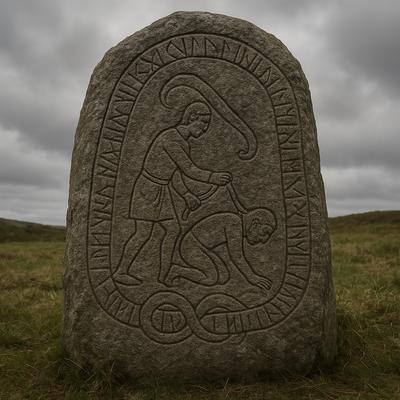

thrall [noun] [before 12th century]
  • a servant slave
  • bondman
  • serf
  • a person in moral or mental servitude
  • a state of servitude or submission

Meaning: a servant slave : bondman; serf; a person in moral or mental servitude.

Etymology: Middle English thral; from Old English thrl; from Old Norse thrll.

Topics: Society:Culture.

Origin: From Scandinavian to English.
See 'thrall' on the Loan Words Map
See more loan words from Scandinavian.
See more loan words from before 1200.


Monday, 19 October 2026

The word 'scoot' originally came from Scandinavian as 'skjóta'

'Scoot' is a word borrowed from Scandinavian 'skjóta'. The word entered the English language some time around 1758.


scoot [verb] [1758]
  • to move swiftly
  • to slide especially while seated

Meaning: to move swiftly; to slide especially while seated scoot over and let me sit down.

Etymology: perhaps alteration of earlier scout; of unknown origin.

Topics: Maritime:Nautical.

Origin: From Scandinavian to English.

note: The word scoot likely emerged in the mid-18th century possibly as nautical slang with uncertain origins but potential links to Scandinavian words like Old Norse skjóta (to shoot/dart) or related dialectal terms for quick movement and in Scots it also meant to gush out. It's also thought to be connected to Middle English scottlynge (scampering/scuttling) and some sources suggest Dutch/Italian roots (like scampare to decamp) though Scandinavian influence is strong and it was perhaps reintroduced to British English from America.
See 'scoot' on the Loan Words Map

See more loan words from Scandinavian.
See more loan words from 1700s.


The Scandinavian origins of the word 'crooked'

'Crooked' is a word borrowed from Scandinavian 'krāka'. The word entered the English language some time around the 13th century.


crooked [adjective] [13th century]
  • not straight
  • dishonest

Meaning: Bent or curved; figuratively dishonest.

Etymology: From crook plus -ed; crook is related to Old Norse krok hook.

Topics: Society:Culture.

Origin: From Norse to English.

note: The word crooked comes from Middle English croked the past participle of the verb croken (to bend) ultimately stemming from Old Norse krāka (hook) or Proto-Germanic krokaz meaning a bend or hook. Evolved from an even older Proto-Indo-European root for bending. It literally meant bent or curved with figurative senses of dishonesty or bad temper developing by the 13th century.
See 'crooked' on the Loan Words Map

See more loan words from Scandinavian.
See more loan words from 1200s.


Friday, 3 January 2025

Did you know that 'fog' is actually Scandinavian?

'Fog' is a word borrowed from Scandinavian 'fogg'. The word entered the English language some time around 1544.


fog [noun] [1544]
  • vapor condensed to fine particles of water suspended in the lower atmosphere that differs from cloud only in being near...
  • a fine spray or a foam for firefighting
  • a murky condition of the atmosphere or a substance causing it
  • a state of confusion or bewilderment
See 'fog' on the Loan Words Map

See more loan words from Scandinavian.

note: Late Middle English: origin uncertain; perhaps related to Norwegian fogg long scattered grass on damp ground.
Etymology: Probably back-formation from 'foggy'
See more loan words from 1500s.


Is 'reindeer' English, or is it actually Scandinavian?

'Reindeer' is a word borrowed from Scandinavian 'hreindýri'. The word entered the English language some time around the 14th century.


reindeer [noun] [14th century]
  • caribou
  • used especially for one of the Old World
See 'reindeer' on the Loan Words Map

See more loan words from Scandinavian.

Etymology: Middle English 'reindere' from Old Norse 'hreinn' reindeer + Middle English 'deer' animal, deer
See more loan words from 1300s.


The Scandinavian roots of the word 'smorgasbord'

'Smorgasbord' is a word borrowed from Scandinavian 'smorgasbord'. The word entered the English language some time around 1879.


smorgasbord [noun] [1879]
  • a luncheon or supper buffet offering a variety of foods and dishes (as hors d'oeuvres, hot and cold meats, smoked and p...
  • an often large heterogeneous mixture
  • mélange
See 'smorgasbord' on the Loan Words Map

See more loan words from Scandinavian.

Etymology: Swedish 'smörgåsbord' from 'smörgås' open sandwich + 'bord' table
See more loan words from 1800s.


Tuesday, 8 August 2023

Do you speak a little Scandinavian when you say 'spry'?

'Spry' is a word borrowed from Scandinavian 'sprækr'. The word entered the English language some time around 1746.


spry [adjective] [1746]
  • nimble
See 'spry' on the Loan Words Map

See more loan words from Scandinavian.

note: From British dialectal sprey from Old Norse sprækr (“nimble lively”) from Proto-Germanic *sprēkiz (“lively”) from Proto-Indo-European *(s)preg- (“to strew jerk sprinkle scatter”).
Etymology: origin unknown
See more loan words from 1700s.


The Scandinavian roots of the word 'walleyed'

'Walleyed' is a word borrowed from Scandinavian 'vagl-eygr'. The word entered the English language some time around the 15th century.


walleyed [adjective] [15th century]
  • having or affected with
  • marked by a wild irrational staring of the eyes
See 'walleyed' on the Loan Words Map

See more loan words from Scandinavian.

Etymology: By folk etymology from Middle English 'wawil-eghed' part translation of Old Norse 'vagl-eygr' walleyed, from 'vagl' beam (akin to Greek 'ochleus' bar, Old English 'wegan' to move, carry) + 'eygr' eyed
See more loan words from 1400s.


The word 'gnash' originally came from Scandinavian as 'gnastan'

'Gnash' is a word borrowed from Scandinavian 'gnastan'. The word entered the English language some time around the 15th century.


gnash [verb] [15th century]
To strike or grind (as the teeth) together
See 'gnash' on the Loan Words Map

See more loan words from Scandinavian.

note: Old Norse gnastan gnashing of teeth
Etymology: Alteration of Middle English 'gnasten'
See more loan words from 1400s.


Monday, 7 August 2023

When you hear 'lam' are you hearing English or Scandinavian?

'Lam' is a word borrowed from Scandinavian 'lamme'. The word entered the English language some time around 1595.


lam [verb] [1595]
  • to beat soundly
  • thrash
  • strike
  • to flee hastily
  • scram
See 'lam' on the Loan Words Map

See more loan words from Scandinavian.

Etymology: Perhaps of Scandinavian origin; akin to Old Norse 'lemja' to thrash; akin to Old English 'lama' lame
See more loan words from 1500s.


When you hear 'skerry' are you hearing English or Scandinavian?

'Skerry' is a word borrowed from Scandinavian 'sker'. The word entered the English language some time around 1612.


skerry [noun] [1612]
A rocky isle - reef
See 'skerry' on the Loan Words Map

See more loan words from Scandinavian.

Etymology: Scots (Shetland and Orkney islands), ultimately from Old Norse 'skerj-, sker' rocky islet
See more loan words from 1600s.


The word 'gruesome' is a loan word from Scandinavian 'grue'

'Gruesome' is a word borrowed from Scandinavian 'grue'. The word entered the English language some time around 1700.


gruesome [adjective] [circa 1700]
Inspiring horror or repulsion - grisly
See 'gruesome' on the Loan Words Map

See more loan words from Scandinavian.

Etymology: Alteration of earlier 'growsome' from English dialect 'grow, grue' to shiver, from Middle English 'gruen' probably from Middle Dutch 'grūwen;' akin to Old High German in'grūēn' to shiver
See more loan words from 1700s.


Did you know that 'brae' is actually Scandinavian?

'Brae' is a word borrowed from Scandinavian 'brá'. The word entered the English language some time around the 13th century.


brae [noun] [13th century]
A hillside especially along a river
See 'brae' on the Loan Words Map

See more loan words from Scandinavian.

note: Consider Brae in Scotland and also Bray of Ireland and Brí an old Irish word meaning 'hill'.
Etymology: Middle English 'bra' from Old Norse 'brā' eyelid; akin to Old English 'brǣw' eyebrow, and probably to Old English 'bregdan' to move quickly
See more loan words from 1200s.


Sunday, 13 November 2022

The Scandinavian roots of the word 'mire'

'Mire' is a word borrowed from Scandinavian 'myrr'. The word entered the English language some time around the 14th century.


mire [noun] [14th century]
  • wet spongy earth (as of a bog or marsh)
  • heavy often deep mud or slush
  • a troublesome or intractable situation
See 'mire' on the Loan Words Map

See more loan words from Scandinavian.

Etymology: Middle English, from Old Norse 'mȳrr;' akin to Old English 'mōs' marsh
See more loan words from 1300s.


The Scandinavian roots of the word 'husband'

'Husband' is a word borrowed from Scandinavian 'husbandi'. The word entered the English language some time around the 13th century.


husband [noun] [13th century]
  • a male partner in a marriage
  • manager
  • a frugal manager
See 'husband' on the Loan Words Map

See more loan words from Scandinavian.

Etymology: Middle English 'husbonde' from Old English 'hūsbonda' master of a house, from Old Norse 'hūsbōndi' from 'hūs' house + 'bōndi' householder; akin to Old Norse 'būa' to inhabit; akin to Old English 'būan' to dwell
See more loan words from 1200s.


Saturday, 12 November 2022

Is 'ferry' English, or is it actually Scandinavian?

'Ferry' is a word borrowed from Scandinavian 'ferja'. The word entered the English language some time before the 12th century.


ferry [verb] [before 12th century]
  • to carry by boat over a body of water
  • to cross by a ferry
  • to convey (as by aircraft or motor vehicle) from one place to another
  • transport
  • to fly (an airplane) from the factory or other shipping point to a designated delivery point or from one base to anothe...
See 'ferry' on the Loan Words Map

See more loan words from Scandinavian.

Etymology: Middle English 'ferien' from Old English 'ferian' to carry, convey; akin to Old English 'faran' to go
See more loan words from before 1200.


Scandinavian 'jól' in the English language

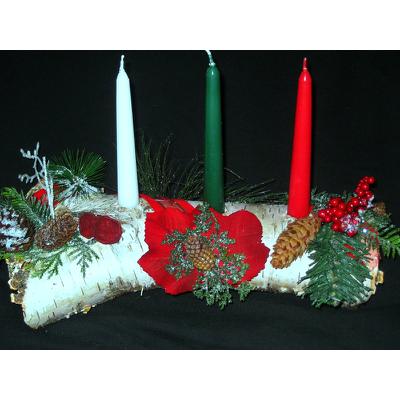
'Yule' is a word borrowed from Scandinavian 'jól'. The word entered the English language some time before the 12th century.


yule [noun] [before 12th century]
The feast of the nativity of Jesus Christ - christmas
See 'yule' on the Loan Words Map

See more loan words from Scandinavian.

Etymology: Middle English 'yol' from Old English 'geōl;' akin to Old Norse 'jōl' a pagan midwinter festival
See more loan words from before 1200.


Do you speak a little Scandinavian when you say 'tarn'?

'Tarn' is a word borrowed from Scandinavian 'tarn'. The word entered the English language some time around the 14th century.


tarn [noun] [14th century]
A small steep-banked mountain lake or pool
See 'tarn' on the Loan Words Map

See more loan words from Scandinavian.

Etymology: Middle English 'terne, tarne' of Scandinavian origin; akin to Old Norse 'tjǫrn' small lake
See more loan words from 1300s.


The Scandinavian origins of the word 'glad'

'Glad' is a word borrowed from Scandinavian 'glathr'. The word entered the English language some time before the 12th century.


glad [adjective] [before 12th century]
  • having a cheerful or happy disposition by nature
  • experiencing pleasure, joy, or delight
  • made happy
  • made pleased, satisfied, or grateful
  • often used with 'of'
  • very willing
See 'glad' on the Loan Words Map

See more loan words from Scandinavian.

note: Related to Old Norse glathr ‘bright joyous’
Etymology: Middle English, shining, glad, from Old English 'glæd;' akin to Old High German 'glat' shining, smooth, Latin 'glaber' smooth, bald
See more loan words from before 1200.


The word 'berserk' is originally from Scandinavian 'berserkr'

'Berserk' is a word borrowed from Scandinavian 'berserkr'. The word entered the English language some time around 1818.


berserk [noun] [1818]
  • an ancient Scandinavian warrior frenzied in battle and held to be invulnerable
  • one whose actions are recklessly defiant
See 'berserk' on the Loan Words Map

See more loan words from Scandinavian.

Etymology: Old Norse 'berserkr' probably from 'ber-' bear + 'serkr' shirt
See more loan words from 1800s.