Showing posts with label Japanese. Show all posts

Thursday, 29 October 2026

The word 'tycoon' originally came from Japanese as 'taikun'

'Tycoon' is a word borrowed from Japanese 'taikun'. The word entered the English language some time around 1857.


tycoon [noun] [1857]
  • shogun
  • a top leader (as in politics)
  • a businessman of exceptional wealth and power
  • magnate

Meaning: shogun; a top leader (as in politics); a businessman of exceptional wealth and power : magnate.

Etymology: Japanese taikun.

Topics: Economy:Finance.

Origin: From Japanese to English.
See 'tycoon' on the Loan Words Map

See more loan words from Japanese.
See more loan words from 1800s.


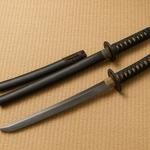
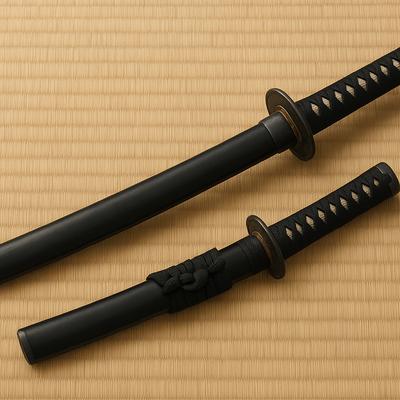
Do you speak a little Japanese when you say 'wakizashi'?

'Wakizashi' is a word borrowed from Japanese 'wakizashi'.


wakizashi
(details not available)
Meaning: Short Japanese sword traditionally worn by samurai.

Etymology: From Japanese wakizashi; its internal word analysis is debated.

Topics: Sports:MartialArts.

Origin: From Japanese to English.

note: One of the traditionally made Japanese swords worn by the samurai in feudal Japan. Its name refers to the practice of wearing it inserted through one's obi or sash.
See 'wakizashi' on the Loan Words Map

See more loan words from Japanese.
See more loan words from (unknown date).

Sunday, 25 October 2026

When you hear 'tatami' are you hearing English or Japanese?

'Tatami' is a word borrowed from Japanese 'tatami'. The word entered the English language some time around 1614.


tatami [noun] [1614]
Straw matting used as a floor covering in a Japanese home
Meaning: straw matting used as a floor covering in a Japanese home.

Etymology: Japanese.

Topics: Household:Furniture.

Origin: From Japanese to English.

note: From Japanese tatami (畳) derived from the verb tatamu (to fold or to pile). This refers to the early form of the mats which were thin and foldable unlike the modern thick rigid mats.
See 'tatami' on the Loan Words Map

See more loan words from Japanese.
See more loan words from 1600s.


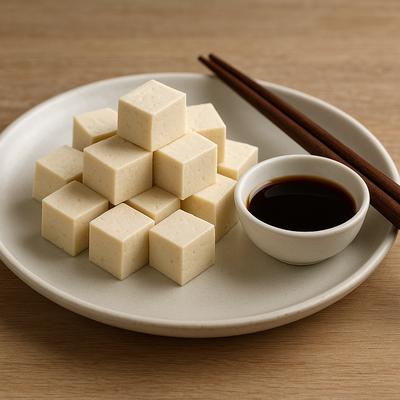
Did you know that 'tofu' is actually Japanese?

'Tofu' is a word borrowed from Japanese 'tofu'. The word entered the English language some time around 1771.


tofu [noun] [1771]
A soft food product prepared by treating soybean milk with coagulants (as magnesium chloride or diluted acids)
Meaning: soybean curd food.

Etymology: From Japanese tofu from Chinese doufu.

Topics: Food:Dishes.

Origin: From Chinese to Japanese to English.

note: Meaning: soybean curd food. Etymology: From Japanese tofu from Chinese doufu.
See 'tofu' on the Loan Words Map

See more loan words from Japanese.
See more loan words from 1700s.


Monday, 19 October 2026

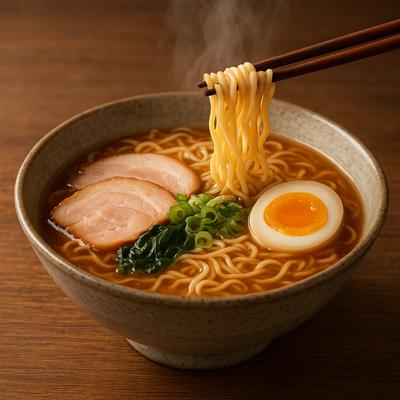
When you hear 'ramen' are you hearing English or Japanese?

'Ramen' is a word borrowed from Japanese 'ramen'. The word entered the English language some time around 1972.


ramen [noun] [1972]
Quick-cooking egg noodles usually served in a broth with bits of meat and vegetables
Meaning: quick-cooking egg noodles usually served in a broth with bits of meat and vegetables.

Etymology: Japanese ramen.

Topics: Food:Dishes, Food:Staples.

Origin: From Japanese to English.
See 'ramen' on the Loan Words Map

See more loan words from Japanese.
See more loan words from 1970s.


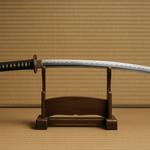
When you hear 'katana' are you hearing English or Japanese?

'Katana' is a word borrowed from Japanese 'katana'.


katana
(details not available)
Meaning: Traditionally single-edged Japanese sword.

Etymology: From Japanese katana sword; deeper word history is uncertain.

Topics: Military:Weapons.

Origin: From Japanese to English.

note: A slightly curved single-edged sword historically worn by the Japanese samurai.
See 'katana' on the Loan Words Map

See more loan words from Japanese.
See more loan words from (unknown date).

How the Japanese language influenced English with the word 'kimono'

'Kimono' is a word borrowed from Japanese 'kimono'. The word entered the English language some time around 1886.


kimono [noun] [1886]
  • a long robe with wide sleeves traditionally worn with a broad sash as an outer garment by the Japanese
  • a loose dressing gown or jacket

Meaning: Japanese robe with wide sleeves.

Etymology: Borrowed from Japanese kimono.

Topics: Clothing:Garments.

Origin: From Japanese to English.

note: Meaning: Japanese robe with wide sleeves. Etymology: Borrowed from Japanese kimono.
See 'kimono' on the Loan Words Map

See more loan words from Japanese.
See more loan words from 1800s.

Is 'haiku' English, or is it actually Japanese?

'Haiku' is a word borrowed from Japanese 'haiku'. The word entered the English language some time around 1902.


haiku [noun] [1902]
  • an unrhymed verse form of Japanese origin having three lines containing usually five, seven, and five syllables respect...
  • a poem in this form usually having a seasonal reference

Meaning: an unrhymed verse form of Japanese origin having three lines containing usually five; seven; and five syllables respectively; a poem in this form usually having a seasonal reference compare tanka.

Etymology: Japanese.

Topics: Arts:Visual.

Origin: From Japanese to English.
See 'haiku' on the Loan Words Map

See more loan words from Japanese.
See more loan words from 1900s.


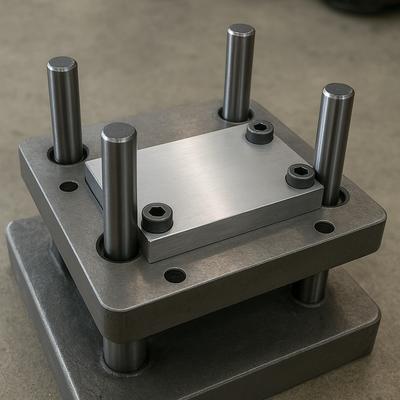
The Japanese origins of the word 'poka-yoke'

'Poka-yoke' is a word borrowed from Japanese 'poka-yoke'.


poka-yoke
(details not available)
Meaning: Design or process that prevents mistakes.

Etymology: Japanese poka-yoke combines poka inadvertent error and yokeru avoid.

Topics: Technology:Automation.

Origin: From Japanese to English.

note: A Japanese term that means mistake-proofing or error prevention. It is also sometimes referred to as a forcing function or a behavior-shaping constraint. A poka-yoke is any mechanism in a process that helps an equipment operator avoid (yokeru) mistakes (poka) and defects by preventing correcting or drawing attention to human errors as they occur. The concept was formalized and the term adopted by Shigeo Shingo as part of the Toyota Production System.
See 'poka-yoke' on the Loan Words Map

See more loan words from Japanese.
See more loan words from (unknown date).

Saturday, 29 August 2026

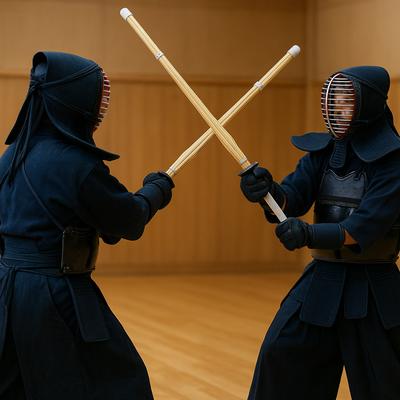
Did you know that 'kendo' is actually Japanese?

'Kendo' is a word borrowed from Japanese 'kendo'. The word entered the English language some time around 1921.


kendo [noun] [1921]
A Japanese sport of fencing usually with bamboo swords
See 'kendo' on the Loan Words Map

See more loan words from Japanese.

note: Kendo (剣道) which translates to way of the sword is a modern Japanese martial art derived from traditional swordsmanship (kenjutsu). The name combines ken (剑/剣) meaning sword and dō (道) meaning way path or discipline reflecting its focus on self-cultivation and mental discipline rather than just combat.
Etymology: Japanese 'kendō' from 'ken' sword + 'dō' art
See more loan words from 1920s.


Saturday, 21 March 2026

How the Japanese language influenced English with the word 'yakuza'

'Yakuza' is a word borrowed from Japanese 'yakuza'. The word entered the English language some time around 1964.


yakuza [noun] [1964]
  • a Japanese gangster
  • an organized crime syndicate in Japan
See 'yakuza' on the Loan Words Map

See more loan words from Japanese.

Etymology: Japanese, ruffian, gangster
See more loan words from 1960s.


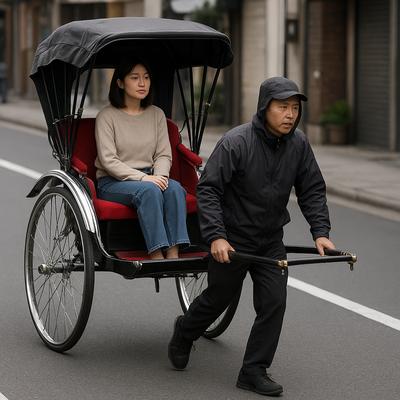
When you say 'rickshaw' are you speaking Japanese?

'Rickshaw' is a word borrowed from Japanese 'jinricksha'. The word entered the English language some time around 1887.


rickshaw [noun] [1887]
A small covered 2-wheeled vehicle usually for one passenger that is pulled by one man and that was used originally in J...
See 'rickshaw' on the Loan Words Map

See more loan words from Japanese.

note: jin means man - riki means strength or power and sha means carriage. Rickshaws originated in Japan where they were first used in the late 1800s.
Etymology: Alteration of 'jinrikisha'
See more loan words from 1800s.

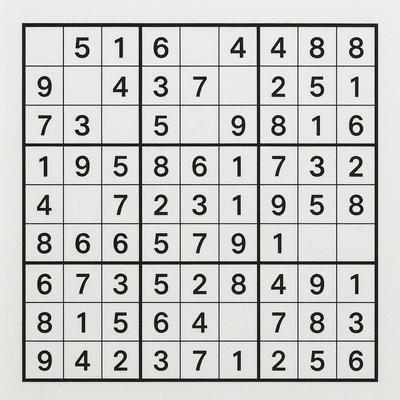
Saturday, 7 March 2026

When you hear 'sudoku' are you hearing English or Japanese?

'Sudoku' is a word borrowed from Japanese 'sudoku'. The word entered the English language some time around 2004.


sudoku [noun] [2004]
A puzzle in which several numbers are to be filled into a 9x9 grid of squares so that every row, every column, and ever...
See 'sudoku' on the Loan Words Map

See more loan words from Japanese.

Etymology: Japanese 'sūdoku' short for 'sūji wa dokushin ni kagiru' "the numerals must remain single" (i.e., the digits can occur only once)
See more loan words from 2000s.

Monday, 2 March 2026

Japanese 'han chō' in the English language

'Honcho' is a word borrowed from Japanese 'han chō'. The word entered the English language some time around 1955.


honcho [noun] [1955]
  • boss
  • hotshot
See 'honcho' on the Loan Words Map

See more loan words from Japanese.

Etymology: Japanese 'hanchō' squad leader, from 'han' squad + 'chō' head, chief
See more loan words from 1950s.


Sunday, 1 March 2026

Did you know that 'shogun' is actually Japanese?

'Shogun' is a word borrowed from Japanese 'sei-i-tai shogun'. The word entered the English language some time around 1727.


shogun [noun] [1727]
One of a line of military governors ruling Japan until the revolution of 1867–68
See 'shogun' on the Loan Words Map

See more loan words from Japanese.

Etymology: Japanese 'shōgun'
See more loan words from 1700s.


Japanese 'bonsai' in the English language

'Bonsai' is a word borrowed from Japanese 'bonsai'. The word entered the English language some time around 1900.


bonsai [noun] [1900]
  • a potted plant (as a tree) dwarfed (as by pruning) and trained to an artistic shape
  • the art of growing such a plant
See 'bonsai' on the Loan Words Map

See more loan words from Japanese.

note: The word bonsai comes from Japanese combining bon (盆 tray or shallow pot) and sai (栽 planting or plant) literally meaning tray planting or tree planted in a pot. This term originates from the ancient Chinese practice of penjing (or pun-sai)
Etymology: Japanese, literally, tray planting
See more loan words from 1900s.


Tuesday, 24 February 2026

Do you speak a little Japanese when you say 'wabi-sabi'?

'Wabi-sabi' is a word borrowed from Japanese 'wabi-sabi'.


wabi-sabi
(details not available)
See 'wabi-sabi' on the Loan Words Map

See more loan words from Japanese.

note: In traditional Japanese aesthetics wabi-sabi (侘び寂び) is centered on the acceptance of transience and imperfection.
Etymology: -
See more loan words from (unknown date).

Monday, 23 February 2026

Do you speak a little Japanese when you say 'origami'?

'Origami' is a word borrowed from Japanese 'orikami'. The word entered the English language some time around 1956.


origami [noun] [1956]
The Japanese art or process of folding squares of paper into representational shapes
See 'origami' on the Loan Words Map

See more loan words from Japanese.

Etymology: Japanese, from 'ori' fold + 'kami' paper
See more loan words from 1950s.


Sunday, 5 January 2025

Is 'ayu' English, or is it actually Japanese?

'Ayu' is a word borrowed from Japanese 'ayu'.


ayu
(details not available)
See 'ayu' on the Loan Words Map

See more loan words from Japanese.

note: A sweetfish - an amphidromous fish of East Asia - the only member of its genus and family - Plecoglossus altivelis. Named and prized for its sweet-tasting flesh. From Japanese (ayu: sweetfish).
Etymology: -
See more loan words from (unknown date).

Friday, 3 January 2025

The Japanese origins of the word 'emoji'

'Emoji' is a word borrowed from Japanese 'moji'.


emoji
(details not available)
See 'emoji' on the Loan Words Map

See more loan words from Japanese.

note: First recorded in 1990–95 from Japanese. Literally 'pictograph'
Etymology: -
See more loan words from (unknown date).