'Sandalwood' is a word borrowed from Sanskrit 'candana'. The word entered the English language some time around 1511.
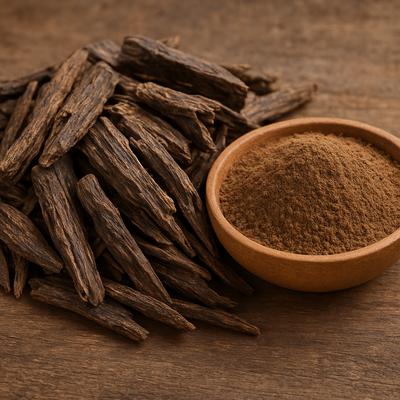
sandalwood [noun] [circa 1511]
- the compact close-grained fragrant yellowish heartwood of a parasitic tree ( of the family Santalaceae, the sandalwood ...
- the tree that yields this wood
- any of various trees other than the sandalwood some of which yield dyewoods
- the fragrant wood of such a tree
See 'sandalwood' on the Loan Words Map
See more loan words from Sanskrit.
note: The term for the tree has a very different etymology from the English word 'sandal'. Sanskrit (candana): Derived from candrah meaning shining or glowing linked to the Latin candere (to shine or glow) in reference to its sacred glowing presence when burned. Arabic & Persian (sandal): The spice and incense trade brought the word into Arabic and Persian as sandal. Greek & Latin (santalum / sandalum): Medieval Latin adapted it as sandalum via the Late Greek word santalon. French & English: passed into Old French as sandale first appearing in the English language in the early 16th century.
Etymology: sandalwood (from Middle English, from Anglo-French 'sandali' from Medieval Latin 'sandalum' from Late Greek 'santalon' ultimately from Sanskrit 'candana' of Dravidian origin; akin to Tamil 'cāntu' sandalwood tree) + 'wood'
See more loan words from 1500s.

No comments:
Post a Comment