Saturday, 29 August 2026

When you hear 'junk' are you hearing English or Malaysian?

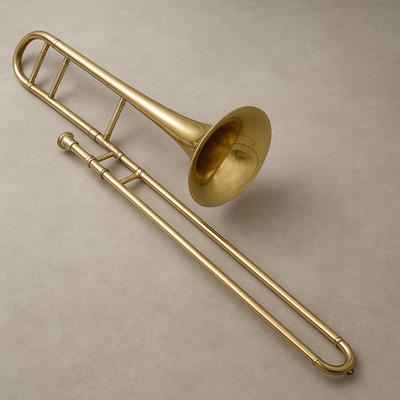
'Junk' is a word borrowed from Malaysian 'jong'. The word entered the English language some time around the 14th century.


junk [noun] [14th century]
  • pieces of old cable or cordage used especially to make gaskets, mats, swabs, or oakum
  • old iron, glass, paper, or other waste that may be used again in some form
  • secondhand, worn, or discarded articles
  • clutter
See 'junk' on the Loan Words Map

See more loan words from Malaysian.

note: A flat-bottomed sailing vessel of a kind typical of China and the East Indies with a prominent stem and lugsails. From Malay jong via French juncque or Dutch jonke or Portuguese junco.
Etymology: Middle English 'jonke'
See more loan words from 1300s.


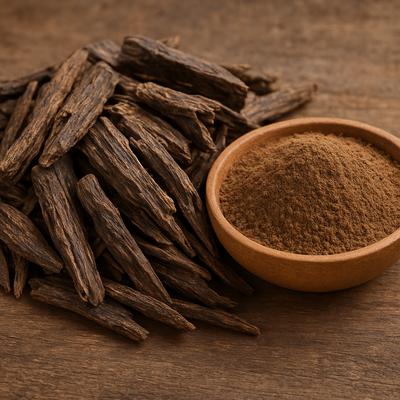
The word 'sandalwood' is originally from Sanskrit 'candana'

'Sandalwood' is a word borrowed from Sanskrit 'candana'. The word entered the English language some time around 1511.


sandalwood [noun] [circa 1511]
  • the compact close-grained fragrant yellowish heartwood of a parasitic tree ( of the family Santalaceae, the sandalwood ...
  • the tree that yields this wood
  • any of various trees other than the sandalwood some of which yield dyewoods
  • the fragrant wood of such a tree
See 'sandalwood' on the Loan Words Map

See more loan words from Sanskrit.

note: The term for the tree has a very different etymology from the English word 'sandal'. Sanskrit (candana): Derived from candrah meaning shining or glowing linked to the Latin candere (to shine or glow) in reference to its sacred glowing presence when burned. Arabic & Persian (sandal): The spice and incense trade brought the word into Arabic and Persian as sandal. Greek & Latin (santalum / sandalum): Medieval Latin adapted it as sandalum via the Late Greek word santalon. French & English: passed into Old French as sandale first appearing in the English language in the early 16th century.
Etymology: sandalwood (from Middle English, from Anglo-French 'sandali' from Medieval Latin 'sandalum' from Late Greek 'santalon' ultimately from Sanskrit 'candana' of Dravidian origin; akin to Tamil 'cāntu' sandalwood tree) + 'wood'
See more loan words from 1500s.


The Greek origins of the word 'katabatic'

'Katabatic' is a word borrowed from Greek 'katabatikos'. The word entered the English language some time around 1918.


katabatic [adjective] [1918]
Relating to or being a wind produced by the flow of cold dense air down a slope (as of a mountain or glacier) in an are...
See 'katabatic' on the Loan Words Map

See more loan words from Greek.

Etymology: Greek 'katabatos' descending, verbal of 'katabainein' to go down, from 'kata-' cata- + 'bainein' to go
See more loan words from 1910s.


Do you speak a little French when you say 'gallop'?

'Gallop' is a word borrowed from French 'galoper'. The word entered the English language some time around 1523.


gallop [noun] [1523]
  • a bounding gait of a quadruped
  • a fast natural 3-beat gait of the horse
  • a ride or run at a gallop
  • a stretch of land suitable for horses
See 'gallop' on the Loan Words Map

See more loan words from French.

note: From Old French galoper (to gallop) which likely originated from a Frankish compound wala hlaupan (to run well) from Germanic elements: wala (well) and hlaupan (to run/leap).
Etymology: Middle French 'galop'
See more loan words from 1500s.


The word 'perfervid' is originally from Latin 'perfervidus'

'Perfervid' is a word borrowed from Latin 'perfervidus'. The word entered the English language some time around 1856.


perfervid [adjective] [1856]
Marked by overwrought or exaggerated emotion - excessively fervent
See 'perfervid' on the Loan Words Map

See more loan words from Latin.

Etymology: New Latin 'perfervidus' from Latin 'per-' thoroughly + 'fervidus' fervid
See more loan words from 1800s.


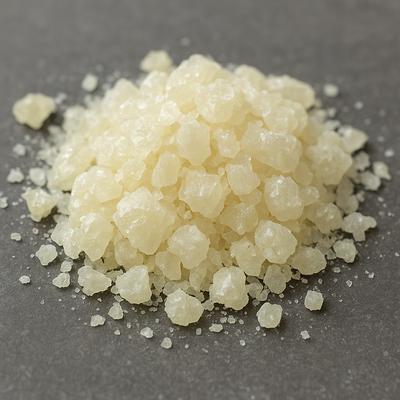
When you say 'camphor' are you speaking Malaysian?

'Camphor' is a word borrowed from Malaysian 'kapur'. The word entered the English language some time around the 14th century.


camphor [noun] [14th century]
  • a tough gummy volatile aromatic crystalline compound CHO obtained especially from the wood and bark of the camphor tree...
  • any of several similar compounds (as some terpene alcohols and ketones)
See 'camphor' on the Loan Words Map

See more loan words from Malaysian.

note: Camphor comes from Medieval Latin camphora which originated from Arabic kāfūr ultimately derived from Malay kapur (chalk/lime/camphor). It refers to a white volatile crystalline substance with an aromatic smell.
Etymology: Middle English 'caumfre' from Anglo-French, from Medieval Latin 'camphora' from Arabic 'kāfūr' from Malay 'kapur'
See more loan words from 1300s.


How the Latin language influenced English with the word 'lily'

'Lily' is a word borrowed from Latin 'lilium'. The word entered the English language some time before the 12th century.


lily [noun] [before 12th century]
  • any of a genus ( of the family Liliaceae, the lily family) of erect perennial leafy-stemmed bulbous herbs that are nati...
  • any of various plants of the lily family or of the related amaryllis or iris families
  • any of various plants with showy flowers
  • as
  • a scarlet anemone (Anemone coronaria) of the Mediterranean region
See 'lily' on the Loan Words Map

See more loan words from Latin.

Etymology: Middle English 'lilie' from Old English, from Latin 'lilium'
See more loan words from before 1200.


Latin 'rubicundus' in the English language

'Rubicund' is a word borrowed from Latin 'rubicundus'. The word entered the English language some time around the 15th century.


rubicund [adjective] [15th century]
Ruddy
See 'rubicund' on the Loan Words Map

See more loan words from Latin.

Etymology: Middle English 'rubicunde' from Latin 'rubicundus' from 'rubēre' to be red; akin to Latin 'rubeus'
See more loan words from 1400s.


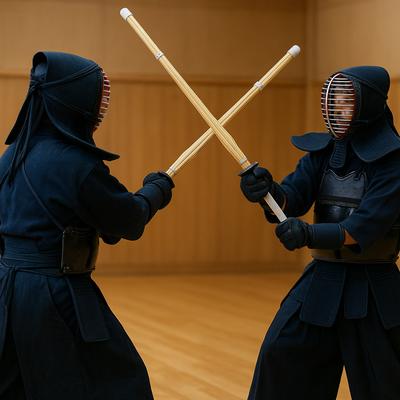
Did you know that 'kendo' is actually Japanese?

'Kendo' is a word borrowed from Japanese 'kendo'. The word entered the English language some time around 1921.


kendo [noun] [1921]
A Japanese sport of fencing usually with bamboo swords
See 'kendo' on the Loan Words Map

See more loan words from Japanese.

note: Kendo (剣道) which translates to way of the sword is a modern Japanese martial art derived from traditional swordsmanship (kenjutsu). The name combines ken (剑/剣) meaning sword and dō (道) meaning way path or discipline reflecting its focus on self-cultivation and mental discipline rather than just combat.
Etymology: Japanese 'kendō' from 'ken' sword + 'dō' art
See more loan words from 1920s.


Thursday, 27 August 2026

When you hear 'amphitheater' are you hearing English or Greek?

'Amphitheater' is a word borrowed from Greek 'amphitheatron'. The word entered the English language some time around the 14th century.


amphitheater [noun] [14th century]
  • an oval or circular building with rising tiers of seats ranged about an open space and used in ancient Rome especially ...
  • a very large auditorium
  • a room with a gallery from which doctors and students may observe surgical operations
  • a rising gallery in a modern theater
See 'amphitheater' on the Loan Words Map

See more loan words from Greek.

note: Late Middle English: via Latin from Greek amphitheatron - from amphi ‘on both sides’ + theatron.
Etymology: Latin 'amphitheatrum' from Greek 'amphitheatron' from 'amphi-' + 'theatron' theater
See more loan words from 1300s.


Saturday, 21 March 2026

Is 'pelmeni' English, or is it actually Russian?

'Pelmeni' is a word borrowed from Russian 'pelmen'.


pelmeni
(details not available)
See 'pelmeni' on the Loan Words Map

See more loan words from Russian.

note: Russian meat dumplings that are often served in broth. Pelmeni became a staple of Russian cuisine during the period of Russian expansion into the Ural Mountains and Siberia. Pelmeni also have deep roots in the traditions and folklore of the Komi and Udmurtia regions of Russia and figure prominently in Komi and Udmurt cuisine.
Etymology: -
See more loan words from (unknown date).

How the Japanese language influenced English with the word 'yakuza'

'Yakuza' is a word borrowed from Japanese 'yakuza'. The word entered the English language some time around 1964.


yakuza [noun] [1964]
  • a Japanese gangster
  • an organized crime syndicate in Japan
See 'yakuza' on the Loan Words Map

See more loan words from Japanese.

Etymology: Japanese, ruffian, gangster
See more loan words from 1960s.


When you say 'crepuscular' are you speaking Latin?

'Crepuscular' is a word borrowed from Latin 'crepusculum'. The word entered the English language some time around 1668.


crepuscular [adjective] [1668]
  • of, relating to, or resembling twilight
  • dim
  • occurring or active during twilight
See 'crepuscular' on the Loan Words Map

See more loan words from Latin.

note: Mid 17th century: from Latin crepusculum ‘twilight’.
Etymology: -
See more loan words from 1600s.


The Italian origins of the word 'quarantine'

'Quarantine' is a word borrowed from Italian 'quaranta giorni'. The word entered the English language some time around 1609.


quarantine [noun] [1609]
  • a period of 40 days
  • a term during which a ship arriving in port and suspected of carrying contagious disease is held in isolation from the ...
  • a regulation placing a ship in quarantine
  • a place where a ship is detained during quarantine
See 'quarantine' on the Loan Words Map

See more loan words from Italian.

note: From the 14th-century Italian phrase quaranta giorni meaning 40 days. It stems from the Venetian practice of forcing ships to anchor for 40 days to prevent the spread of the plague. 14th Century Origin: The term arose during the Black Death in Europe when Mediterranean ports required ships to isolate. Venetian Practice: The Republic of Ragusa (modern-day Dubrovnik) first implemented a 30-day isolation period (trentino) in 1377 which was later extended to 40 days (quarantino or quarantena). Why 40 Days? The 40-day period may have been chosen for its biblical significance (e.g. Jesus in the desert Lent) or simply deemed sufficient to ensure a ship was safe.
Etymology: Partly modification of French 'quarantaine' from Old French, from 'quarante' forty, from Latin 'quadraginta' from 'quadra-' (akin to 'quattuor' four) + '-ginta' (akin to vi'ginti' twenty); partly modification of Italian 'quarantena' quarantine of a ship, from 'quaranta' forty, from Latin 'quadraginta'
See more loan words from 1600s.
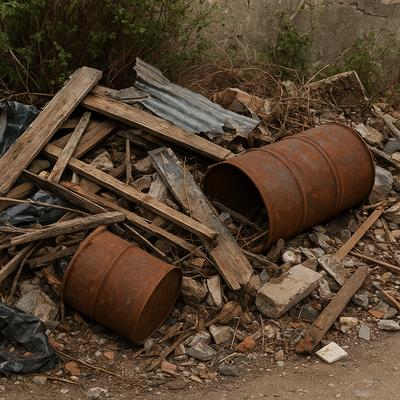

Is 'bully' English, or is it actually Dutch?

'Bully' is a word borrowed from Dutch 'boele'. The word entered the English language some time around 1538.


bully [noun] [1538]
  • sweetheart
  • a fine chap
  • a blustering browbeating person
  • one habitually cruel to others who are weaker
See 'bully' on the Loan Words Map

See more loan words from Dutch.

note: Original use was as a term of endearment applied to either sex. Later became a familiar form of address to a male friend. The current sense dates from the late 17th century.
Etymology: Probably from Middle Dutch 'boele' lover; akin to Middle Low German 'bōle' lover, Middle High German 'buole'
See more loan words from 1500s.


When you say 'rickshaw' are you speaking Japanese?

'Rickshaw' is a word borrowed from Japanese 'jinricksha'. The word entered the English language some time around 1887.


rickshaw [noun] [1887]
A small covered 2-wheeled vehicle usually for one passenger that is pulled by one man and that was used originally in J...
See 'rickshaw' on the Loan Words Map

See more loan words from Japanese.

note: jin means man - riki means strength or power and sha means carriage. Rickshaws originated in Japan where they were first used in the late 1800s.
Etymology: Alteration of 'jinrikisha'
See more loan words from 1800s.


Latin 'sudorificus' in the English language

'Sudorific' is a word borrowed from Latin 'sudorificus'. The word entered the English language some time around 1626.


sudorific [adjective] [1626]
Causing or inducing sweat - diaphoretic
See 'sudorific' on the Loan Words Map

See more loan words from Latin.

note: Sudorific (adj./n.) meaning causing sweat or a drug that induces perspiration. Originated in the 1620s from New Latin sudorificus. It combines the Latin sudor (sweat from Proto Indo European root sweyd-) with the suffix -ficus from facere (to make do). It denotes agents that promote sweating.
Etymology: New Latin 'sudorificus' from Latin 'sudor'
See more loan words from 1600s.


Saturday, 7 March 2026

The Latin roots of the word 'mansion'

'Mansion' is a word borrowed from Latin 'mansio'. The word entered the English language some time around the 14th century.


mansion [noun] [14th century]
  • the act of remaining or dwelling
  • stay
  • dwelling
  • manor house
  • a large imposing residence
See 'mansion' on the Loan Words Map

See more loan words from Latin.

Etymology: Middle English, from Anglo-French, from Latin 'mansion-, mansio' from 'manēre' to remain, dwell; akin to Greek 'menein' to remain
See more loan words from 1300s.


How the Latin language influenced English with the word 'poultice'

'Poultice' is a word borrowed from Latin 'pultes'. The word entered the English language some time around the 15th century.


poultice [noun] [15th century]
A soft usually heated and sometimes medicated mass spread on cloth and applied to sores or other lesions
See 'poultice' on the Loan Words Map

See more loan words from Latin.

Etymology: Middle English 'pultes' from Medieval Latin, literally, pap, from Latin, plural of 'pult-, puls' porridge
See more loan words from 1400s.

Did you know that 'trombone' is actually Italian?

'Trombone' is a word borrowed from Italian 'tromba'. The word entered the English language some time around 1724.

trombone [noun] [circa 1724]
A brass instrument consisting of a long cylindrical metal tube with two turns and having a movable slide or valves for ...
See 'trombone' on the Loan Words Map

See more loan words from Italian.

Etymology: Italian, augmentative of 'tromba' trumpet, of Germanic origin; akin to Old High German 'trumba, trumpa' trumpet
See more loan words from 1700s.