'Hames' is a word borrowed from Dutch 'haam'. The word entered the English language some time around the 14th century.
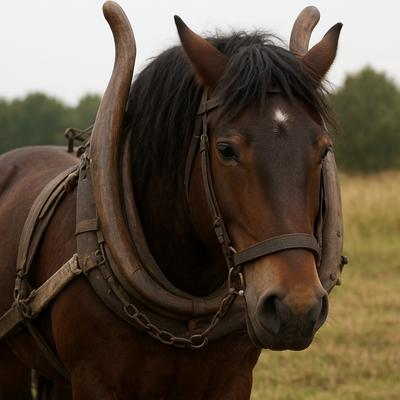
hames [noun] [14th century]
Meaning: A hames refers to the two curved pieces of wood or metal attached to the collar of a draft horse (such as a cart or plough horse) to which the pulling traces are hooked. The word traces back to Middle Dutch (haam) and entered English around 1300. The Agricultural Link: Putting the hames on a horse incorrectly—such as installing them upside down twisting the joining chains or misaligning the heavy harness—totalized the setup and created a tangled dysfunctional mess before the work even started.
Etymology: The Trade Route: During the medieval period there was a massive amount of trade and agricultural exchange between England and the Low Countries (modern-day Netherlands and Flanders). Specialized terms for farming shipping and textiles were frequently absorbed into English. The Irish Survival: While the physical word hames was used by farmers across Britain and Ireland for centuries to describe harness parts the specific idiom to make a hames of it survived and flourished almost exclusively in Hiberno-English (Irish-English) long after it faded from daily use in mainstream British English.
Topics: Society:Culture.
Origin: From Dutch to English.
note: Of Dutch origin but now part of Hiberno English: “to make a hames of it”.
See 'hames' on the Loan Words Map

See more loan words from Dutch.
See more loan words from 1300s.

No comments:
Post a Comment