Tuesday, 8 August 2023

Did you know that 'wadi' is actually Arabic?

'Wadi' is a word borrowed from Arabic 'wādī'. The word entered the English language some time around 1828.


wadi [noun] [1828]
  • the bed or valley of a stream in regions of southwestern Asia and northern Africa that is usually dry except during the...
  • a shallow usually sharply defined depression in a desert region
See 'wadi' on the Loan Words Map

See more loan words from Arabic.

Etymology: Arabic 'wādi'
See more loan words from 1800s.


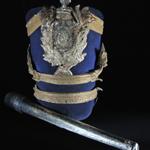
The word 'shako' is originally from Hungarian 'csákó'

'Shako' is a word borrowed from Hungarian 'csákó'. The word entered the English language some time around 1793.


shako [noun] [1793]
A stiff military hat with a high crown and plume
See 'shako' on the Loan Words Map

See more loan words from Hungarian.

Etymology: French, from Hungarian 'csákó'
See more loan words from 1700s.


The Yiddish origins of the word 'shtick'

'Shtick' is a word borrowed from Yiddish 'Stück'. The word entered the English language some time around 1959.


shtick [noun] [1959]
  • a usually comic or repetitious performance or routine
  • bit
  • one's special trait, interest, or activity
  • bag
See 'shtick' on the Loan Words Map

See more loan words from Yiddish.

Etymology: Yiddish 'shtik' pranks, literally, piece, from Middle High German 'stücke' from Old High German 'stucki;' akin to Old English 'stycce' piece, Old High German 'stoc' stick
See more loan words from 1950s.


The word 'shibboleth' is a loan word from Yiddish 'shibbōleth'

'Shibboleth' is a word borrowed from Yiddish 'shibbōleth'. The word entered the English language some time around 1638.


shibboleth [noun] [1638]
  • a word or saying used by adherents of a party, sect, or belief and usually regarded by others as empty of real meaning
  • a widely held belief
  • truism
  • a use of language regarded as distinctive of a particular group
See 'shibboleth' on the Loan Words Map

See more loan words from Yiddish.

Etymology: Hebrew 'shibbōleth' stream; from the use of this word in Judg 12:6 as a test to distinguish Gileadites from Ephraimites
See more loan words from 1600s.


Did you know that 'slogan' is actually Gaelic?

'Slogan' is a word borrowed from Gaelic 'sluagh-ghairm'. The word entered the English language some time around 1513.


slogan [noun] [1513]
  • a war cry especially of a Scottish clan
  • a word or phrase used to express a characteristic position or stand or a goal to be achieved
  • a brief attention-getting phrase used in advertising or promotion
See 'slogan' on the Loan Words Map

See more loan words from Gaelic.

Etymology: Alteration of earlier 'slogorn' from Scottish Gaelic 'sluagh-ghairm' from 'sluagh' army, host + 'gairm' cry
See more loan words from 1500s.


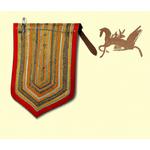
The word 'shabrack' is originally from Turkish 'çaprak'

'Shabrack' is a word borrowed from Turkish 'çaprak'.


shabrack
(details not available)
See 'shabrack' on the Loan Words Map

See more loan words from Turkish.

note: A cavalry saddlecloth used in European armies. Early 19th century from German Schabracke of east European origin; compare with Russian shabrak.
Etymology: -
See more loan words from (unknown date).

Did you know that 'hoyden' is actually Dutch?

'Hoyden' is a word borrowed from Dutch 'heiden'. The word entered the English language some time around 1676.


hoyden [noun] [1676]
A girl or woman of saucy, boisterous, or carefree behavior
See 'hoyden' on the Loan Words Map

See more loan words from Dutch.

Etymology: Perhaps from obsolete Dutch 'heiden' country lout, from Middle Dutch, heathen; akin to Old English 'hǣthen' heathen
See more loan words from 1600s.


When you hear 'converso' are you hearing English or Spanish?

'Converso' is a word borrowed from Spanish 'converso'. The word entered the English language some time around 1889.


converso [noun] [1889]
A Jew who publicly recanted the Jewish faith and adopted Christianity under the pressure of the Spanish Inquisition
See 'converso' on the Loan Words Map

See more loan words from Spanish.

Etymology: Spanish, literally, convert
See more loan words from 1800s.
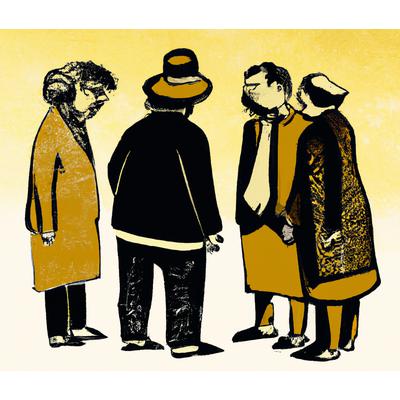

The Yiddish roots of the word 'yeshiva'

'Yeshiva' is a word borrowed from Yiddish 'yeshiva'. The word entered the English language some time around 1760.


yeshiva [noun] [1760]
  • a school for talmudic study
  • an Orthodox Jewish rabbinical seminary
  • a Jewish day school providing secular and religious instruction
See 'yeshiva' on the Loan Words Map

See more loan words from Yiddish.

Etymology: Late Hebrew 'yĕshībhāh'
See more loan words from 1700s.


When you say 'nacre' are you speaking Arabic?

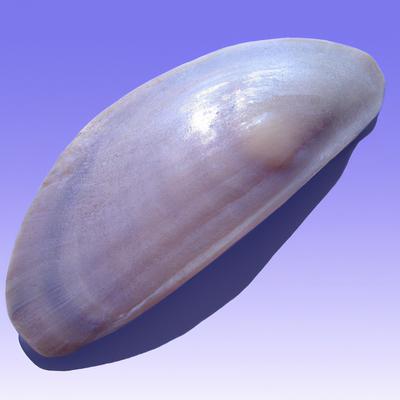
'Nacre' is a word borrowed from Arabic 'naqqāra'. The word entered the English language some time around 1718.


nacre [noun] [1718]
Mother-of-pearl
See 'nacre' on the Loan Words Map

See more loan words from Arabic.

Etymology: French, from Middle French, from Old Italian 'naccara' drum, nacre, from Arabic 'naqqāra' drum
See more loan words from 1700s.


When you say 'asperity' are you speaking French?

'Asperity' is a word borrowed from French 'asperite'. The word entered the English language some time around the 13th century.


asperity [noun] [13th century]
  • rigor
  • roughness of surface
  • unevenness
  • a tiny projection from a surface
  • roughness of sound
See 'asperity' on the Loan Words Map

See more loan words from French.

Etymology: Middle English 'asprete' from Anglo-French 'aspreté' from 'aspre' rough, from Latin 'asper' from Old Latin '*absperos' from 'ab-' ab- + '-speros;' akin to Sanskrit 'apasphura' repelling, Latin 'spernere' to spurn
See more loan words from 1200s.


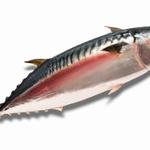
When you hear 'tuna' are you hearing English or Spanish (USA)?

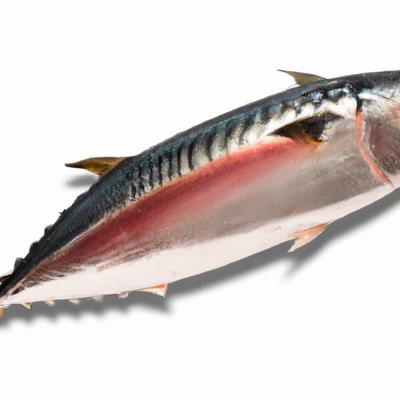
'Tuna' is a word borrowed from Spanish (USA) 'atún'. The word entered the English language some time around 1555.


tuna [noun] [circa 1555]
  • any of various flat-jointed prickly pears (genus )
  • one (O. tuna) of tropical America
  • the edible fruit of a tuna
See 'tuna' on the Loan Words Map

See more loan words from Spanish (USA).

Etymology: Spanish, from Taino
See more loan words from 1500s.


The word 'oupire' is originally from Polish 'upiór'

'Oupire' is a word borrowed from Polish 'upiór'.


oupire
(details not available)
See 'oupire' on the Loan Words Map

See more loan words from Polish.

note: From Polish upiór; a ghostly/ghastly creature or a ghoul-like fiend; from Proto-Slavic *ǫpyrь.
Etymology: -
See more loan words from (unknown date).