Saturday, 7 March 2026

Is 'dirigible' English, or is it actually French?

'Dirigible' is a word borrowed from French 'dirigeable'. The word entered the English language some time around 1581.
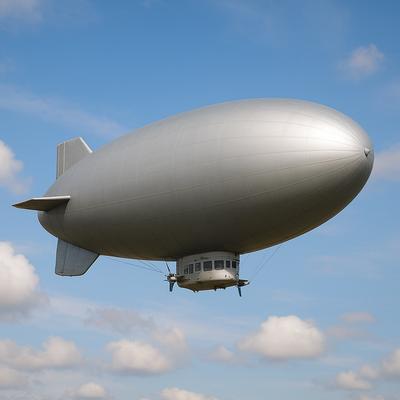

dirigible [adjective] [1581]
Capable of being steered
See 'dirigible' on the Loan Words Map

See more loan words from French.

note: An airship dirigible balloon or dirigible is a type of aerostat aircraft that can navigate through the air flying under its own power. Aerostats use buoyancy from a lifting gas that is less dense than the surrounding air to achieve the lift needed to stay airborne.
Etymology: Latin 'dirigere'
See more loan words from 1500s.


When you hear 'sudoku' are you hearing English or Japanese?

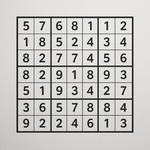
'Sudoku' is a word borrowed from Japanese 'sudoku'. The word entered the English language some time around 2004.


sudoku [noun] [2004]
A puzzle in which several numbers are to be filled into a 9x9 grid of squares so that every row, every column, and ever...
See 'sudoku' on the Loan Words Map

See more loan words from Japanese.

Etymology: Japanese 'sūdoku' short for 'sūji wa dokushin ni kagiru' "the numerals must remain single" (i.e., the digits can occur only once)
See more loan words from 2000s.

Do you speak a little Greek when you say 'etymology'?

'Etymology' is a word borrowed from Greek 'etumologia'. The word entered the English language some time around the 14th century.


etymology [noun] [14th century]
  • the history of a linguistic form (as a word) shown by tracing its development since its earliest recorded occurrence in...
  • a branch of linguistics concerned with
See 'etymology' on the Loan Words Map

See more loan words from Greek.

note: Late Middle English: from Old French ethimologie via Latin from Greek etumologia from etumologos ‘student of etymology’ from etumon neuter singular of etumos ‘true’.
Etymology: Middle English 'ethimologie' from Anglo-French, from Latin 'etymologia' from Greek, from 'etymon' + '-logia' -logy
See more loan words from 1300s.


When you hear 'amygdala' are you hearing English or Greek?

'Amygdala' is a word borrowed from Greek 'amugdalē'. The word entered the English language some time around 1845.


amygdala [noun] [1845]
The one of the four basal ganglia in each cerebral hemisphere that is part of the limbic system and consists of an almo...
See 'amygdala' on the Loan Words Map

See more loan words from Greek.

Etymology: New Latin, from Latin, almond, from Greek 'amygdalē'
See more loan words from 1800s.


Friday, 6 March 2026

Did you know that 'mustard' is actually French?

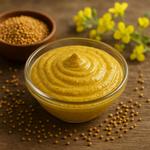
'Mustard' is a word borrowed from French 'moustarde'. The word entered the English language some time around the 13th century.


mustard [noun] [13th century]
  • a pungent yellow powder of the seeds of any of several common Brassica hirta, B. nigra, ( or ) used as a condiment or i...
  • zest
  • any of several herbs (genus Brassica of the family Cruciferae syn. Brassicaceae, the mustard family) with lobed leaves,...
  • a dark to moderate yellow
See 'mustard' on the Loan Words Map

See more loan words from French.

note: The word mustard originates from the Latin term *mustum ardens* translating to burning must. This refers to the Roman practice of mixing ground mustard seeds with must (unfermented fresh grape juice) to create a pungent paste. The term passed through Old French (moustarde) before entering Middle English in the 13th century.
Etymology: Middle English, from Anglo-French 'mustarde' from 'must' must, from Latin 'mustum'
See more loan words from 1200s.


Wednesday, 4 March 2026

Did you know that 'kvass' is actually Russian?

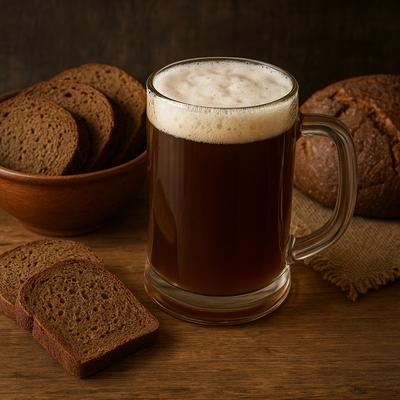
'Kvass' is a word borrowed from Russian 'kvas'. The word entered the English language some time around 1553.


kvass [noun] [circa 1553]
A slightly alcoholic beverage of eastern Europe made from fermented mixed cereals and often flavored
See 'kvass' on the Loan Words Map

See more loan words from Russian.

note: Kvass (pronounced kvahs) is a traditional Slavic fermented low-alcohol beverage made from rye bread. The word comes from the Old East Slavic *kvasŭ (leaven fermented drink) rooted in the Proto-Slavic *kvasu which means sour or leaven. It is ultimately derived from the Proto-Indo-European root *kwh₂et- (to become sour or to ferment).
Etymology: Russian 'kvas'
See more loan words from 1500s.


The word 'persimmon' is a loan word from Amerindian 'pasiminan'

'Persimmon' is a word borrowed from Amerindian 'pasiminan'. The word entered the English language some time around 1612.


persimmon [noun] [1612]
  • any of a genus (Diospyros) of trees of the ebony family with hard fine wood, oblong leaves, and small bell-shaped flo...
  • an eastern United States tree D. kaki (D. virginiana) or a Japanese tree ()
  • the usually orange several-seeded globular berry of a persimmon that is edible when fully ripe but usually extremely as...
See 'persimmon' on the Loan Words Map

See more loan words from Amerindian.

Etymology: Virginia Algonquian 'pessemmin'
See more loan words from 1600s.


Did you know that 'macaronic' is actually Italian?

'Macaronic' is a word borrowed from Italian 'macaroni.'. The word entered the English language some time around 1638.


macaronic [adjective] [1638]
  • characterized by a mixture of vernacular words with Latin words or with non-Latin words having Latin endings
  • characterized by a mixture of two languages
See 'macaronic' on the Loan Words Map

See more loan words from Italian.

Etymology: New Latin 'macaronicus' from Italian dialect 'maccarone' macaroni
See more loan words from 1600s.


How the Greek language influenced English with the word 'amphibian'

'Amphibian' is a word borrowed from Greek 'amphibios'. The word entered the English language some time around 1835.


amphibian [noun] [1835]
  • an organism
  • any of a class (Amphibia) of cold-blooded vertebrates (as frogs, toads, or salamanders) intermediate in many characters...
  • an amphibious vehicle
  • an airplane designed to take off from and land on either land or water
See 'amphibian' on the Loan Words Map

See more loan words from Greek.

note: In the sense ‘having two modes of existence or of doubtful nature': amphi (both) + bios (life).
Etymology: Ultimately from Greek 'amphibion' amphibious being, from neuter of 'amphibios'
See more loan words from 1800s.


Is 'dreggs' English, or is it actually Swedish?

'Dreggs' is a word borrowed from Swedish 'drägg'.


dreggs
(details not available)
See 'dreggs' on the Loan Words Map

See more loan words from Swedish.

note: Middle English: probably of Scandinavian origin and related to Swedish drägg (plural).
Etymology: -
See more loan words from (unknown date).

Is 'escutcheon' English, or is it actually Latin?

'Escutcheon' is a word borrowed from Latin 'scutum'. The word entered the English language some time around the 15th century.


escutcheon [noun] [15th century]
  • a defined area on which armorial bearings are displayed and which usually consists of a shield
  • a protective or ornamental plate or flange (as around a keyhole)
  • the part of a ship's stern on which the name is displayed
See 'escutcheon' on the Loan Words Map

See more loan words from Latin.

Etymology: Middle English 'escochon' from Anglo-French 'escuchoun' from Vulgar Latin '*scution-, scutio' from Latin 'scutum' shield
See more loan words from 1400s.


When you hear 'anchovy' are you hearing English or Portuguese?

'Anchovy' is a word borrowed from Portuguese 'anchova'. The word entered the English language some time around 1595.


anchovy [noun] [1595]
Any of a family (Engraulidae) of small fishes resembling herrings that includes several (as ) that are important food f...
See 'anchovy' on the Loan Words Map

See more loan words from Portuguese.

Etymology: Spanish 'anchova'
See more loan words from 1500s.

How the German language influenced English with the word 'quaff'

'Quaff' is a word borrowed from German 'quassen'. The word entered the English language some time around 1523.


quaff [verb] [1523]
  • to drink deeply
  • to drink (a beverage) deeply
See 'quaff' on the Loan Words Map

See more loan words from German.

note: A word of obscure origin perhaps imitative or perhaps from Low German quassen to overindulge (in food and drink).
Etymology: origin unknown
See more loan words from 1500s.