Saturday, 28 February 2026

The word 'galley' originally came from Greek as 'galaia'

'Galley' is a word borrowed from Greek 'galaia'. The word entered the English language some time around the 13th century.


galley [noun] [13th century]
  • a ship or boat propelled solely or chiefly by oars
  • as
  • a long low ship used for war and trading especially in the Mediterranean Sea from the Middle Ages to the 19th century
  • galleass
  • a warship of classical antiquity
See 'galley' on the Loan Words Map

See more loan words from Greek.

Etymology: Middle English 'galeie' from Anglo-French 'galie, galee' ultimately from Middle Greek 'galea'
See more loan words from 1200s.


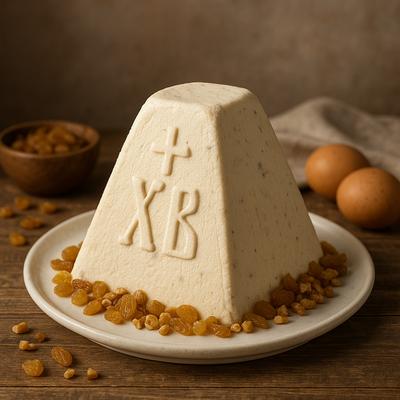
When you hear 'pashka' are you hearing English or Russian?

'Pashka' is a word borrowed from Russian 'pashka'.


pashka
(details not available)
See 'pashka' on the Loan Words Map

See more loan words from Russian.

note: Pashka (also spelled pasha**pascha or paskha; Russian: па́сха) is an Eastern European/Russian Orthodox cheese dessert with an etymology that directly links to the holiday it celebrates. The word pashka is derived from Pascha the Greek term for Easter which itself is a transliteration of the Aramaic pascha and the Hebrew pesach meaning Passover. Context: In Russian Paskha (Пасха) is the word for Easter. The dish is named after this as it is designed to be eaten specifically to break the fast after the Lenten period. Doublet: It is a doublet of the English word Pasch and the Ukrainian word paska (which refers to a similar but bread-based Easter tradition).
Etymology: -
See more loan words from (unknown date).

The word 'pasha' is originally from Turkish 'paça'

'Pasha' is a word borrowed from Turkish 'paça'. The word entered the English language some time around 1646.


pasha [noun] [1646]
A man of high rank or office (as in Turkey or northern Africa)
See 'pasha' on the Loan Words Map

See more loan words from Turkish.

note: Via Turkish paşa from Pahlavi pati ‘lord’ + šāh ‘shah’.
Etymology: Turkish 'paşa'
See more loan words from 1600s.


When you say 'pyramid' are you speaking Greek?

'Pyramid' is a word borrowed from Greek 'pyramis'. The word entered the English language some time around 1549.


pyramid [noun] [1549]
  • an ancient massive structure found especially in Egypt having typically a square ground plan, outside walls in the form...
  • a structure or object of similar form
  • a polyhedron having for its base a polygon and for faces triangles with a common vertex
  • a crystalline form each face of which intersects the vertical axis and either two lateral axes or in the tetragonal sys...
See 'pyramid' on the Loan Words Map

See more loan words from Greek.

Etymology: Latin 'pyramid-, pyramis' from Greek
See more loan words from 1500s.


The French roots of the word 'quoit'

'Quoit' is a word borrowed from French 'quoit'. The word entered the English language some time around the 15th century.


quoit [noun] [15th century]
  • a flattened ring of iron or circle of rope used in a throwing game
  • a game in which the are thrown at an upright pin in an attempt to ring the pin or come as near to it as possible
See 'quoit' on the Loan Words Map

See more loan words from French.

note: Probably from Old French coite - flat stone.
Etymology: Middle English 'coite'
See more loan words from 1400s.


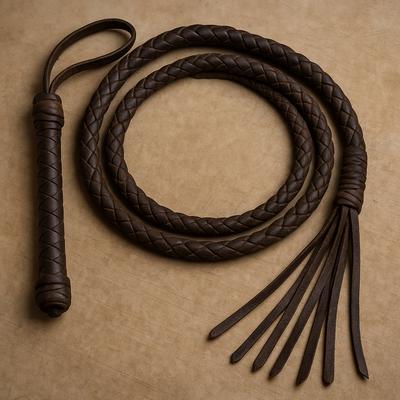
Is 'knout' English, or is it actually Russian?

'Knout' is a word borrowed from Russian 'knut'. The word entered the English language some time around 1716.


knout [noun] [1716]
A whip used for flogging
See 'knout' on the Loan Words Map

See more loan words from Russian.

note: A kind of whip with knots. Via French knout from Russian кнут (knut) from Old East Slavic кнутъ (knutŭ) from Old Norse knútr (“knot in a cord”).
Etymology: Russian 'knut' of Scandinavian origin; akin to Old Norse 'knūtr' knot; akin to Old English 'cnotta'
See more loan words from 1700s.


The word 'sycophant' is a loan word from Greek 'sukophantēs'

'Sycophant' is a word borrowed from Greek 'sukophantēs'. The word entered the English language some time around 1575.


sycophant [noun] [1575]
A servile self-seeking flatterer
See 'sycophant' on the Loan Words Map

See more loan words from Greek.

note: From Greek sukophantēs ‘informer’ from sukon ‘fig’ + phainein ‘to show’ perhaps with reference to making the insulting gesture of the ‘fig’ (sticking the thumb between two fingers) to informers.
Etymology: Latin 'sycophanta' slanderer, swindler, from Greek 'sykophantēs' slanderer, from 'sykon' fig + 'phainein' to show
See more loan words from 1500s.


Tuesday, 24 February 2026

Did you know that 'ancient' is actually Latin?

'Ancient' is a word borrowed from Latin 'ante'. The word entered the English language some time around the 14th century.


ancient [adjective] [14th century]
  • having had an existence of many years
  • of or relating to a remote period, to a time early in history, or to those living in such a period or time
  • of or relating to the historical period beginning with the earliest known civilizations and extending to the fall of th...
  • having the qualities of age or long existence
  • as
See 'ancient' on the Loan Words Map

See more loan words from Latin.

Etymology: Middle English 'ancien' from Anglo-French, from Vulgar Latin '*anteanus' from Latin 'ante' before
See more loan words from 1300s.


When you say 'trenchant' are you speaking French?

'Trenchant' is a word borrowed from French 'trenchant'. The word entered the English language some time around the 14th century.


trenchant [adjective] [14th century]
  • keen
  • vigorously effective and articulate
  • caustic
  • sharply perceptive
  • penetrating
See 'trenchant' on the Loan Words Map

See more loan words from French.

note: The word trenchant comes from Old French where trenchant was the present participle of trenchier meaning to cut. The word's origin is related to the modern English words trench a cut into the ground and retrench meaning to cut down. Therefore a trenchant remark or analysis is one that is sharp cutting and penetrates to the heart of a matter.
Etymology: Middle English 'trenchaunt' from Anglo-French, present participle of 'trencher'
See more loan words from 1300s.


When you hear 'museum' are you hearing English or Greek?

'Museum' is a word borrowed from Greek 'mouseion'. The word entered the English language some time around 1672.


museum [noun] [1672]
  • an institution devoted to the procurement, care, study, and display of objects of lasting interest or value
  • a place where objects are exhibited
See 'museum' on the Loan Words Map

See more loan words from Greek.

note: Denoting a university building (specifically one erected at Alexandria by Ptolemy Soter): via Latin from Greek mouseion ‘seat of the Muses’ - based on mousa ‘muse’.
Etymology: Latin 'Museum' place for learned occupation, from Greek 'Mouseion' from neuter of 'Mouseios' of the Muses, from 'Mousa'
See more loan words from 1600s.


Do you speak a little Arabic when you say 'gazelle'?

'Gazelle' is a word borrowed from Arabic 'ghazāl'. The word entered the English language some time around 1600.


gazelle [noun] [1600]
Any of numerous small to medium graceful and swift African and Asian antelopes ( and related genera)
See 'gazelle' on the Loan Words Map

See more loan words from Arabic.

Etymology: French, from Middle French, from Arabic 'ghazāl'
See more loan words from 1600s.


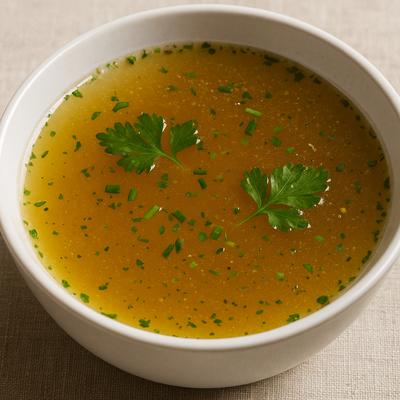
The French roots of the word 'bouillon'

'Bouillon' is a word borrowed from French 'bouillon'. The word entered the English language some time around 1656.


bouillon [noun] [circa 1656]
  • a clear seasoned soup made usually from lean beef
  • broth
See 'bouillon' on the Loan Words Map

See more loan words from French.

Etymology: French, from Old French 'boillon' from 'boillir' to boil
See more loan words from 1600s.


The French origins of the word 'chamois'

'Chamois' is a word borrowed from French 'chamois'. The word entered the English language some time around 1560.


chamois [noun] [1560]
  • a small goatlike bovid (Rupicapra rupicapra) of mountainous regions from southern Europe to the Caucasus
  • a soft pliant leather prepared from the skin of the chamois or from sheepskin
  • a cotton fabric made in imitation of chamois leather
See 'chamois' on the Loan Words Map

See more loan words from French.

note: The word chamois comes from French ultimately from Late Latin camox referring to the agile Alpine antelope; it entered English around the 1550s for the animal then the soft leather (made from its skin or similar) by the 1570s. Derived from an extinct Alpine language possibly Raetic or Ligurian related to crooked for its hooked horns.
Etymology: Middle French, from Late Latin 'camox'
See more loan words from 1500s.


Is 'tramontane' English, or is it actually Italian?

'Tramontane' is a word borrowed from Italian 'tramontana'. The word entered the English language some time around 1596.


tramontane [adjective] [1596]
  • transalpine
  • lying on or coming from the other side of a mountain range
See 'tramontane' on the Loan Words Map

See more loan words from Italian.

Etymology: Italian 'tramontano' from Latin 'transmontanus' from 'trans-' + 'mont-, mons' mountain
See more loan words from 1500s.


When you say 'tarantella' are you speaking Italian?

'Tarantella' is a word borrowed from Italian 'tarantella'. The word entered the English language some time around 1782.


tarantella [noun] [1782]
A lively folk dance of southern Italy in time
See 'tarantella' on the Loan Words Map

See more loan words from Italian.

Etymology: Italian, from 'Taranto' Italy
See more loan words from 1700s.


Did you know that 'paparazzi' is actually Italian?

'Paparazzi' is a word borrowed from Italian 'paparazzo'. The word entered the English language some time around 1961.


paparazzi [noun] [1961]
A freelance photographer who aggressively pursues celebrities for the purpose of taking candid photographs
See 'paparazzi' on the Loan Words Map

See more loan words from Italian.

Etymology: Italian, from 'Paparazzo' surname of such a photographer in the film 'La dolce vita' (1959) by Federico Fellini
See more loan words from 1960s.


French 'perrot' in the English language

'Parrot' is a word borrowed from French 'perrot'. The word entered the English language some time around 1525.


parrot [noun] [circa 1525]
  • any of numerous widely distributed tropical birds (order Psittaciformes and especially family Psittacidae) that are oft...
  • a person who sedulously echoes another's words
See 'parrot' on the Loan Words Map

See more loan words from French.

note: Probably from dialect French perrot diminutive of the male given name Pierre ‘Peter’. Compare with parakeet.
Etymology: Probably modification of Middle French 'perroquet'
See more loan words from 1500s.


Do you speak a little Japanese when you say 'wabi-sabi'?

'Wabi-sabi' is a word borrowed from Japanese 'wabi-sabi'.


wabi-sabi
(details not available)
See 'wabi-sabi' on the Loan Words Map

See more loan words from Japanese.

note: In traditional Japanese aesthetics wabi-sabi (侘び寂び) is centered on the acceptance of transience and imperfection.
Etymology: -
See more loan words from (unknown date).

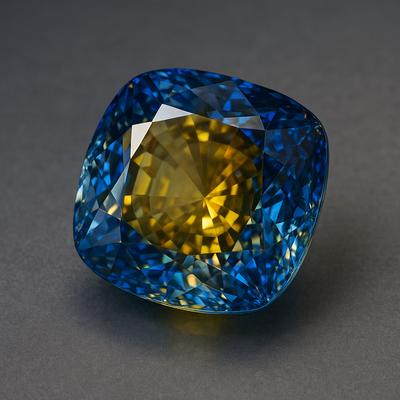
The word 'topaz' is a loan word from Greek 'topazos'

'Topaz' is a word borrowed from Greek 'topazos'. The word entered the English language some time around the 13th century.


topaz [noun] [13th century]
  • a mineral that is essentially a silicate of aluminum and usually occurs in orthorhombic translucent or transparent crys...
  • a usually yellow to brownish-yellow transparent mineral topaz used as a gem
  • a yellow sapphire
  • a yellow quartz
See 'topaz' on the Loan Words Map

See more loan words from Greek.

Etymology: Middle English 'topace' from Anglo-French, from Latin 'topazus' from Greek 'topazos'
See more loan words from 1200s.


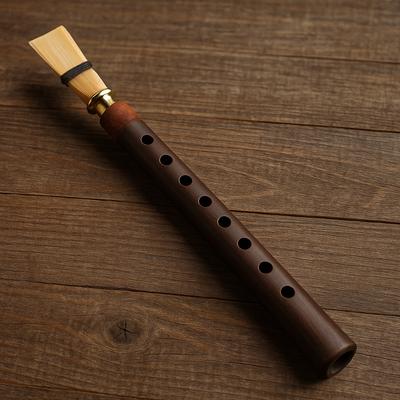
The Armenian roots of the word 'duduk'

'Duduk' is a word borrowed from Armenian 'duduk'.


duduk
(details not available)
See 'duduk' on the Loan Words Map

See more loan words from Armenian.

note: An 'apricot-made wind instrument' is a double reed woodwind instrument made of apricot wood originating from Armenia.
Etymology: -
See more loan words from (unknown date).

The word 'anecdote' originally came from Greek as 'anekdota'

'Anecdote' is a word borrowed from Greek 'anekdota'. The word entered the English language some time around 1686.


anecdote [noun] [1686]
A usually short narrative of an interesting, amusing, or biographical incident
See 'anecdote' on the Loan Words Map

See more loan words from Greek.

Etymology: French, from Greek 'anekdota' unpublished items, from neuter plural of 'anekdotos' unpublished, from 'a-' + 'ekdidonai' to publish, from 'ex' out + 'didonai' to give
See more loan words from 1600s.

Monday, 23 February 2026

When you say 'mirage' are you speaking French?

'Mirage' is a word borrowed from French 'mirage'. The word entered the English language some time around 1803.


mirage [noun] [1803]
  • an optical effect that is sometimes seen at sea, in the desert, or over a hot pavement, that may have the appearance of...
  • something illusory and unattainable like a mirage
See 'mirage' on the Loan Words Map

See more loan words from French.

note: From the French verb mirer meaning to look at which is a borrowing from the Latin mirari to wonder at. This root is also the origin of English words like admire miracle and marvel.
Etymology: French, from 'mirer' to look at, from Latin 'mirari'
See more loan words from 1800s.

Do you speak a little Japanese when you say 'origami'?

'Origami' is a word borrowed from Japanese 'orikami'. The word entered the English language some time around 1956.


origami [noun] [1956]
The Japanese art or process of folding squares of paper into representational shapes
See 'origami' on the Loan Words Map

See more loan words from Japanese.

Etymology: Japanese, from 'ori' fold + 'kami' paper
See more loan words from 1950s.

Is 'muesli' English, or is it actually German (Swiss)?

'Muesli' is a word borrowed from German (Swiss) 'Müesli'. The word entered the English language some time around 1939.

muesli [noun] [1939]
A breakfast cereal of Swiss origin consisting of rolled oats, nuts, and fruit
See 'muesli' on the Loan Words Map

See more loan words from German (Swiss).

Etymology: German dialect (Swiss) 'Müsli' diminutive of German 'Mus' soft food, mush, from Old High German 'muos;' akin to Old English 'mōs' food and probably to Old English 'mete' food
See more loan words from 1930s.


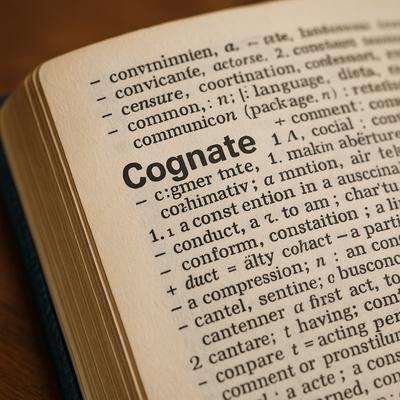
How the Latin language influenced English with the word 'cognate'

'Cognate' is a word borrowed from Latin 'cognatus'. The word entered the English language some time around 1645.


cognate [adjective] [circa 1645]
  • of the same or similar nature
  • generically alike
  • related by blood
  • related on the mother's side
  • related by descent from the same ancestral language
See 'cognate' on the Loan Words Map

See more loan words from Latin.

note: Cognate (from Latin cognatus meaning blood-related) refers to words in different languages that share a common etymological (word origin) ancesto
Etymology: Latin 'cognatus' from 'co-' + 'gnatus, natus' past participle of 'nasci' to be born; akin to Latin 'gignere' to beget
See more loan words from 1600s.