Sunday, 13 November 2022

When you hear 'elite' are you hearing English or French?

'Elite' is a word borrowed from French 'élite'. The word entered the English language some time around 1823.


elite [noun] [1823]
  • the choice part
  • cream
  • the best of a class
  • the socially superior part of society
  • a group of persons who by virtue of position or education exercise much power or influence
See 'elite' on the Loan Words Map

See more loan words from French.

Etymology: French 'élite' from Old French 'eslite' from feminine of 'eslit' past participle of 'eslire' to choose, from Latin 'eligere'
See more loan words from 1800s.


French 'freschete' in the English language

'Freshet' is a word borrowed from French 'freschete'. The word entered the English language some time around 1596.


freshet [noun] [1596]
  • stream
  • a great rise or overflowing of a stream caused by heavy rains or melted snow
  • a swelling quantity
  • influx
See 'freshet' on the Loan Words Map

See more loan words from French.

Etymology: -
See more loan words from 1500s.


When you hear 'samurai' are you hearing English or Japanese?

'Samurai' is a word borrowed from Japanese 'samurai'. The word entered the English language some time around 1727.


samurai [noun] [1727]
  • a military retainer of a Japanese daimyo practicing the code of conduct of Bushido
  • the warrior aristocracy of Japan
See 'samurai' on the Loan Words Map

See more loan words from Japanese.

Etymology: Japanese
See more loan words from 1700s.


Do you speak a little German when you say 'nix'?

'Nix' is a word borrowed from German 'nix'. The word entered the English language some time around 1789.


nix [noun] [1789]
Nothing
See 'nix' on the Loan Words Map

See more loan words from German.

Etymology: German 'nichts' nothing
See more loan words from 1700s.


When you hear 'moron' are you hearing English or Greek?

'Moron' is a word borrowed from Greek 'mōros'. The word entered the English language some time around 1910.


moron [noun] [1910]
  • a person affected with mild mental retardation
  • a very stupid person
See 'moron' on the Loan Words Map

See more loan words from Greek.

Etymology: Irregular from Greek 'mōros' foolish, stupid
See more loan words from 1910s.


Hindi 'chá' in the English language

'Chai' is a word borrowed from Hindi 'chá'. The word entered the English language some time around 1974.


chai [noun] [1974]
A beverage that is a blend of black tea, honey, spices, and milk
See 'chai' on the Loan Words Map

See more loan words from Hindi.

note: Possibly originated from Chinese chá.
Etymology: Turkish 'çay' & Russian, Persian, Hindi, & Urdu 'chay' tea
See more loan words from 1970s.


How the French language influenced English with the word 'aspic'

'Aspic' is a word borrowed from French 'aspic'. The word entered the English language some time around 1530.


aspic [noun] [1530]
Asp
See 'aspic' on the Loan Words Map

See more loan words from French.

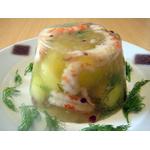
note: A savory jelly usually made with meat or fish stock and gelatin. Normally chilled and used as a garnish and coating for meats seafoods eggs etc.
Etymology: Middle French, alteration of 'aspe' from Latin 'aspis'
See more loan words from 1500s.


The Dutch roots of the word 'skipper'

'Skipper' is a word borrowed from Dutch 'schipper'. The word entered the English language some time around the 14th century.


skipper [noun] [14th century]
  • the master of a ship
  • the master of a fishing, small trading, or pleasure boat
  • the captain or first pilot of an airplane
  • a person in a position of leadership
See 'skipper' on the Loan Words Map

See more loan words from Dutch.

Etymology: Middle English, from Middle Dutch 'schipper' from 'schip' ship; akin to Old English 'scip' ship
See more loan words from 1300s.


Is 'suede' English, or is it actually French?

'Suede' is a word borrowed from French 'Suède (gants de)'. The word entered the English language some time around 1883.


suede [noun] [1883]
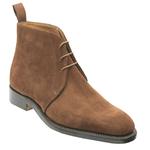
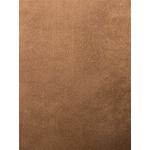
  • leather with a napped surface
  • a fabric finished with a nap to simulate suede
See 'suede' on the Loan Words Map

See more loan words from French.

Etymology: French 'gants de Suède' Swedish gloves
See more loan words from 1800s.

The Afrikaans origins of the word 'veld'

'Veld' is a word borrowed from Afrikaans 'veld'. The word entered the English language some time around 1835.


veld [noun] [1835]
A grassland especially of southern Africa usually with scattered shrubs or trees
See 'veld' on the Loan Words Map

See more loan words from Afrikaans.

Etymology: Afrikaans 'veld' from Dutch, field; akin to Old English 'feld' field
See more loan words from 1800s.


Is 'waffle' English, or is it actually Dutch?

'Waffle' is a word borrowed from Dutch 'waffle'. The word entered the English language some time around 1744.


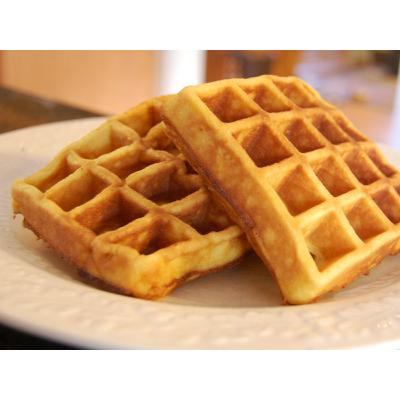
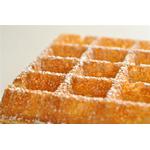
waffle [noun] [1744]
A crisp cake of batter baked in a waffle iron
See 'waffle' on the Loan Words Map

See more loan words from Dutch.

Etymology: Dutch 'wafel' from Middle Dutch 'wafele;' akin to Old High German 'waba' honeycomb, Old English 'wefan' to weave
See more loan words from 1700s.


Did you know that 'chiaroscuro' is actually Italian?

'Chiaroscuro' is a word borrowed from Italian 'chiaro oscuro'. The word entered the English language some time around 1686.


chiaroscuro [noun] [1686]
  • pictorial representation in terms of light and shade without regard to color
  • the arrangement or treatment of light and dark parts in a pictorial work of art
  • the interplay or contrast of dissimilar qualities (as of mood or character)
  • a 16th century woodcut technique involving the use of several blocks to print different tones of the same color
See 'chiaroscuro' on the Loan Words Map

See more loan words from Italian.

Etymology: Italian, from 'chiaro' clear, light + 'oscuro' obscure, dark
See more loan words from 1600s.


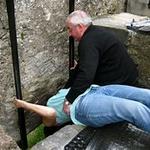
The Gaelic origins of the word 'blarney'

'Blarney' is a word borrowed from Gaelic 'blarney'. The word entered the English language some time around 1784.


blarney [noun] [1784]
  • skillful flattery
  • blandishment
  • nonsense
See 'blarney' on the Loan Words Map

See more loan words from Gaelic.

Etymology: a stone in Blarney Castle, near Cork, Ireland, held to bestow skill in flattery on those who kiss it
See more loan words from 1700s.